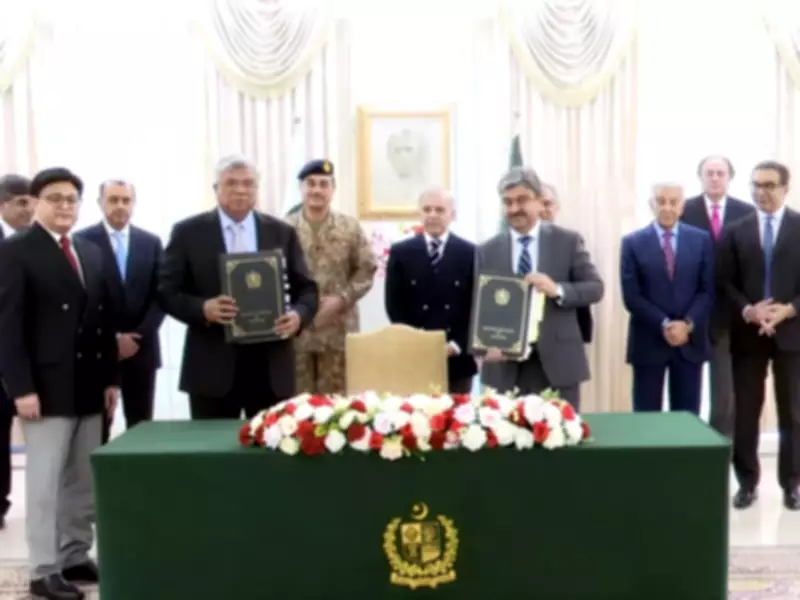
The long-awaited privatization process of Pakistan International Airlines (PIA) reached its culmination on Thursday, marking a significant milestone in Pakistan's economic history. The federal government and the Arif Habib Consortium formally concluded the transaction by signing the essential documents, including the shareholders agreement and the share purchase and subscription agreement.
A High-Profile Ceremony in Islamabad
The signing ceremony was held in the capital city of Islamabad, drawing attention from top national figures. Prime Minister Shehbaz Sharif graced the event with his presence, underscoring the government's commitment to this major economic reform. Notably, Chief of Defence Forces and Chief of the Army Staff Field Marshal Syed Asim Munir also attended, highlighting the strategic importance of this privatization move for Pakistan's aviation sector and overall economic stability.
Key Signatories and Stakeholders
The documents were signed by a distinguished group of officials and business leaders, representing both the public and private sectors. From the government side, Defence Secretary Lieutenant General (retired) Muhammad Ali and Privatisation Commission Secretary Usman Bajwa put their signatures on the agreements. PIA Holding Company CEO Asad Rasool and PIACL CEO Amir Hayat represented the airline's interests.

On the consortium side, Arif Habib Corporation Limited Chairman Arif Habib led the private sector delegation. He was joined by Fatima Fertiliser Director Fazal Ahmed and Lake City CEO Gohar Ejaz, showcasing the diverse business interests involved in this landmark deal. This collaboration between government entities and private investors sets the stage for a new chapter in PIA's operations, aiming to enhance efficiency and competitiveness in the global aviation market.
Implications for Pakistan's Economy
The privatization of PIA is expected to have far-reaching effects on Pakistan's economic landscape. By transferring ownership to the Arif Habib Consortium, the government hopes to alleviate financial burdens and inject fresh capital into the airline. This move is part of broader efforts to reform state-owned enterprises and attract private investment, which could boost economic growth and create job opportunities in related industries.
As the details of the agreement unfold, stakeholders and the public await further announcements regarding the operational changes and future plans for PIA under its new ownership. This historic deal not only concludes a lengthy privatization process but also opens doors for potential improvements in service quality and expansion of routes, benefiting passengers and the national economy alike.