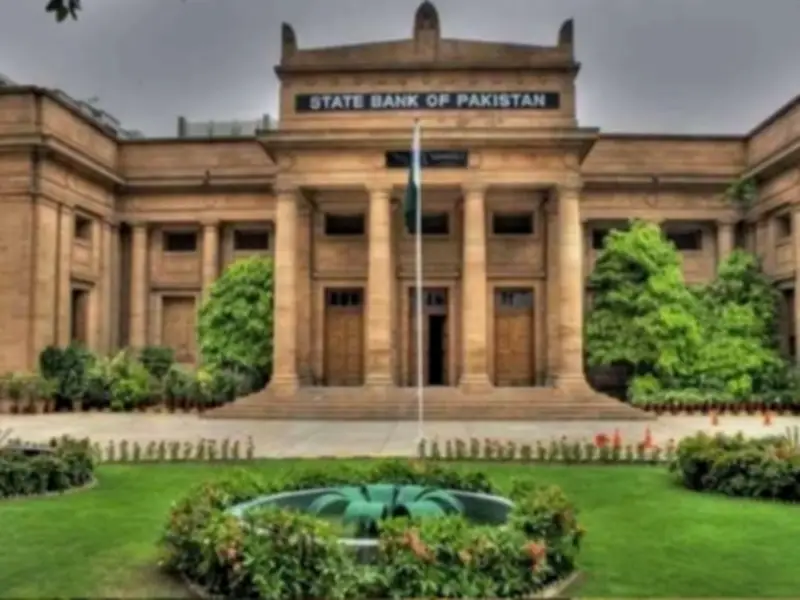
State Bank of Pakistan (SBP) Governor Jameel Ahmad called an urgent press conference on Friday to announce a positive economic outlook, projecting GDP growth of around 4% for fiscal year 2026, higher than the government's provisional estimate of 3.7%. The growth is driven primarily by expansion in the industrial sector, even as the central bank revised its expectations slightly lower due to geopolitical tensions in the Middle East.
Revised Growth Projections
Governor Ahmad indicated that economic growth in FY26 is now expected in the range of 3.75-4.75%, higher than the government's provisional estimate of 3.7%. Before the Israel-US attack on Iran, the SBP projected GDP growth of over 4%, but due to the Middle East crisis, the growth was expected to be lower than that, he said, talking about the revised numbers. However, the situation is again improving. Large-scale manufacturing (LSM) growth averaged 6% during FY26, reaching as high as 10% in certain months. This industrial momentum is expected to anchor the 4% growth target for FY27.
Foreign Exchange Reserves and Debt Repayment
Foreign exchange reserves held by the central bank rose to $18.4 billion by the end of FY26, up from $13 billion a year earlier. This build-up occurred despite a substantial $8 billion debt repayment in June alone. "Excluding these repayments, underlying reserves would have approached approximately $23 billion, underscoring the strength of external inflows," Ahmad noted. Pakistan's total external debt has remained broadly stable at around $100 billion since FY22, while reserves have increased six-fold over three years, according to the governor. The government has also improved its debt profile by shifting towards long-tenor multilateral financing with maturities of 20-25 years.

Current Account Surplus
The current account, which had recorded a large deficit of $17.5 billion (4.7% of GDP) in FY22, leading to import and dividend restrictions, has now shifted into a surplus position. It posted surpluses of $3.3 billion in FY23, $2.1 billion in FY24, and $2.1 billion (0.5% of GDP) in FY25. For FY26, the current account has remained in surplus during the first 11 months, with the full-year balance projected to stay within 0-1% of GDP. This has reduced SBP's outstanding foreign exchange liabilities sharply from $5.8 billion in FY23 to $950 million by end-FY26, according to Arif Habib Limited (AHL).
Trade Deficit and Export Miss
However, the government has missed the export target by a wide margin of $5.2 billion, as receipts during the last fiscal year plunged to $30.1 billion, causing a double-digit increase in the trade deficit and exposing underlying economic vulnerabilities. Pakistan's trade deficit widened to $39.47 billion in FY26, up 21.57% from the previous fiscal year, according to the Pakistan Bureau of Statistics (PBS).
Remittances and Incentive Schemes
Workers' remittances are expected to exceed $41.5 billion in FY26, higher than the previous year despite regional geopolitical challenges. Cumulatively, remittances during July-May FY26 rose 9.2% to $38.1 billion from $34.9 billion in the same period last year. The SBP has projected remittances to reach $44 billion in FY27. Governor Ahmad announced the discontinuation of government subsidy schemes for remittances, including the Sohni Dharti Remittance Program (SDRP) and the Telegraphic Transfer Charges Incentive Scheme (TTCIS). However, commercial banks and exchange companies will continue to incentivise inflows under the existing framework, with no expected negative impact on overall flows. Customers will continue receiving services free of charge.
Foreign Direct Investment and Roshan Digital Account
Pakistan slipped from seventh to ninth place among regional destinations preferred for investment projects exceeding $500 million, underscoring the structural impediments that continue to discourage multinational corporations from committing large-scale capital. The Roshan Digital Account (RDA) scheme has shown improvement, attracting average inflows of around $300 million per month following recent enhancements.

Inflation and Monetary Policy
On the inflation front, the average reading for FY26 is estimated at 7.05%, slightly above the target range of 5-7%. The governor highlighted that while inflation accelerated to 11.1% year-on-year in June 2026 following increases in petroleum product prices, the full-year average remained close to the SBP's medium-term target range.