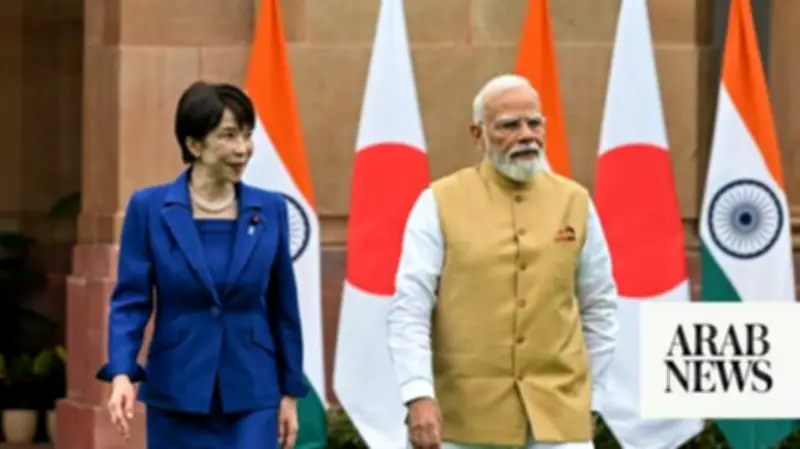
India and Japan signed cooperation agreements covering economic security, artificial intelligence and energy resilience on Thursday, during Japanese Prime Minister Sanae Takaichi's first official visit to New Delhi. The agreements were announced after the 16th India-Japan Annual Summit, which followed Indian Prime Minister Narendra Modi's visit to Tokyo last August.
Wide-ranging talks and joint declaration
The two leaders held wide-ranging talks on the full spectrum of India-Japan ties, covering trade, investment, economic security, energy, emerging technologies, defence and people-to-people exchanges, the Indian Ministry of External Affairs said. India's foreign ministry listed 16 outcomes following Modi's meeting with Takaichi, including a joint declaration on economic security that covers collaboration in semiconductors, critical minerals, AI, clean energy and pharma, aimed at deepening partnerships and diversifying supply chains.
In today's atmosphere of global upheaval, mutual trust is our greatest strategic asset. And I am proud that the India-Japan partnership stands fully tested on this touchstone, Modi said, as quoted by his office in an X post.

Energy resilience and critical minerals
India's Ministry of Petroleum and Natural Gas and Japan's Ministry of Economy, Trade and Industry adopted a joint statement on energy resilience, which covers strategic stockpiling and mechanisms for oil reserves. The two countries also agreed to cooperate more closely in battery manufacturing and critical minerals exploration.
India and Japan must leverage our respective strengths to become stronger and more prosperous together, Takaichi told reporters during a joint press conference. Amid a turbulent international landscape, establishing such a mutually complementary, cooperative relationship has become ever more important. As both countries face challenges such as economic weaponization and non-market practices, we need to urgently build resilience in our critical mineral supply chains.
Economic ties and investment
Japan is among India's largest foreign investors and has backed major infrastructure projects, such as the Mumbai-Ahmedabad high-speed rail line. There are about 1,400 Japanese companies operating in India, nearly half of which are in manufacturing. Bilateral trade reached $27.5 billion in the 2025-26 fiscal year, while Japanese investment in India was valued at $3.2 billion between April and December 2025, according to Indian government data.
Geopolitical context and strategic alignment
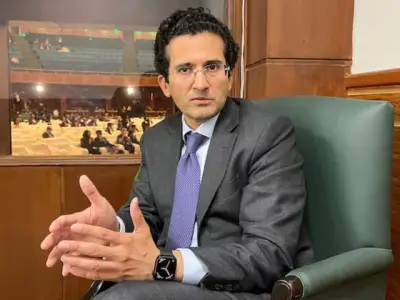
India and Japan are deepening ties amid strained relations with China and the US, said Vanshika Saraf, a research analyst at the Takshashila Institution. The summit is unfolding against a backdrop of worsening China-Japan relations. China has increased its coercive actions vis-a-vis Japan, both militarily and economically. India has borne the brunt of Chinese aggression several times, she told Arab News. Therefore, it is only natural that the two countries share a similar vision on what a stable and free Indo-Pacific region should look like.
New Delhi and Tokyo have also had to navigate rocky ties with Washington under US President Donald Trump's administration, which slapped both countries with high tariffs. Both Japan and India felt they were being treated unfairly by the current administration. Japan, even more so, given its US treaty ally. Moreover, reduced trust in the American security umbrella is also bringing both these powers closer together, Vanshika said. By forging stronger relations, the two countries have much to gain, given their ideological alignment and ambitions.