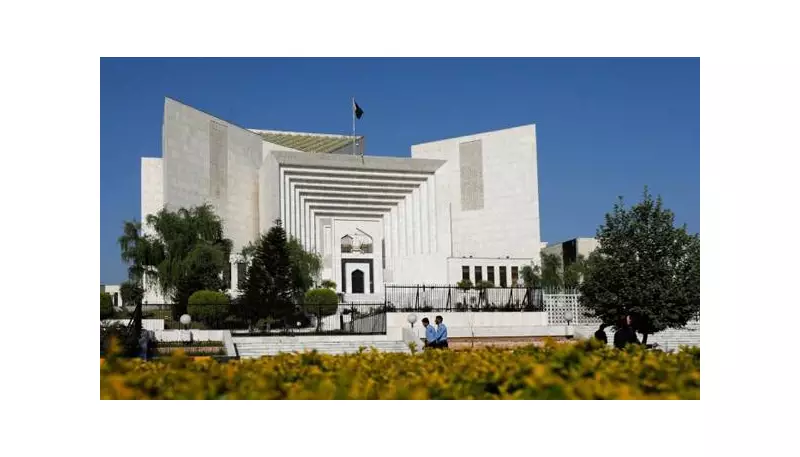
In a landmark decision with significant implications for Pakistan's agriculture and business sectors, the Supreme Court has issued a firm directive to the Competition Appellate Tribunal. The apex court has ordered the tribunal to conclusively decide on the massive penalty of Rs. 72 billion imposed on sugar mills within a strict deadline of 90 days.
The Supreme Court's Directive and Legal Background
The ruling came from a three-member bench of the Supreme Court, headed by Chief Justice Qazi Faez Isa. The bench was hearing a set of appeals that challenged the jurisdiction of the Competition Commission of Pakistan (CCP). The core legal question revolved around whether the CCP had the authority to impose such a hefty fine on the sugar mills involved in alleged anti-competitive practices.
The Supreme Court's judgment, delivered on January 6, 2026, provided crucial clarity. The court dismissed the appeals filed by the sugar mills, thereby upholding the CCP's jurisdictional power to investigate and penalize cartelization and unfair trade practices. However, the final determination on the actual imposition of the Rs. 72 billion fine was referred back to the specialized forum, the Competition Appellate Tribunal.

The court explicitly instructed the tribunal to examine the matter on its merits and reach a final decision within three months. This move balances the affirmation of regulatory authority with the right of the accused parties to a fair hearing before the relevant appellate body.
Details of the Competition Commission's Case
The origins of this high-stakes case date back to an extensive inquiry conducted by the Competition Commission of Pakistan. The CCP's investigation concluded that numerous sugar mills across the country had engaged in coordinated anti-competitive behavior. The alleged practices included:
- Collusion to fix prices, harming consumers and the broader market.
- Unfair trading conditions that distorted the sugar industry.
- Cartelization, where competing mills act as a single entity to control supply and pricing.
Based on these findings, the CCP exercised its regulatory mandate and imposed a collective penalty of Pakistani Rupees Seventy-Two Billion on the implicated sugar mills. This unprecedented fine sent shockwaves through the industry and led to a protracted legal battle, with mills challenging both the verdict and the CCP's very authority to issue it.
Implications and Expected Outcomes
The Supreme Court's order has several immediate and long-term consequences for Pakistan's economic and legal landscape. By setting a strict 90-day deadline, the court has ensured that this protracted litigation reaches a swift conclusion, providing certainty to all stakeholders.
For the regulatory environment, the judgment is a powerful endorsement of the CCP's role. It reinforces the commission's capacity to police market abuse and protect consumer interests from powerful cartels, especially in essential commodity sectors like sugar.
For the sugar industry and business community, the ruling establishes a clear precedent. While it affirms that regulators can pursue stringent action, it also confirms that appellate mechanisms exist for a fair review. The tribunal's upcoming decision will now be the focal point, determining the financial fate of the involved mills.
For consumers and the agriculture sector, a final resolution promises greater market stability. A decisive action against cartelization could lead to more competitive pricing and fairer trade practices in the long run, impacting one of Pakistan's key agricultural industries.
The nation now awaits the decision of the Competition Appellate Tribunal, which must deliver its verdict by early April 2026, following the Supreme Court's unambiguous command.