One of the biggest problems in human history is currently confronting the world. The frequency of catastrophic weather events is increasing, global temperatures are rising, and cities all over the world are dealing with air pollution, traffic jams, and rising energy demands. Scientists caution that climate change will have detrimental effects on infrastructure, food security, the economy, and health systems if immediate action is not taken. Rail transportation is a crucial option that frequently gets less attention than renewable energy, electric cars, and industrial pollutants.
Transportation Emissions and the Role of Rail
One of the biggest global sources of greenhouse gas emissions is transportation. International research indicates that between one-fifth and one-quarter of the world's energy-related carbon emissions come from transportation. The demand for mobility and freight movement is rising quickly as economies and populations expand. Transportation emissions might increase dramatically by 2050 if current trends continue, making it far more difficult to meet global climate targets.
A straightforward but effective message is highlighted in recent publications from the World Bank, the Asian Development Bank (ADB), and international train specialists. Decarbonising transportation in the future will require more than just switching to electric vehicles from gasoline and diesel ones. Additionally, more people and cargo will need to be moved from air and road transportation to rail systems.

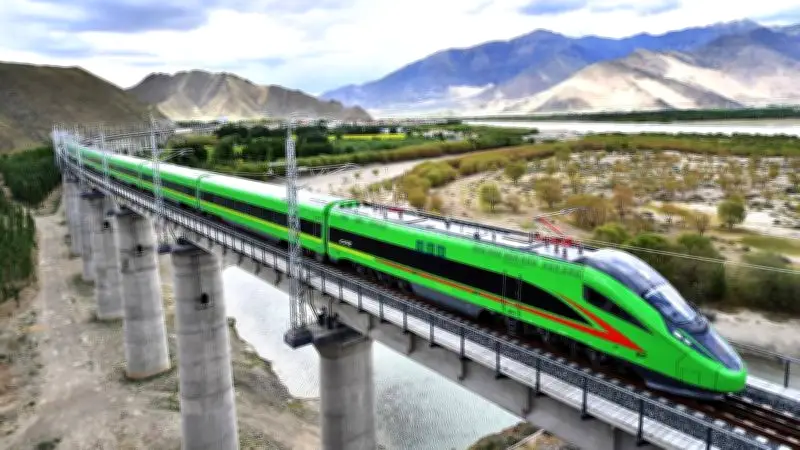
Already, one of the greenest modes of transportation is rail. Compared to cars, trucks, and aeroplanes, trains require significantly less energy to transport huge quantities of people and commodities. Rail generates substantially fewer emissions per passenger or per ton of freight delivered due to its efficiency. Railways promote both economic expansion and climate action, according to the World Bank. With a comparatively low carbon footprint, rail offers enterprises economical logistics and effective passenger mobility. Rail can assist in separating economic expansion from emissions growth in developing nations, where transportation demand is predicted to rise quickly in the upcoming decades.
Modal Shift: The Core of Rail's Climate Contribution
The World Bank report's most significant conclusion is that rail's biggest contribution to climate action comes from what experts refer to as "modal shift," rather than just technology. Moving people and cargo from higher-emission modes of transportation, like private vehicles, trucks, and short-haul aeroplanes, to rail networks is known as modal shift. Research indicates that this change, rather than just technology advancements, accounts for about 80% of the potential emissions reductions from rail.
This discovery modifies the way governments should consider investing in transportation. Countries should concentrate on offering appealing alternatives to road transportation in addition to cleaner automobiles. People naturally choose trains over cars when rail services are dependable, reasonably priced, and well-integrated with urban development. Similarly, when rail networks provide stable and effective services, firms transport more freight by train.
Urban Expansion and Freight Efficiency
The advantages go beyond the effects of climate change. Traffic congestion, fuel consumption, road safety, and urban air quality are all improved by rail transportation. These advantages are especially significant in emerging nations where transportation systems are under growing strain due to rising urbanisation. The importance of urban rail systems, such as suburban railways and metro systems, is especially significant. Traffic jams, lengthy commutes, and deteriorating air pollution are major problems in major cities worldwide. By effectively transporting huge numbers of people across crowded urban regions, metro systems offer a workable option.

Investments in public transportation, such as metro rail, light rail, and bus rapid transit, can dramatically lower emissions when they draw passengers away from private automobiles, according to the ADB analysis. Although the concrete and steel needed for metro system construction may initially produce emissions, these emissions are typically compensated over time by fewer vehicles and lower operating emissions. This is particularly important for cities in Asia, Africa, and the Middle East that are expanding quickly. Building cities around high-capacity public transportation instead of relying solely on automobiles can help prevent decades of future emissions as urban populations grow. In order to minimise the need for long-distance travel, well-designed metro systems also promote transit-oriented development, which concentrates residences, businesses, and offices around stations.
Another significant opportunity is freight transportation. Every day, millions of trucks travel over highways all over the world. Trucks are flexible, but they also produce a lot of pollution. For long-distance transportation of bulk goods and containers, rail freight provides a more environmentally friendly option. Future transportation systems should include more freight rail, according to the World Bank. Countries may cut pollution, fuel consumption, and logistics costs by shifting more freight from trucks to rail. Effective rail freight corridors can promote industrial growth and help achieve climate objectives.
Technology, Carbon, and Strategic Policy
Technology continues to play a significant role in the solution. The rail systems themselves need to keep cutting their emissions. One of the best methods is electrification. Compared to diesel trains, electric trains that run on low-carbon electricity emit significantly fewer emissions. The environmental advantages of electrified rail continue to grow as national electrical grids become cleaner due to the rise of renewable energy. Electrification is not the sole choice, though. In situations when complete electrification is not financially viable, new technologies are being developed that can aid in the decarbonisation of train networks. Many nations are already testing and using battery-powered trains. Interest in hydrogen-powered trains is also growing, especially for low-density tracks where regular electrification could be prohibitively costly.
The rail sector should not get complacent, according to the WSP global outlook on rail decarbonisation. Even though rail is already among the greenest forms of transportation, stakeholders need to keep cutting emissions from supply chains, operations, construction, and maintenance. The paper emphasises that governments, infrastructure managers, railroad operators, and others must take measures to achieve net-zero emissions by 2050. The distinction between operational and embodied carbon is another key idea that has emerged from recent research. Emissions generated during regular railway operations are referred to as operational carbon. Emissions produced during building, production, maintenance, and infrastructure renewal are referred to as embodied carbon. If the rail industry is to meet its net-zero goals, future developments must address both sources.
This shift is made possible in large part by governments. Sustainable modes of transportation should be promoted by long-term planning, favourable laws, and calculated investments. Transportation decisions can be influenced by infrastructure funding, land-use planning, and pricing policies. Better environmental and economic results are likely to be attained by nations that incorporate climate goals into transportation planning.
Developing nations have possibilities as well as obstacles. In order to promote economic growth, they must, on the one hand, increase transportation infrastructure. However, they have the chance to avoid making the same mistakes as many industrialised nations, where decades of development focused on cars led to traffic jams, pollution, and excessive emissions. The World Bank contends that by making early investments in integrated, multimodal transportation networks, emerging nations can "leapfrog" conventional transportation development trajectories. They can develop systems that promote rail, public transportation, walking, and cycling instead of relying on high-emission vehicle transportation.
The Way Forward: Pakistan and the World
Pakistan is a helpful illustration of the difficulties and possibilities that lie ahead. Pakistan, like many developing nations, is dealing with rising transportation emissions, increased urbanisation, and rising freight demand. Air quality issues and traffic congestion are plaguing major cities including Karachi, Lahore, Islamabad, and Peshawar. However, Pakistan has a vast railway network that may be more important in the future for logistics and mobility. Reducing emissions might be greatly aided by increasing urban transit systems, upgrading freight services, improving suburban rail, and modernising current rail infrastructure. By lowering logistics costs and boosting transportation efficiency, rail investments will not only help achieve climate goals but also boost economic competitiveness.
In a large portion of the developing globe, the same idea holds true. Rail is more than just a transportation project. Additionally, it is an economic development project, a public health initiative, an environmental project, and a climate adaption project.
In the future, a variety of approaches will be needed to meet global climate goals. Energy efficiency, electric cars, renewable energy, and industrial decarbonisation are all crucial. However, transportation systems themselves need to adapt. Congestion, land-use issues, and resource usage might not be entirely resolved by merely switching millions of cars to electric vehicles. There is a need for more effective mobility solutions. One of the most useful and scalable solutions on the market today is offered by rail. Compared to many alternatives, it can transport a lot of people and products while using less energy, emitting fewer emissions, and requiring less land. Rail can become a key component of a low-carbon future when combined with renewable energy sources, sustainable urban design, and public transportation.
Despite the urgency of the climate crisis, the route ahead is becoming more and more obvious. It will take bold choices, sustained investment, and collaboration between communities, businesses, and governments to build more sustainable transportation systems. Climate change cannot be solved by rail alone, but it would be far harder to achieve global transport decarbonisation without rail. Railways may once again demonstrate their worth as the world strives to reduce global warming and reach net-zero emissions by the middle of the century—not just as catalysts for economic growth but also as essential instruments for safeguarding the environment for coming generations.