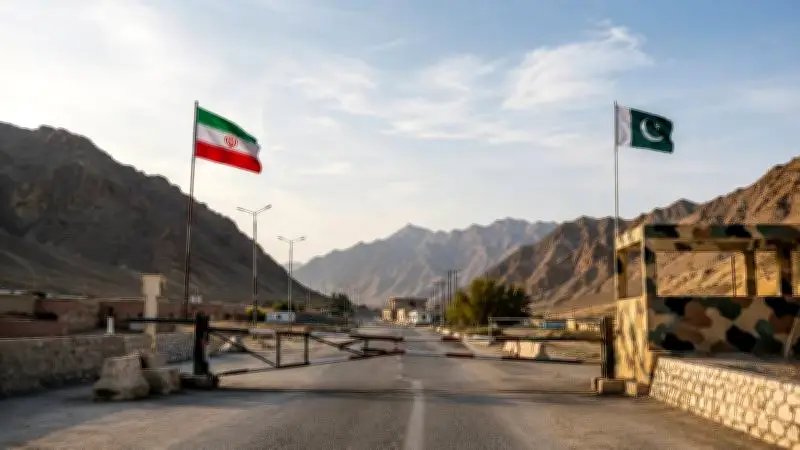
Thousands of families in Balochistan's Kech District are expected to regain a crucial source of livelihood after the district administration announced that informal cross-border trade through the JALAGI Crossing Point will resume during July, following an agreement with the Iranian authorities. Deputy Commissioner Yasir Iqbal Dashti said the breakthrough was achieved after successful negotiations facilitated by the Inspector General of the Frontier Corps, Balochistan South.
Technical Issues Being Resolved
While a few technical issues remain, the district administration and Frontier Corps are working to resolve them quickly so that operations at the crossing can begin without further delay. Speaking at a press briefing alongside border representatives, Dashti said temporary arrangements had also been put in place to provide immediate relief to residents of the border areas until the JALAGI Crossing Point becomes fully operational.
Mechanism for Transparent Trade
Dashti said that once the crossing is functioning, the district administration will consult all relevant institutions, border representatives and traders to establish a transparent, well-organised and effective mechanism for managing border trade. He said the objective was to ensure that the system operated fairly and that the benefits reached those who genuinely depended on the border economy.

Impact of 18-Month Closure
The announcement follows nearly 18 months of border closure, which dealt a severe blow to the economy of Kech District, particularly Turbat and the surrounding areas. Thousands of families who relied on informal cross-border trade lost their primary source of income, contributing to rising unemployment, worsening economic conditions and a range of social challenges. Border trade has long served as a vital economic lifeline in the conflict-affected district, supporting thousands of households.
Residents' Hopes and Concerns
Residents hope that the reopening of the crossing will generate employment, reduce poverty and help curb social problems linked to economic hardship, including theft, robbery and insecurity. They have also expressed hope that the district administration will implement a robust and transparent system to ensure that only poor and deserving people living in the border region benefit from the scheme. In previous years, they allege that influential individuals and organised groups manipulated the system, while many eligible beneficiaries were excluded.
Broader Regional Impact
Observers say that if similar initiatives are introduced in other border districts, the revival of local cross-border economic activity could strengthen regional economies, reduce public hardship and contribute to improvements in employment, education and broader social development.