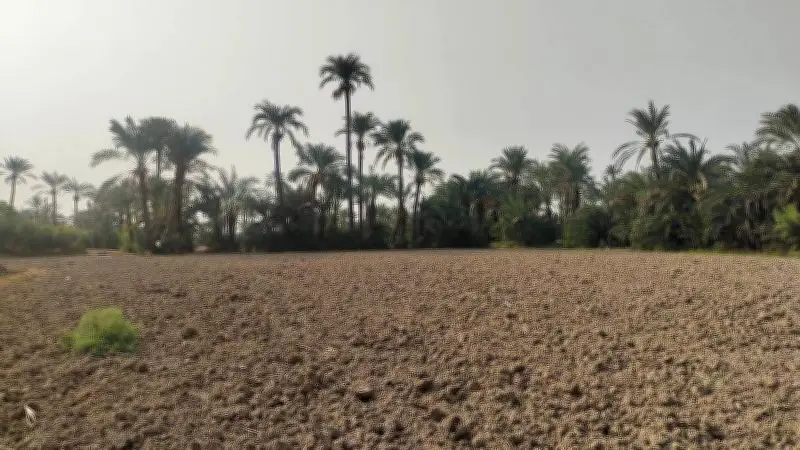
Every Pakistani farmer lives with uncertainty about the fate of their crops, the burden of fertiliser bills paid on credit, and sometimes praying for rain, other times hoping it does not rain. This is not a failure of individual resilience in the age of climate change; it is a policy failure, decades in the making. Climate shocks that used to happen once in a generation now arrive with a regularity that makes planning nearly impossible. And yet, Pakistan has almost nothing in place to financially protect its farmers when the worst happens.
The Cost of Policy Failure
The State Bank of Pakistan's latest report puts a number on what this failure has cost: nearly $59 billion in economic losses from climate disasters over the past three decades, $29.3 billion between 1992 and 2021, and then another $28 billion in a single year when the 2022 floods submerged a third of the country. That second figure exceeded the entire global disbursements of UN climate funds at the time. This past monsoon season, 2.23 million acres of cropland were destroyed, with $1.5 billion in agricultural damage in a single year. And this spring, eleven of fifteen major wheat-producing districts recorded rainfall between 100% and 350% above normal during the very weeks when wheat should have been harvested.
Disproportionate Burden on Pakistan
Pakistan emits less than 1% of global greenhouse gases. It is absorbing consequences far beyond its share. Agriculture employs 37% of Pakistan's workforce and contributes up to 24% of GDP. It also operates almost entirely without a financial safety net. When climate shocks hit, farmers do not respond by investing more carefully next season. They respond by disinvesting — selling livestock, withdrawing children from school, planting the following year with borrowed money and borrowed hope.

Wrong Policy Instruments
Governments have tried to address this, but through the wrong instruments. Support price announcements arrive after sowing decisions are made. Input subsidies appear after markets have already sent negative signals. Emergency cash transfers come months after the damage. In 2024–25, Punjab announced a wheat support price of Rs. 3,900 per 40 kg and then chose not to procure at that price at all, causing market prices to fall 30% below the announced floor. In 2025–26, the announced support price of Rs. 3,500 per 40 kg was below the estimated cost of production of Rs. 4,000–4,500 per 40 kg.
Experiments in countries like India have shown that price support mechanisms of this kind can paradoxically suppress farm-gate prices by incentivising farmers to sell simultaneously, creating a supply glut. The floor becomes the ceiling.
The Need for Pre-Season Risk Protection
The deeper problem is not the design of any particular scheme. It is that all of these instruments respond to losses after they happen. None of them changes what a farmer is willing to invest before a season begins. Farmers are often willing to invest and modernise, but they hesitate because a drought, flood, or other shock can wipe out their investment. Governments should therefore focus not only on providing loans but also on providing affordable crop insurance and risk protection, such as has been experimented with in other developing countries.
In Bangladesh, for instance, pre-season insurance bought before sowing increased fertiliser investment by 16% and household consumption by 8%, while post-disaster compensation reduced the consumption drop after a shock by 40%. Both effects matter, but the pre-season one is more important: a farmer who knows he/she is insured before planting invests differently from the outset. This is the mechanism that supports prices, and post-disaster transfers cannot replicate.
Low Insurance Coverage
Currently, less than 2% of Pakistan's cultivated area carries any crop insurance at all. A scheme launched in Punjab in 2018 under the Prime Minister's Agriculture Emergency Programme enrolled 500,000 farmers by 2022, which sounds significant until you note there are more than 4.5 million wheat farming households in Punjab alone. Private insurers often quote premiums which are entirely out of reach for a smallholder operating on margins of Rs. 500 to 2,000 per acre. This is a policy failure, not a market failure. The market is pricing a real risk. The question is who bears it.

Parametric Insurance as a Solution
Traditional indemnity insurance — where an adjuster visits the field after a loss — does not scale well in smallholder settings. What does scale is parametric or weather index insurance: payouts triggered by objective meteorological thresholds, such as district-level rainfall deviation from a long-run normal, rather than individual farm assessments. No adjuster required and no disputed claim. Payout within thirty days of a threshold crossing can be introduced.
Mexico's CADENA programme has operated this way for years. India's PMFBY scheme covered 41.9 million farmer applications in 2024–25 alone. Pakistan's own Meteorological Department already archives district-level dekadal rainfall data going back to 2000, which is sufficient for designing and pricing such a product.
Fiscal Arithmetic and Financing
The fiscal arithmetic is more favourable than it appears. The common objection is cost. But the comparison is rarely made. A parametric crop insurance scheme covering wheat, rice and cotton smallholders — roughly 25 million acres with an 80% premium subsidy for farmers with 25 acres or less — is estimated to cost between Rs. 90–100 billion per year, or roughly 0.33–0.37% of agricultural GDP. The 2025 floods caused $1.5 billion in agricultural damage in a single season. The scheme is not just affordable by comparison; it changes the damage equation prospectively.
There is also a financing route that can help the government avoid touching the domestic budget. Pakistan already has $304.2 million in approved projects under the Green Climate Fund. Similarly, the Fund for Responding to Loss and Damage, now operational following COP29, has already opened its first $250 million disbursement window. A country that contributed less than 1% of global emissions and absorbed nearly $30 billion in a single flood year has one of the strongest possible cases for accessing both instruments to finance farmer insurance premiums.
Three Steps for Change
Three things, done in sequence, could change Pakistan's agricultural risk landscape within two growing seasons. First, the National Disaster Risk Management Fund and the Ministry of National Food Security should commission an actuarial analysis now, engaging the World Bank's Global Index Insurance Facility to estimate trigger frequencies and actuarially fair premiums by crop and district using the existing Pakistan Meteorological Department–Climate Hazards Group InfraRed Precipitation with Station data set. Second, the Ministry of Climate Change should initiate Green Climate Fund and Fund for Responding to Loss and Damage funding applications, framing premium subsidies explicitly as climate adaptation instruments. Third, if national scale is not yet feasible, a pilot in the next season using land registry enrolment and the Benazir Income Support Programme digital payment system would generate the evidence needed for rapid scaling.
Pakistan's farmers already know the risk. The question is whether the state is willing to share it.