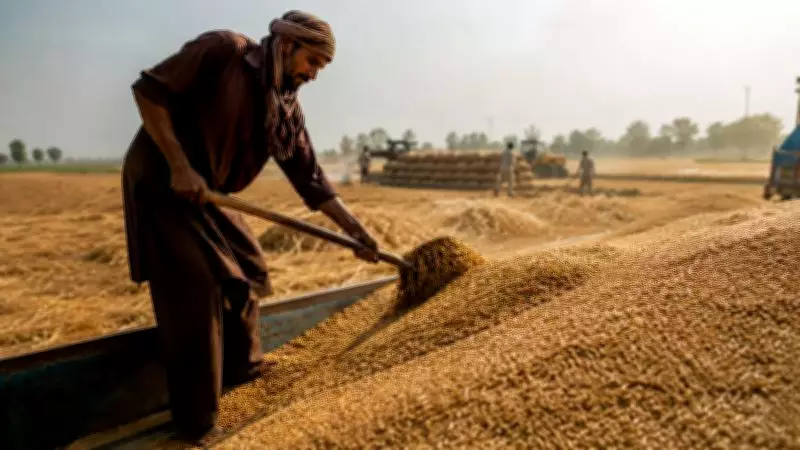
The 2026 harvest season in Pakistan has been a tale of two narratives: federal failure contrasted with provincial successes. While the federal government's agricultural policies have been criticized for inefficiency and lack of foresight, provincial governments have stepped up to fill the void, implementing localized strategies that have yielded positive results.
Federal Shortcomings
The federal government's approach to agriculture in 2026 has been marked by delays in subsidy distribution, inadequate pest control measures, and a lack of timely support for farmers. These failures have led to reduced crop yields in certain regions, particularly in areas heavily dependent on federal interventions. The absence of a coherent national policy has exacerbated the challenges faced by farmers, including water scarcity and rising input costs.
Impact on Key Crops
Wheat and rice production, two staple crops, have been significantly affected. Federal mismanagement of water resources and fertilizer subsidies has resulted in lower yields than anticipated. Farmers have reported difficulties in accessing credit facilities, further hampering productivity. The federal government's failure to address these issues has led to widespread discontent among the farming community.

Provincial Initiatives
In contrast, provincial governments have demonstrated proactive leadership. Punjab, Sindh, Khyber Pakhtunkhwa, and Balochistan have each implemented tailored programs to support their agricultural sectors.
Punjab's Success Story
Punjab has focused on modernizing farming techniques through the introduction of high-yield seed varieties and advanced irrigation systems. The provincial government has also facilitated farmer training programs, resulting in increased productivity and better crop management.
Sindh's Water Management
Sindh has prioritized water conservation and distribution, addressing long-standing issues of water scarcity. By upgrading canal systems and promoting drip irrigation, the province has improved water efficiency, leading to better harvests despite federal neglect.
Khyber Pakhtunkhwa's Organic Farming
Khyber Pakhtunkhwa has promoted organic farming practices, tapping into niche markets both domestically and internationally. This shift has not only improved soil health but also provided farmers with premium prices for their produce.
Balochistan's Resilience
Balochistan, despite its arid climate, has leveraged drought-resistant crops and community-based water harvesting techniques. Provincial support for these initiatives has helped stabilize agricultural output in challenging conditions.
Conclusion
The 2026 harvest season underscores the critical importance of effective governance in agriculture. While federal failures have hindered national progress, provincial successes offer a blueprint for future policy. The contrast highlights the need for a decentralized approach that empowers local governments to address region-specific challenges. Moving forward, a collaborative model that combines federal resources with provincial expertise could unlock Pakistan's full agricultural potential.