Serious concerns have emerged over deteriorating conditions in nearly 13,000 educational institutions across Punjab, including Rawalpindi district, which have been handed over to private management during the past two years under outsourcing and public-private partnership arrangements. According to education sector representatives, many of these schools are now facing an acute shortage of basic facilities, including electricity, water, furniture and other essential resources. Several outsourced schools have reportedly been abandoned altogether, with buildings locked and lying deserted.
Cost-Cutting Measures and Viral Incident
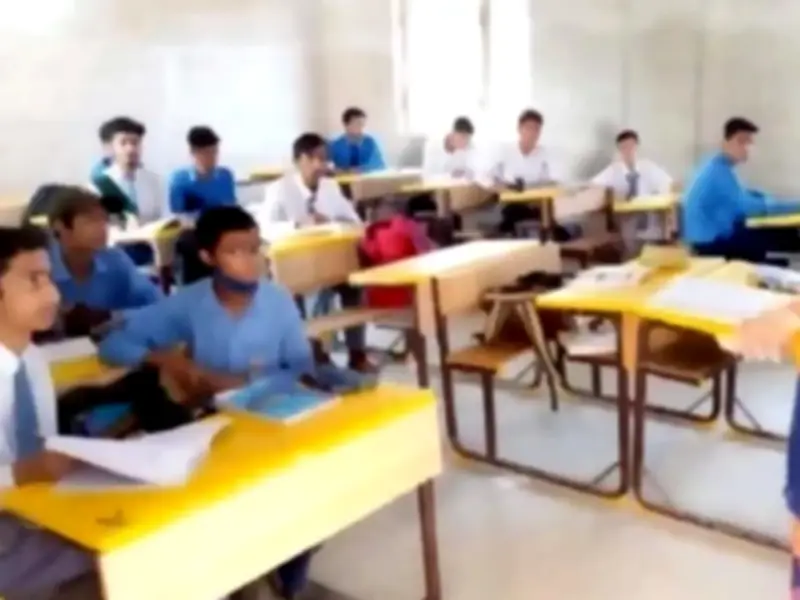
Complaints have intensified regarding cost-cutting measures adopted during school hours, including the switching off of electric fans to avoid high electricity bills. In one widely discussed incident at a school operating under a public-private partnership arrangement, management allegedly turned off ceiling fans during classes. A video of the incident went viral on social media, prompting the registration of an FIR against the school administration.
Union Leaders Highlight Widespread Issues
Muhammad Shafiq Bhalwalia, Secretary General of the Schools Education Pensioners Association, along with Punjab Teachers Union central president Ramzan Inqalabi and union leaders Bashir Warraich and Amjad Mahmood, stated that approximately 13,000 primary, elementary and high schools had been outsourced over the past two years. They claimed that many of these institutions were now struggling due to administrative difficulties and dilapidated infrastructure. They further alleged that when schools are transferred to private operators under partnership arrangements, female teachers possessing only matriculation or FA qualifications are often recruited on salaries ranging from Rs7,000 to Rs10,000 per month, while students are charged fees of around Rs1,500 each.

Violations of Employment Agreements
Union representatives also alleged widespread violations of employment agreements in outsourced schools. According to them, teachers are reportedly made to sign salary receipts showing payments of Rs17,000 per month, despite actually receiving only Rs7,000. Allegations of fake student enrolments have also surfaced. Education leaders warned that the continued transfer of public educational institutions into private hands amounts to closing the doors to free education. They argued that the policy is steadily destroying the dream of quality public education for children from poor families. They demanded an immediate halt to the privatisation of educational institutions, insisting that the provision of free education remains a constitutional and moral responsibility of the state.
Lack of Permanent Heads in Government Schools
Meanwhile, a total of 9,217 high and higher secondary schools are currently operating under the Punjab Education Department across Punjab, but the absence of permanent heads has severely affected the administrative and academic functioning of these institutions. No regular headmasters, headmistresses or principals have been appointed in government high and higher secondary schools for the past three years. Instead, schools are being run under an ad hoc arrangement merely to manage day-to-day affairs. Out of the 9,217 institutions, only 2,973 have permanent headmasters or principals, while 6,244 schools are functioning without regular heads. This means that nearly two-thirds of Punjab's high and higher secondary schools are operating without permanent administrative leadership. Although temporary and inexperienced acting heads have been assigned in some institutions, their appointments are also on an interim basis, further aggravating the situation.