When Christian Simpson, a retro gaming YouTuber known as Peri Fractic, acquired the remnants of the early PC company Commodore in 2025, he decided to continue where the original Commodore left off. This meant starting product development in the mid-1990s. Simpson and his team first focused on reviving the company's most iconic product. Today, you can purchase a Commodore 64 that closely resembles the 1982 original, albeit with Wi-Fi connectivity, USB ports, and other modern enhancements. This nostalgia-driven endeavor has proven successful, with Commodore reporting sales of 30,000 units since last year.
Entering the Mobile Phone Market
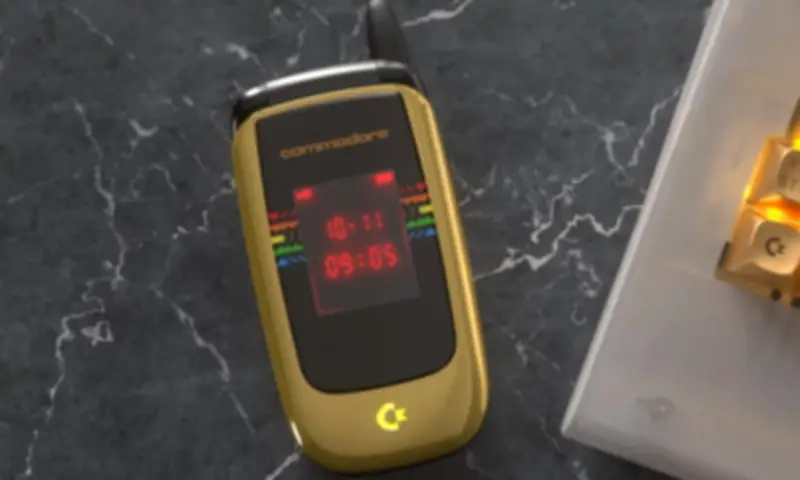
Following this success, the company turned to hypothetical scenarios. The early 2000s marked the dawn of the cellphone era, dominated by companies like Nokia. Simpson pondered what Commodore would have done in that era. He concluded they would have made a phone. "I think they would have followed Apple," Simpson said, "and ultimately released an iPhone. Or, at least, a phone. Every other company did." The new Commodore is now preparing to ship a phone the original company never envisioned: the Callback 8020, a flip phone starting at $499.
With features and colors reminiscent of the early 2000s, Simpson hopes to capitalize on gadget nostalgia while addressing a modern problem: excessive phone usage. The Callback 8020 is not designed to be a powerhouse of computing hardware. It features a 3.25-inch, 480x640 internal screen, a MediaTek Helio G81 processor, 4GB of RAM, 64GB of storage, a headphone jack, and an FM radio antenna. The specifications suggest a slower performance, aligning with its philosophy of simplicity.

Philosophy and Features
Philosophically, the Callback 8020 resembles devices like the Light Phone, aiming to strike a balance between essential features and minimalism. "This is really the phone between dumb and smart," Simpson explained. The device blocks social media and web browsers entirely, preventing access to servers like Facebook's. Running on Jolla's privacy-focused Sailfish operating system, it can technically run most Android apps. However, Commodore plans to implement an allow-listing system where users can request Android apps to be added to the Callback's store, with AI and human reviewers deciding acceptability. Sideloading remains an option for other apps. Simpson is open to adding apps like Uber and Spotify but intends to exclude time-wasting apps like Slack and Gmail.
Commodore envisions the Callback as a nights-and-weekends phone for escaping work apps and notifications. The phone is designed to be quieter, featuring five colored LEDs that glow for notifications instead of buzzing. The outer screen displays only the time, date, battery level, and connectivity status. Users can take photos with a 48-megapixel camera, send messages via voice or T9 typing, listen to music through an audiophile-grade DAC and included headphones, make calls, and little else.
Pricing and Availability
The standard Callback model comes in beige, white, and silver. A translucent blue model is available for $549.99, and a gold "Founders Edition" for $640. Commodore plans to start shipping by the end of the year. Simpson expressed confidence despite shrinking RAM and component supplies. "We've built in a buffer to the pricing," he said. "And if we don't use that buffer, it allows us to offer a discounted launch price instead." While the starting price is high for a second phone, Commodore's timing aligns with growing interest in smartphone alternatives and Y2K nostalgia. Perhaps Commodore's time has come again.