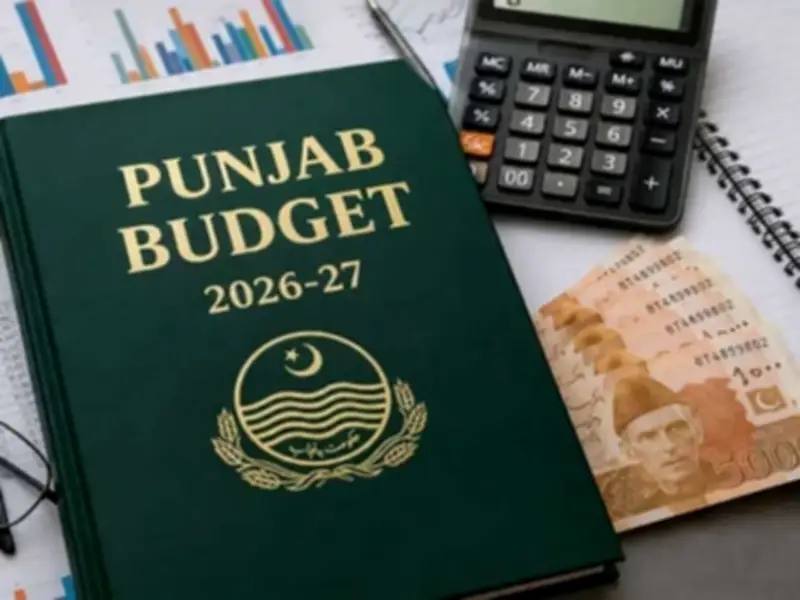
The Punjab government has entered the final phase of preparations for its fiscal year 2026-27 budget, which is expected to be presented on June 8. The upcoming budget is likely to prioritize development projects, infrastructure, digital transformation, and public welfare, with significant allocations proposed for both urban and rural areas.
Budget Size and Development Outlay
According to government sources, the total size of the Punjab budget is expected to be close to Rs6 trillion, making it one of the largest budgets in the province's history. Development spending is set to receive special emphasis, with an initial development outlay of approximately Rs1.45 trillion under consideration. Officials indicated that the allocation could rise to nearly Rs1.5 trillion if additional financial resources become available.
Under proposals submitted by the Planning and Development Board, around Rs980 billion may be allocated for the core development programme, Rs320 billion for other development schemes, and Rs150 billion for foreign-assisted projects.

Sectoral Allocations
The education sector is expected to receive between Rs650 billion and Rs750 billion, including more than Rs500 billion for school education. The health budget may be increased to around Rs420 billion, with substantial funding proposed for the upgrading of public hospitals, procurement of medicines, modern medical equipment, and healthcare initiatives.
Salary and Pension Increases
Sources said the government is considering a 10 percent increase in salaries for public sector employees, while pension increases ranging between 5 and 10 percent are also under discussion. A proposal to raise the minimum wage in Punjab is likewise expected to form part of the budget package.
Welfare Initiatives
Large allocations are also expected for flagship welfare initiatives of Chief Minister Maryam Nawaz Sharif, including the laptop scheme, Asaan Karobar programme, and Green Tractor Scheme. The government is also planning to expand the Suthra Punjab programme and youth employment and skills development initiatives.
Infrastructure and Agriculture
Infrastructure development will remain a major focus area, with significant spending proposed for roads, bridges, mass transit systems, and clean drinking water projects. The agriculture sector is also expected to benefit from farmer support packages, agricultural subsidies, solarisation of tube wells, modern seed programmes, and incentives aimed at boosting wheat and cotton production.
Local Government and Fiscal Targets
Sources indicated that up to Rs850 billion could be transferred to local governments and district-level development projects. Meanwhile, the provincial government is expected to maintain a fiscal surplus of between Rs700 billion and Rs850 billion in line with IMF-related commitments. More than Rs500 billion is likely to be earmarked for debt servicing and pension obligations. The government has simultaneously initiated austerity measures during the budget preparation process.