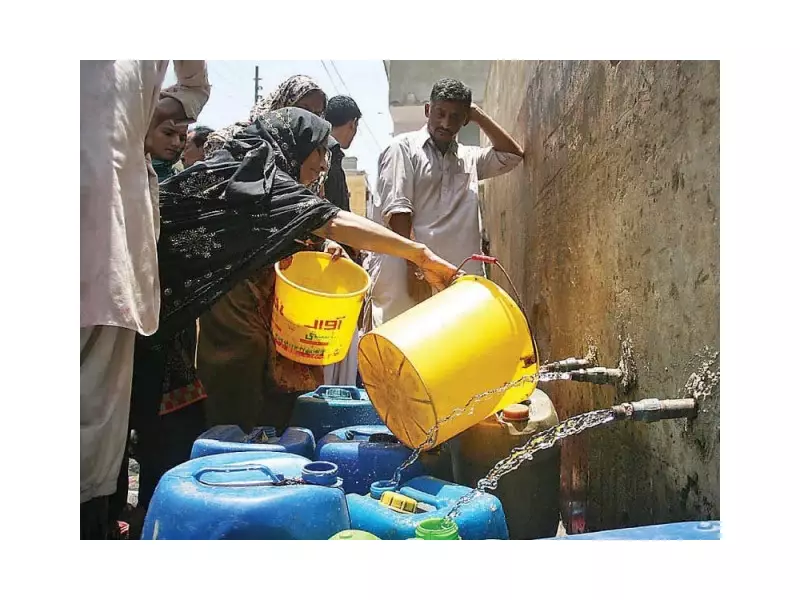
For nearly two decades, Karachi has been grappling with a severe and worsening water shortage. The city's hopes for relief are pinned on the long-awaited K-IV mega water supply project, which remains incomplete due to persistent delays, funding shortfalls, and a lack of coordination between federal and Sindh authorities.
Project Delays and Skyrocketing Costs
The ambitious K-IV project promises to deliver an additional 260 million gallons of water per day (MGD) to Karachi's thirsty populace. However, its journey has been marred by setbacks. Originally initiated in 2016 by the Sindh government and the Karachi Water and Sewerage Corporation (KWSC) with a budget of Rs25 billion and a two-year timeline, the project soon stalled. Design flaws and mismanagement led to work stopping in 2018 after only 20% completion.
In 2021, the federal government handed over the project to the Water and Power Development Authority (WAPDA), which undertook a complete redesign. Construction resumed in 2022 with a target of December 2025. However, progress has been sluggish. A WAPDA official, speaking anonymously, revealed that while about 65% of the work is done, funding delays are a major hurdle. The federal government released far less than the required Rs40 billion for the current fiscal year, with total releases standing at Rs85 billion to date.

The financial picture has darkened considerably. The combined cost of K-IV's four components was initially estimated at Rs253 billion. The main component—transporting water from Keenjhar Lake to Kathore—has seen its cost revised from Rs126 billion to a staggering Rs170 billion due to rising material prices. This revision awaits federal approval. If approved, the total project cost will inflate to Rs297 billion.
Karachi's Parched Reality and Other Components
The urgency of the project is underscored by Karachi's dire water situation. The city's demand stands at 1,200 MGD, but it receives only 650 MGD from the Indus River and Hub Dam. No additional quota has been secured, even as demand surges. The existing supply is further diminished by tanker operations, groundwater extraction, system leakages, and industrial use before it reaches residential areas.
Beyond the main conduit, three other components under the Sindh government's oversight are in various stages:
- The Rs71-billion K-IV Augmentation Plan, a bulk distribution system, began in November after a two-year delay.
- The Rs40-billion KB Feeder Lining Project, rehabilitating a canal from the Indus to Keenjhar Lake, is 30% complete with a June 2027 deadline.
- A critical Rs16-billion power supply project by the Sindh Transmission and Dispatch Company has not started due to withheld funds, threatening the entire project's operation.
Revised Deadlines and Calls for Urgency
WAPDA's General Manager South and Project Director, Amir Mughal, claims the funding issue is now being addressed. Federal allocations have been increased from Rs3.2 billion to Rs8.25 billion, and the Sindh government is expected to release its pending Rs8.5 billion share. Mughal states the project is now expected to be completed by December 2026.
However, internal assessments are less optimistic. While 2027 is the official deadline for water to reach households, a lack of urgency could push final completion to 2030. For the millions of Karachi residents who have waited twenty years for a reliable water supply, any further delay prolongs a daily crisis that shows no sign of abating.