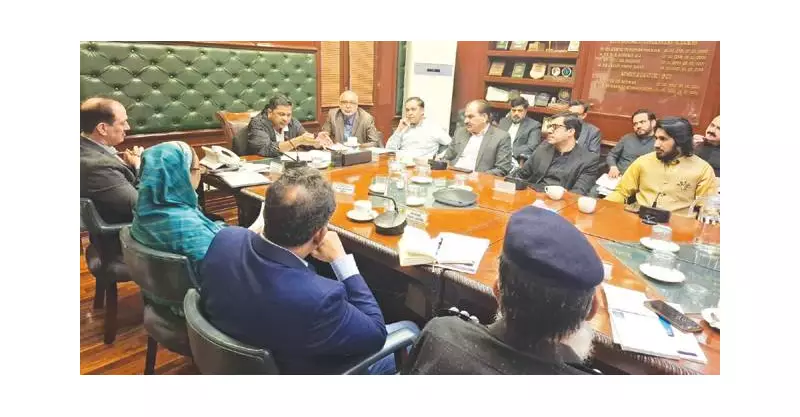
In a significant move to address the chronic issues plaguing Karachi's logistics and traffic flow, a high-level meeting chaired by Commissioner Syed Hassan Naqvi resulted in several key decisions aimed at providing relief to goods transporters and streamlining city traffic.
High-Level Gathering to Address Transport Crisis
The meeting saw participation from a wide array of senior officials and stakeholders. Notable attendees included Additional IG Police Karachi Azad Khan, Transport Secretary Asad Zamin, and DIG Traffic Syed Pir Muhammad Shah. Representatives from the Provincial Transport Authority, Excise Department, and major transport alliances like the Pakistan Goods Transport Alliance and Karachi Goods Carrier Association were also present, underscoring the meeting's importance.
Key Decisions for Traffic Management and Transporter Relief
The forum made concrete decisions on multiple fronts. To directly combat traffic accidents and congestion, the DIG Traffic was instructed to ensure strict enforcement of traffic laws. The most notable infrastructural decision was the allocation of a dedicated HTV lane for heavy vehicles on the crucial route from Mai Kolachi to Qayyumabad Bridge.

Lane-marking for this project will begin immediately. Once operational, heavy traffic will be restricted to this lane with a enforced speed limit of 30 km/h. Furthermore, the meeting pledged comprehensive efforts to resolve long-standing problems faced by transporters, including:
- Acute parking problems across the city.
- Issuance of HTV licences.
- Streamlining registration for vehicle insurance.
- Exploring the development of a proposed terminal for transporters.
Focus on Vehicle Fitness and Passenger Safety
Beyond immediate traffic concerns, the discussion also covered critical safety issues. The problems related to vehicle fitness and the lack of insurance for vehicles and bus passengers were thoroughly debated. It was decided that the relevant authorities would formally approach the government to consider proposals for initiating comprehensive insurance schemes for both commercial vehicles and their passengers, aiming to enhance public safety.
The collective resolve from this high-powered meeting indicates a targeted approach to untangling some of Karachi's most persistent logistical and traffic nightmares, promising a coordinated effort between civic authorities, police, and the transport industry itself.