Karachi's Gul Plaza Inferno Exposes Systemic Fire Safety Failures
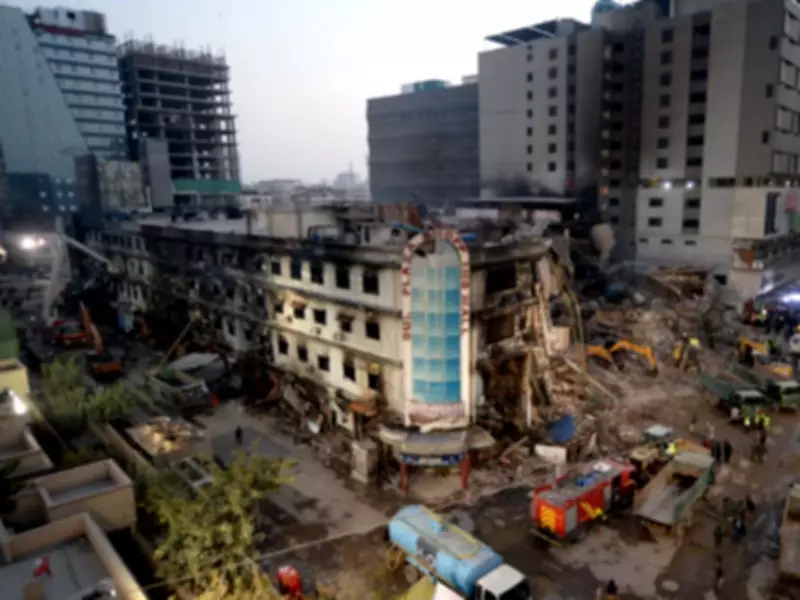
Located in the bustling heart of Karachi, Gul Plaza stood for decades as a three-story shopping mall where generations found everything from imported crockery to the perfect pair of sandals. Last month, however, this commercial landmark made headlines for all the wrong reasons when a catastrophic fire ripped through the complex on the night of January 17. The blaze reduced the structure, which once housed approximately 1,200 small and large shops, to ashes and smoke-blackened rubble, claiming 80 lives with many individuals still reported missing.
Anatomy of a Tragedy
While preliminary investigations suggest the fire originated from minors at a shop selling artificial flowers, deeper findings reveal that a lack of functional fire exits and the extreme density of shoppers and stalls crammed into the building significantly worsened the situation. Rescue workers took at least 10 painstaking days to comb through the remains of the 70,000 square-foot complex, originally constructed in the 1980s. This prolonged operation has raised serious questions about urban governance, fire safety protocols, and emergency rescue capacity in Pakistan's largest metropolitan area.
Urban planners are now warning that this blaze—the deadliest fire incident in over a decade—represents just the tip of the iceberg. They fear that Karachi, home to over 20 million residents, might experience another similar catastrophe unless immediate preemptive measures are implemented. The megapolis comprises hundreds of shopping centers similar to Gul Plaza, alongside numerous residential and commercial high-rises, with alarmingly few equipped with proper fire safety mechanisms.

Systemic Vulnerabilities and Governance Gaps
A revealing 2023 fire safety audit conducted by the Sindh government found that only 6% of buildings in the city's three major commercial centers possessed adequate fire safety systems. The report urgently recommended implementing fire safety regulations in remaining structures, but these warnings went largely unheeded. "Karachi is vulnerable to such incidents simply because of a string of issues related to unplanned urbanisation, densification, overpopulation and a lack of handling and rescue capacity," stated Amber Alibhai, secretary general of Shehri-Citizens for a Better Environment, a prominent non-governmental organization.
Alibhai further observed that increasing housing demand and the non-implementation of building and fire safety regulations have made buyers vulnerable to illegal constructions where "fire safety is not a priority." She emphasized that lax building laws often allow these hazardous constructions to be regularized afterward, calling for greater transparency in all commercial and residential construction approvals and a firm stance against approving illegal structures.
Expert Analysis and Recommendations
Veteran architect Arif Hasan identified several key factors behind massive losses in fire incidents across Karachi and other major cities:
- Lack of comprehensive urban planning
- Inadequate maintenance and monitoring of structures
- Non-implementation of existing fire regulations
"Fires do and can occur anywhere in the world. The issues are their frequency, government's rescue capacity and the extent of human losses," Hasan told media outlets. He advocated for a holistic approach encompassing proper planning, regular maintenance and monitoring, and strict implementation of fire safety standards, including modern firefighting mechanisms, to significantly mitigate disaster impacts.
"No new building should be handed over to the developer unless it meets all the fire safety regulations, whereas the government must ensure that existing structures, particularly high-rises, follow safety regulations," Hasan added emphatically.

Political Fallout and Governance Challenges
The Gul Plaza tragedy, the worst fire incident since the 2012 Baldia factory fire that claimed 289 lives, has highlighted significant governance gaps, placing the Pakistan People's Party (PPP), which has ruled Sindh province since 2008, under considerable pressure. Opposition parties in Karachi, including Pakistan Tehreek-e-Insaf and Muttahida Quami Movement-Pakistan, along with affected shopkeepers, have accused authorities of failing to launch timely rescue and firefighting operations that could have saved lives and contained the blaze.
While the provincial government and Karachi Mayor Murtaza Wahab denied these allegations, they acknowledged the general lack of safety standards throughout the metropolis. In response, Sindh Chief Minister Syed Murad Ali Shah has issued an ultimatum to government offices, private enterprises, and high-rise buildings to implement fire safety standards immediately. Social media footage has shown government officials visiting congested markets and buildings, urging owners to clear illegally occupied pathways and adopt proper fire safety mechanisms.
Crippled Firefighting Infrastructure
Official statistics reveal that approximately 1,700 fire incidents, mostly small-scale, were recorded across Karachi last year alone. The city's firefighting capabilities remain critically inadequate, with only about 1,000 trained firefighters available against an internationally recommended requirement of 15,000 to 20,000 personnel.
The Karachi Metropolitan Corporation (KMC) operates with severely limited resources:
- Just 30 fire stations for the entire sprawling metropolis
- Only 57 fire trucks and six ladder trucks
- Several fire engines non-operational for years
These numbers fall far below global safety standards, which recommend one fire station per 100,000 people. Compounding these deficiencies, former chief fire officer Ishtiaq Ahmed Khan revealed that Karachi lacks even a single dedicated water hydrant for fire brigade use. Although the KMC maintains underground water tanks in several areas, chronic water shortages have rendered them dry for years.
"A fire engine has to travel an average six to eight miles to fetch water while maneuvering through jam-packed roads before reaching the fire sight," Khan explained. "It gets even worse during peak hours."
Demoralized Personnel and Institutional Neglect
According to Khan, who retired in December 2024, the city's firefighting force numbers barely 700 personnel, many lacking proper protective gear such as helmets. Furthermore, fire service personnel have not received risk allowances for several years, significantly affecting morale. "They feel demoralised because of the current state of affairs," Khan stated bluntly.
"I can tell you that fire brigade has never been a priority for KMC officials. They do not even bother to look at the files concerned," he added, highlighting institutional neglect. Alibhai echoed this sentiment, criticizing prevailing attitudes toward safety: "Authorities and the people in general do not take fire safety seriously. It’s a mindset."
The Gul Plaza tragedy serves as a stark reminder of the urgent need for comprehensive reforms in urban planning, strict enforcement of building codes, enhanced rescue capabilities, and a fundamental shift in safety consciousness to prevent similar disasters in Pakistan's largest and most vibrant city.