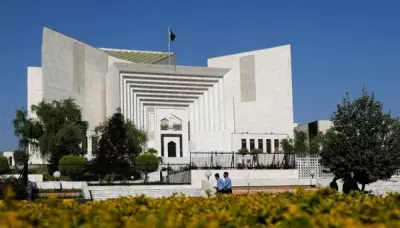
In a significant political development, opposition members of the Khyber Pakhtunkhwa Assembly, led by Pakistan Tehreek-e-Insaf (PTI), have mounted strong resistance against the federal government's reported plan to impose governor's rule in the province. The move has sparked a fresh constitutional and political confrontation between the center and the opposition.
Assembly Session Erupts in Protest
The issue came to the forefront during a session of the provincial assembly held on Monday. Opposition lawmakers vocally condemned the alleged plan, framing it as an undemocratic maneuver to undermine the elected provincial government. The session witnessed heated exchanges as members from the treasury benches also engaged in the debate, reflecting the heightened political tensions surrounding the issue.
The opposition's stance was clear and unified: any attempt to invoke Article 234 of the Constitution to impose governor's rule would be vehemently opposed. They argued that the provincial government is functioning effectively and that no constitutional grounds exist for such an extreme measure. The opposition views the plan as politically motivated, aimed at destabilizing PTI's governance in KPK.

The Constitutional and Political Battle Lines
At the heart of the dispute lies Article 234, which allows the imposition of governor's rule—officially called provincial government's failure of constitutional machinery—under specific circumstances. The opposition contends that the current situation in KPK does not meet the stringent criteria outlined in the constitution for such an action.
Key opposition figures, including PTI's parliamentary leader, articulated that this move represents a blatant overreach by the federal government. They warned that imposing governor's rule would set a dangerous precedent for provincial autonomy and disrupt the democratic process. The debate has thus shifted beyond immediate politics to encompass broader principles of federalism and constitutional integrity.
Implications and the Road Ahead
This strong opposition from within the KP Assembly signifies a major roadblock for the federal government's reported strategy. It demonstrates that the plan would face not only legal challenges but also significant political pushback, potentially escalating into a wider crisis.
The unfolding situation puts the role of the provincial governor and the federal cabinet under intense scrutiny. Political analysts suggest that the government may now have to reconsider its approach, as forcing the issue could lead to prolonged instability. The opposition has signaled its intent to use all parliamentary and legal avenues to thwart the plan, promising a continued standoff.
As the dust settles from Monday's tumultuous session, all eyes are on Islamabad's next move. The outcome of this clash will have profound implications for the balance of power between the center and the provinces, and for the political landscape of Khyber Pakhtunkhwa in the days to come.