Poland's Democratic Crossroads: A Victory That Raised New Questions
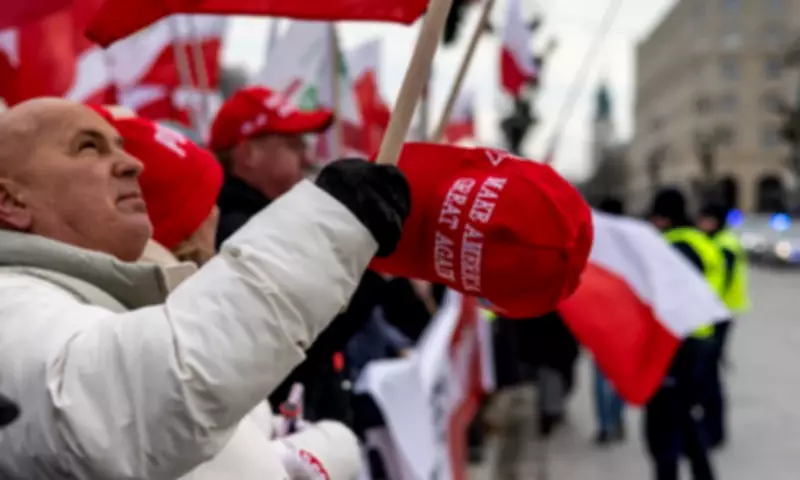
In October 2023, Poland witnessed a seismic political shift when voters decisively ousted the conservative Law and Justice Party after eight years of democratic erosion. The election, which saw a record 74 percent turnout, brought to power a coalition of center-left, far-left, and agrarian parties. For activists like 24-year-old Dominika Lasota, who had protested against the previous government's policies, the moment was both triumphant and anxious.
"We met together an hour before the results and sat down on the couch and stared at the TV," Lasota recalled. "We were all like: 'We're either going to drink a lot of hard alcohol later for the bad reasons, or we're going to run to the streets for the good reasons.'" That night, they celebrated in the streets, but the celebration masked a deeper uncertainty about what would come next.
The Roots of Democratic Backsliding
To understand Poland's current predicament, one must look back to its transition from Soviet rule in 1989. For decades, Poland enjoyed a stable democracy with independent institutions, free media, and regular elections. However, a tragic event in 2010 set the stage for change. The plane crash near Smolensk, Russia, which killed President Lech Kaczyński and other leaders, spawned conspiracy theories that were embraced by his twin brother, Jarosław Kaczyński, co-founder of the Law and Justice Party.

Riding a wave of populist and anti-elite sentiment, the party won the 2015 elections and quickly moved to consolidate power. They packed courts with partisan judges, targeted women's groups, sued independent media, and transformed state television into a propaganda tool. While these actions drew criticism, they didn't trigger a sustained crisis until 2020, when the party pushed through a near-total abortion ban via the courts, bypassing the legislature.
This move proved to be a critical miscalculation. Tens of thousands of Poles, including Lasota, took to the streets in protest, laying the groundwork for the massive mobilization that would eventually topple the government in 2023.
The Liberal Coalition's Catch-22
Despite their electoral victory, Poland's new liberal government quickly found itself in a difficult position. As political scientist Ben Stanley noted, unwinding authoritarian harm "quickly, effectively, and legally" is nearly impossible. The coalition faces a stark choice: follow democratic norms and proceed slowly, or act swiftly and risk mirroring the illiberal tactics they opposed.
In December 2023, the government attempted to reclaim control of state media by firing staff and temporarily pulling a news channel off-air—actions that drew international criticism for their heavy-handedness. Moreover, the coalition has struggled to articulate a positive political vision beyond opposing Law and Justice. Notably, the strict abortion ban that sparked protests remains in place, and in 2025, populist candidate Karol Nawrocki narrowly defeated liberal Rafał Trzaskowski in the presidential election.
"Somehow the people who vote for populists do not have that many qualms," Trzaskowski observed. "They do not ask themselves so many questions... whereas our side is always prevaricating, asking questions."
Lessons for Democracy's Future
Poland's experience offers a tentative yet hopeful lesson: democratic backsliding is not irreversible, and authoritarian-leaning governments can be voted out. However, the reversal is only the beginning of a longer, messier process of restoration. Lasota's candid admission—"We were absolutely clueless"—highlights the challenges liberals face when taking power after an authoritarian regime.
The story underscores that repairing a democracy requires more than just electoral victory; it demands careful navigation of legal and ethical boundaries to avoid perpetuating the very problems one seeks to solve. For observers in other nations, including the United States, Poland's journey serves as a reminder that safeguarding democracy is an ongoing struggle, fraught with complexities and no easy answers.