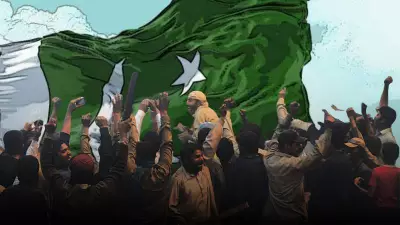
The dramatic, youth-driven uprising that forced the end of Sheikh Hasina Wajed's lengthy tenure has created a rare and uncertain political opening in Bangladesh. Hasina's departure to India, following sustained demonstrations, marked more than a personal defeat; it represented the collapse of a governance system built on historical legacy, patronage networks, and coercion rather than genuine public support.
A Legacy of Growth Without Inclusion
For nearly two decades, Bangladesh under Hasina's Awami League posted strong economic numbers. The country saw notable export growth, major infrastructure developments, better human development scores, and praised macroeconomic stability. However, this economic progress failed to strengthen democracy. Elections turned into heavily contested formalities, opposition voices were stifled, media faced pressure, and state institutions like the judiciary and election bodies became politicized.
The regime governed through intimidation more than persuasion, using the liberation legacy of Sheikh Mujibur Rahman as a shield while eroding its pluralist core. Political dissent was framed as disloyalty, and competition was treated as a threat. This mix of historical claim and forceful control created a stability lacking public trust and growth that excluded many.

The Generational Revolt and the New Political Landscape
The movement that broke this order was not ideological but generational. Bangladesh's Generation Z—urban, digitally savvy, and globally conscious—rebelled not against development but against political exclusion. Their core demands were democratic dignity, a voice, and participation. The challenge now is turning this moral force into a lasting political structure.
The interim government in Dhaka faces the huge task of organizing credible elections in a fractured environment. The youth leaders have formed a political party, moving from protest to politics, but they lack the electoral machinery of established groups.
The Bangladesh Nationalist Party (BNP), long sidelined, has re-emerged as a major contender. The death of Khaleda Zia closed an era, but the return of her son, Tarique Rahman, from exile has energized the party. Its nationwide organization is a key advantage.
More significant is the return of Jamaat-e-Islami. Once banned, its disciplined cadre, madrassa networks, and loyal voter base give it outsized electoral clout. Meanwhile, the Awami League, though weakened, retains a base built on liberation symbolism and years of patronage.
The role of the Bangladesh Army adds complexity. Its intervention helped end Hasina's rule, boosting its image as a stabilizer. For democracy to succeed, the military must now step back to its constitutional role.
Regional Powers Vie for Influence
External forces are intensely focused on this transition. India, which held major sway under Hasina, has lost its privileged position. It is now pragmatically engaging with the BNP, seen as an electorally viable force, to protect its interests in border stability and limiting outside influence.
China is pursuing a long-term, economic strategy. By offering infrastructure projects and investment under the Belt and Road Initiative, Beijing aims to be a steady partner regardless of who governs, using economic statecraft for leverage.
Pakistan is actively capitalizing on the thaw in relations with Dhaka. Engagement has deepened, notably in defence. The recent visit of Bangladesh's Air Chief to Pakistan and discussions around procuring JF-17 Thunder fighter jets signal a potential qualitative shift in defence ties and Bangladesh's desire to diversify its strategic partnerships.
This geopolitical courtship highlights a central truth: Bangladesh's transition is happening under a powerful regional spotlight. The interim and future governments must manage these external relationships without letting them distort domestic agendas or compromise sovereignty.

A Familiar South Asian Crossroads
Bangladesh's situation mirrors broader South Asian patterns where democratic transitions often stall. Sri Lanka's protests ousted leaders but not the system; Nepal's post-monarchy politics remains unstable; Pakistan's democracy swings between civilian rule and institutional imbalance. The lesson is clear: removing a ruler is easier than reforming the structures that enable power concentration and external dependence.
Bangladesh now stands at a decisive point. The fall of an entrenched regime has reopened democratic space, but it is fragile and contested. The true test is twofold: whether transparent elections and restrained institutions can turn popular hope into representative governance, and whether the new order can maintain strategic autonomy amid fierce regional rivalry. With prudence and political humility, this youth-led revolt could become a democratic renewal. Without it, Bangladesh risks another unfinished transition in South Asia's troubled political landscape.