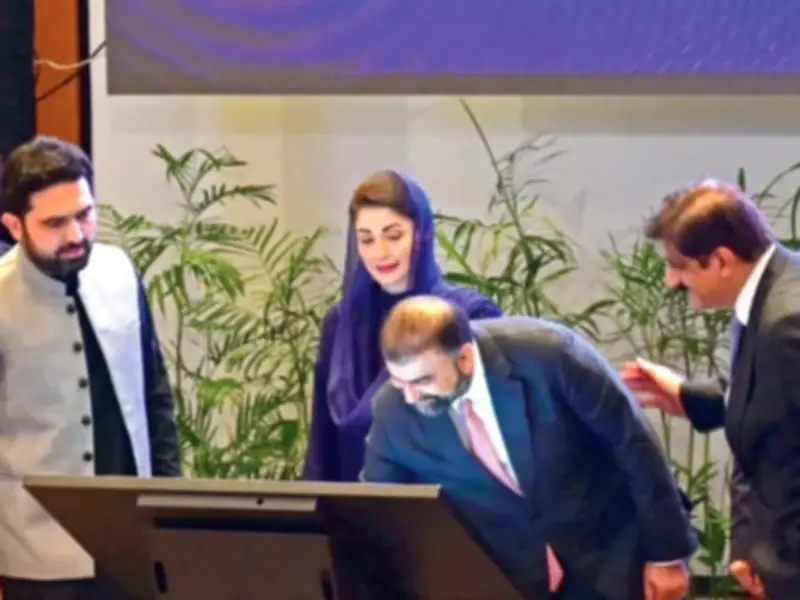
The National Judicial (Policy Making) Committee (NJPMC) conference, intended to address Pakistan's prison system challenges, was dominated by political rhetoric on Thursday as chief ministers of Punjab and Khyber-Pakhtunkhwa used the forum to highlight the plight of political prisoners rather than propose concrete remedies for overcrowded jails.
Conference Concludes with Islamabad Declaration
The conference ended with all four provincial governments endorsing the Islamabad Declaration, pledging coordinated reforms to ease overcrowding, improve prison conditions, and strengthen rehabilitation. In his keynote address, Chief Justice of Pakistan Yahya Afridi noted that prisons reflect the criminal justice system's pulse and emphasized that meaningful reform requires shared institutional responsibility and sustained provincial leadership. He welcomed the collective commitment to advancing the NJPMC's National Prison Reform Action Plan.
Political Prisoners Take Center Stage
Despite the chief justice's success in bringing all four chief ministers together, the conference did not address concerns surrounding political prisoners. Khyber-Pakhtunkhwa Chief Minister Sohail Afridi highlighted former prime minister Imran Khan's hardships in jail, urging the chief justice to intervene. Punjab Chief Minister Maryam Nawaz recounted her own imprisonment during the PTI government, describing the hardships she endured.

Notably, Federal Constitutional Court Chief Justice Aminuddin Khan and Islamabad High Court Chief Justice Sardar Sarfraz Dogar did not attend. Former federal minister Fawad Chaudhry, who spent months in jail, dismissed the Islamabad Declaration as a media exercise lacking seriousness and substance. "It contains broad promises but no specific actions, timelines, accountability, or implementation mechanism," he said, adding that Pakistan already has numerous reports and laws, but enforcement is poor.
Khyber-Pakhtunkhwa CM's Plea for Imran Khan
Sohail Afridi said his government is building waiting areas for visitors outside prisons and urged similar arrangements at Adiala Jail for PTI workers. He also requested that water cannons not be used against Imran Khan's sisters during visits. Expressing concern over Khan's health, Afridi claimed 85% of vision in one of his eyes had been affected and requested access to personal doctors, regular family meetings, and video calls with his sons. He stated that the Khyber-Pakhtunkhwa government extends similar facilities to prisoners in the province.
Afridi criticized restrictions on public gatherings, noting that while assemblies are permitted in a democracy, FIRs are registered against participants, including terrorism charges against underage PTI supporters. He concluded that prison reforms should begin with Adiala Jail.
Maryam Nawaz's Personal Account
Maryam Nawaz reflected on her imprisonment, saying it profoundly shaped her outlook on reform. She recalled the pain of separation while incarcerated with her father, during which her mother became seriously ill. "For days, neither of us could speak to her. We could not sit beside her, hold her hand, or comfort her in her final moments. She left this world while we remained behind prison walls," she said. Maryam stated that she now stands not only as chief minister but as someone who has experienced incarceration firsthand.
She noted that Punjab operates one of the country's largest prison systems, with 45 prisons housing over 69,000 inmates against an authorized capacity of around 39,000. Nearly three-fourths of inmates are undertrial prisoners. "Prison reforms cannot be pursued in isolation; they must go hand-in-hand with broader criminal justice reforms," she said. Her government has introduced emergency call buttons and alarm systems in prison cells across Punjab, ensuring inmates can call for immediate assistance. Maryam also revealed she experienced solitary confinement during her imprisonment.

Islamabad Declaration Commitments
Law Minister Azam Nazeer Tarar read the Islamabad Declaration, which outlines seven key commitments. The chief ministers affirmed that prison reform is a constitutional, humanitarian, and public safety imperative. Commitments include reducing unnecessary incarceration, especially of undertrial prisoners, by strengthening bail, legal aid, probation, parole, and non-custodial alternatives; reviewing provincial laws to align with constitutional and human rights standards; improving prison conditions through investment in infrastructure, sanitation, nutrition, healthcare, and safeguards against torture; promoting rehabilitation through education, vocational training, and post-release support; strengthening coordination across the criminal justice system; establishing provincial implementation mechanisms with time-bound plans; and reporting regularly to a national coordination mechanism.