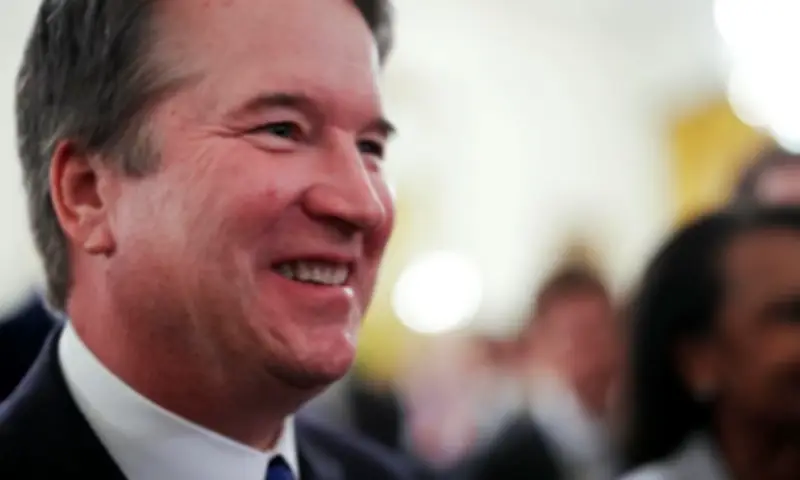
Justice Brett Kavanaugh, a Republican appointee known for his conservative leanings, has authored a significant Supreme Court opinion advancing racial justice in jury selection. In the case Pitchford v. Cain, decided on Thursday, Kavanaugh enforced protections against racial discrimination in jury selection that he first proposed nearly four decades ago as a law student.
The 5-4 decision ruled in favor of Terry Pitchford, a Mississippi death row inmate, finding that prosecutors improperly excluded Black jurors from his trial. The ruling enforces the three-step process established in Batson v. Kentucky (1986), which prohibits removing jurors based on race. Kavanaugh's opinion requires that defense counsel be given an opportunity to rebut prosecutors' race-neutral explanations for striking jurors, a position he advocated in a 1989 Yale Law Journal note.
Background of the Case
In Pitchford's trial, prosecutors used peremptory challenges to remove four of five potential Black jurors. Defense counsel raised Batson objections, but the trial judge never allowed them to rebut the prosecution's explanations. Kavanaugh wrote that this violated the mandatory third step of Batson, stating that defense counsel must have an opportunity to argue that the reasons were pretextual.

Dissenting Opinion
Justice Neil Gorsuch, joined by three other Republican appointees, dissented, arguing that Pitchford waived his Batson claim by not raising it with sufficient detail. Kavanaugh countered that defense counsel preserved the objection and the trial judge even assured them it was preserved.
The case was complicated by the Antiterrorism and Effective Death Penalty Act of 1996, which sets a high bar for federal challenges to state convictions. Despite this, Kavanaugh's majority found that the state court's decision was an unreasonable application of federal law.
This victory for criminal defendants highlights how long-held views can influence judicial outcomes, even in a conservative-leaning Court.