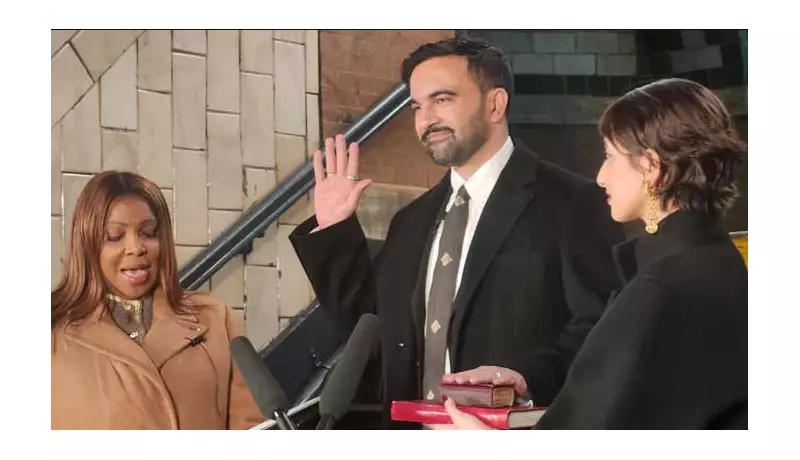
New York City has entered a new chapter in its political history with the inauguration of Zohran Kwame Mamdani as its 110th mayor. The swearing-in ceremony, held on January 1, 2026, marked a historic milestone as Mamdani became the first Muslim to ever lead America's most populous city.
A Historic Oath and a Diverse Background
The ceremony was a moment of profound significance, not just for the city but for communities across the United States. Zohran Kwame Mamdani, at 33 years old, took the oath of office, pledging to serve all New Yorkers. His background is a tapestry of diverse influences that reflect the city's own multicultural identity.
Mamdani is the son of renowned academic Mahmood Mamdani and filmmaker Mira Nair. He was raised in both Kampala, Uganda, and New York City, giving him a unique global perspective. His educational journey took him from the United Nations International School to Wesleyan University, and later to the London School of Economics for a master's degree in comparative politics.

From Community Organizer to City Hall
Before his historic mayoral victory, Mamdani's career was deeply rooted in public service and advocacy. He did not follow a traditional political path but instead built his foundation in grassroots work.
He served as a housing counselor at the Chhaya Community Development Corporation in Queens. In this role, he worked directly with South Asian and Indo-Caribbean communities, helping residents fight evictions, secure affordable housing, and navigate the complexities of homeownership. This frontline experience with some of the city's most pressing issues shaped his political vision and policy priorities.
His foray into electoral politics began in 2020 when he was elected to represent the 36th District in the New York State Assembly. His platform has consistently focused on progressive causes, including housing justice, healthcare for all, and robust climate action.
The Significance and the Path Forward
The election of Zohran Mamdani as mayor sends a powerful message about inclusion and representation in American politics. New York City, with its long history as a gateway for immigrants, now has a leader whose personal story embodies that legacy. His victory is seen as a breakthrough, challenging historical barriers and inspiring a new generation of diverse political candidates.
As he assumes office, Mayor Mamdani faces immediate and formidable challenges. The city continues to grapple with an affordable housing crisis, economic inequality, and the ongoing task of post-pandemic recovery. His administration's approach to these issues, informed by his community organizing past, will be closely watched by both supporters and critics.
His swearing-in is more than a change of personnel; it is a symbolic shift for a global metropolis. It underscores the evolving demographics and political aspirations of urban America. The world will be watching to see how this historic mayor governs one of the planet's most influential cities.