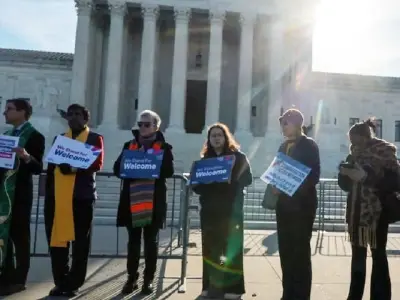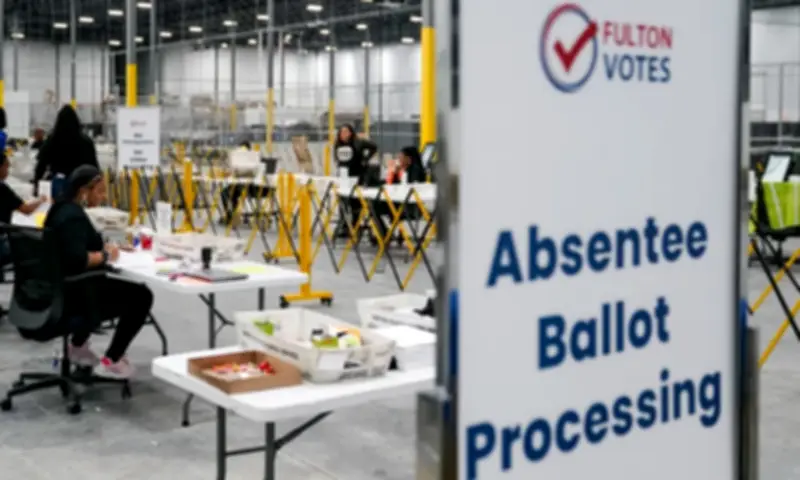
The Supreme Court on Wednesday rejected a Republican-backed lawsuit that sought to invalidate thousands of absentee ballots arriving after Election Day, ruling that federal laws setting the election date do not require states to discard late-arriving mail-in votes. The 5-4 decision, with Chief Justice John Roberts joining the three Democratic-appointed justices and Justice Amy Coney Barrett writing the majority opinion, affirmed Mississippi's five-day grace period for absentee ballots mailed before Election Day.
Case Background and Legal Challenge
The lawsuit, Watson v. Republican National Committee, argued that three 19th-century federal laws—the 1845 law setting House elections, and similar statutes for Senate and presidential elections—require all ballots to be received by Election Day. The Republican Party and the Libertarian Party of Mississippi claimed that Mississippi's law allowing ballots mailed by Election Day to arrive up to five days later violated these statutes. Mississippi is one of 30 states with such grace periods.
Justice Barrett's majority opinion rejected this interpretation, stating that the federal laws set the day when voters must cast their ballots, not the deadline for election officials to receive them. She noted that other federal laws, such as the Uniformed and Overseas Citizens Absentee Voting Act, explicitly defer to state deadlines for absentee ballot receipt. "When Congress set the day for the election, it set the day when the electorate must make its choice," Barrett wrote. "The ministerial task of gathering ballots is not part of that choice."

Historical Precedent and State Practices
The opinion highlighted that states have counted late-arriving absentee ballots for over a century without legal challenge. During the Civil War, Nevada and Rhode Island collected soldiers' ballots on Election Day and counted them after arrival. In the 1940s, seven states enacted laws allowing late-arriving ballots, and no one challenged them under the election-day statutes. "For more than a century, states across the country have read the federal law, concluded that it permits late-arriving ballots to be counted, and enacted laws that said as much," Barrett wrote.
The majority also noted that if the Republican Party believed Mississippi's law was bad policy, it could lobby Congress or the state legislature to change it. The question before the Court was whether federal law preempted state law, not whether the state law was wise.
Dissenting Opinion and Warning
Justice Samuel Alito, joined by Justices Clarence Thomas, Neil Gorsuch, and Brett Kavanaugh, dissented. Alito argued that the election-day statutes required all ballots to be gathered by Election Day, as was the practice before the Civil War when voting occurred in person. He warned that counting late-arriving ballots could lead to candidates who were behind in early returns winning, potentially eroding public confidence in elections. Alito cited concerns about fraud, though he offered no evidence of widespread fraud in Mississippi's system.
Barrett responded that Alito's reasoning would freeze election practices in the 19th century, outlawing early voting and other modern conveniences. "Alito's argument boils down to a claim that because we are governed by 19th-century election-day laws, we are also governed by 19th-century voting practices," she wrote.
Political Implications and Institutional Concerns
The case highlighted the partisan divide on the Court. The majority included Chief Justice Roberts and Justice Barrett, both appointed by Republican presidents, but they sided with the three Democratic appointees. The four dissenters were all Republican appointees. Legal experts noted that the case should never have reached the Supreme Court, as the lower courts unanimously rejected the GOP's argument. The fact that four justices signed onto the dissent, despite the lack of legal support, raised concerns about the Court's politicization.

"The premise of this lawsuit is that because the Republican Party controls six seats on the Supreme Court, it could simply ask the justices to implement their preferred rules for federal elections, and the Court would do so regardless of whether there is any legal support for the GOP's position," the majority opinion stated. The decision serves as a warning of what could happen if President Donald Trump replaces another justice, potentially cementing a conservative majority willing to overturn long-standing election practices.