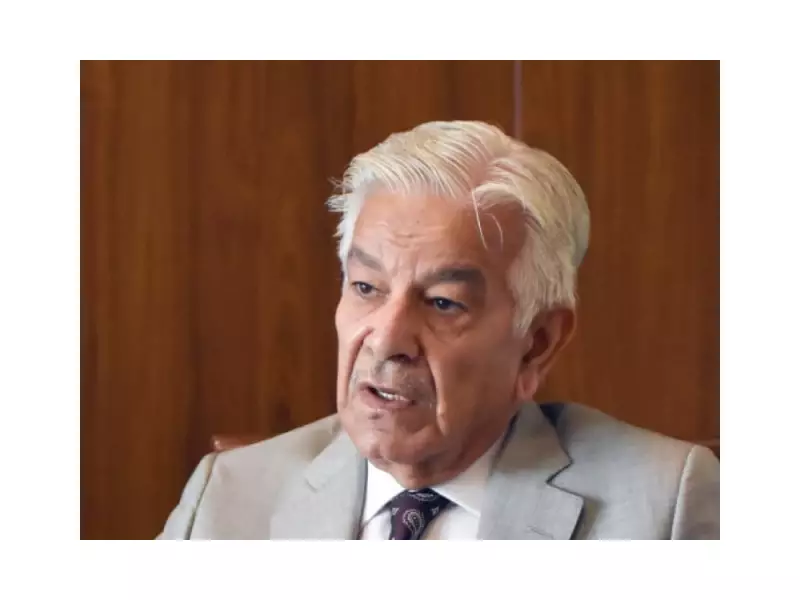
In a powerful statement resonating across political circles, Pakistan's Defense Minister Khawaja Asif has declared the nation's unwavering determination to defeat Taliban militants, asserting that Pakistan will "set an example for the world" if necessary.
The minister's bold declaration comes amid escalating tensions along the Pakistan-Afghanistan border, where terrorist elements have increasingly threatened regional stability. "We can defeat Taliban," Asif stated emphatically, highlighting the government's resolve to protect national interests and citizen safety.
Cross-Border Warning Issued
During his address, the defense minister issued a stern warning regarding cross-border militant activities. He emphasized that Pakistan possesses both the capability and political will to confront security challenges head-on, regardless of their origin or backing.

"Our patience should not be mistaken for weakness," Asif cautioned, signaling a potential shift in Pakistan's counter-terrorism strategy. The statement suggests Islamabad may be preparing for more aggressive measures against terrorist sanctuaries operating from neighboring territories.
Regional Implications and Global Message
The minister's words carry significant weight in regional geopolitics, particularly as Afghanistan continues to grapple with governance challenges under Taliban rule. Asif's declaration positions Pakistan as ready to take independent action against security threats, potentially altering the dynamics of counter-terrorism efforts in South Asia.
Key aspects of the minister's address include:
- Pakistan's readiness to conduct unilateral operations against terrorist elements
- A clear message to international stakeholders about Pakistan's security priorities
- Reaffirmation of the country's right to self-defense against cross-border terrorism
- Potential escalation in counter-terrorism measures if current threats persist
This development marks a crucial moment in Pakistan's ongoing battle against extremism, with the defense minister's statements indicating a possible new chapter in the nation's security policy approach.