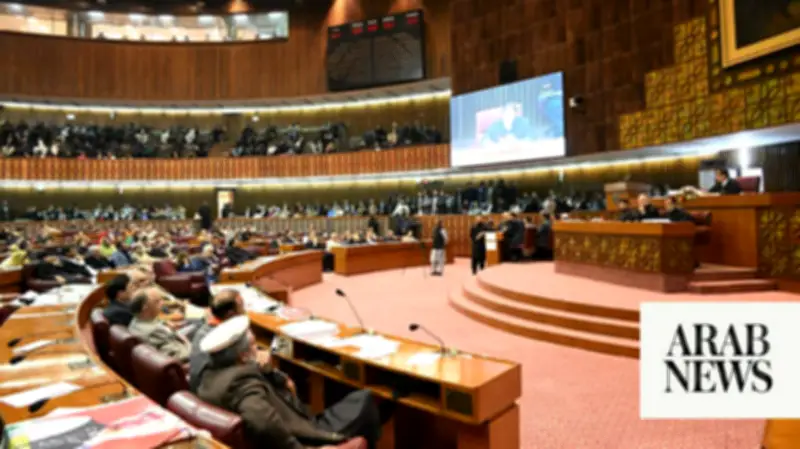
Pakistan's National Assembly on Tuesday approved the federal budget for fiscal year 2026-27 by passing the finance bill through a voice vote after days of parliamentary debate on the country's economic priorities and fiscal plans. The bill gives effect to the federal budget presented by Finance Minister Muhammad Aurangzeb on June 10, which proposes an outlay of Rs18.77 trillion ($67.5 billion), targets economic growth of 4 percent and inflation of 8.2 percent, and seeks to balance fiscal consolidation with development spending under an ongoing International Monetary Fund-supported reform program.
Finance Minister Moves Bill for Passage
“Mr. Speaker, I beg to move that a bill to give effect to the financial proposals of the federal government for the year beginning on the 1st day of July 2026 and to amend certain laws, the Finance Bill 2026, be passed,” Aurangzeb told the house before the vote. National Assembly Speaker Sardar Ayaz Sadiq then put the motion before lawmakers. “All those in favor of it may say aye,” he said. “All those against it may say no.” After conducting the voice vote, the speaker declared the bill approved. “I think ayes have it. Consequently, the motion is adopted and the bill is passed,” he said.
Parliamentary Debate Highlights Economic Priorities
The passage of the bill followed several days of debate in the National Assembly, during which treasury and opposition lawmakers discussed taxation measures, federal spending priorities, economic growth prospects and the distribution of resources between the federal government and provinces. The debate also focused on the government's decision to rely on provincial funds to help meet fiscal and defense-related requirements while remaining on track under a $7 billion IMF program.

Defense Spending Increased Amid Security Concerns
Pakistan increased defense spending by about 18 percent in the budget following last year's military confrontation with India and ongoing security concerns along its western border with Afghanistan. Some lawmakers, however, argued that repeated reliance on provincial funds could constrain development spending and public services at the local level. The government has projected a fiscal deficit of 3.6 percent of gross domestic product in the coming fiscal year and set an ambitious revenue collection target as it attempts to strengthen public finances and sustain macroeconomic stability.
Following the passage of the Finance Bill, Sadiq adjourned the National Assembly. “The House is adjourned to meet again on Wednesday, 24th June, at 11 a.m.,” he said.