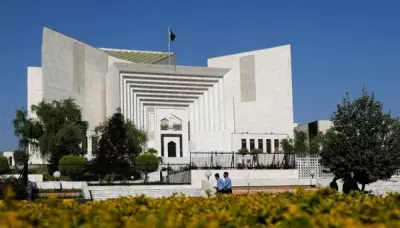
The Sindh High Court is currently hearing a significant constitutional petition that challenges the recently passed Sindh Local Government Act, raising serious questions about its compliance with the spirit of Pakistan's Constitution.
Constitutional Petition Challenges New Legislation
A constitutional petition filed by Muzamil Mumtaz and others has brought the Sindh Local Government Act under judicial scrutiny. The petitioners argue that the new legislation fundamentally contradicts Article 140-A of the Constitution, which explicitly mandates the devolution of political, administrative, and financial responsibility to elected representatives at the local level.
The legal challenge contends that instead of empowering local governments, the act concentrates power with provincial authorities. This centralization of authority, according to the petitioners, represents a significant step backward in Pakistan's democratic development and undermines the constitutional vision of grassroots governance.

Key Legal Arguments and Concerns
The petition outlines several critical areas where the Sindh Local Government Act allegedly violates constitutional principles. Legal experts supporting the petition emphasize that the act fails to establish genuine local self-government as envisioned by the Constitution's framers.
Among the primary concerns raised is the limited authority granted to local representatives in crucial areas such as taxation, development planning, and service delivery. The petitioners argue that without meaningful financial and administrative autonomy, local governments cannot effectively address community needs or promote participatory development.
The legislation has been criticized for creating a system where local bodies exist in name only, lacking the substantive power necessary to function as true instruments of local governance. This arrangement, according to constitutional experts, defeats the very purpose of establishing local government systems.
Broader Implications for Provincial Governance
The outcome of this constitutional challenge could have far-reaching consequences for governance structures across Sindh province. A ruling against the legislation might force provincial authorities to reconsider their approach to local government and undertake substantial revisions to align with constitutional requirements.
Legal observers note that this case represents a critical test for constitutional governance in Pakistan, particularly regarding the implementation of devolution principles. The judiciary's interpretation of Article 140-A could establish important precedents for future local government legislation not only in Sindh but potentially in other provinces as well.
The petition has attracted attention from governance experts and civil society organizations who view it as a landmark case in Pakistan's ongoing struggle to establish effective local governance systems. Many see the case as pivotal for determining whether provincial governments will honor the constitutional commitment to meaningful devolution.
As the Sindh High Court continues its deliberations, all stakeholders await a judgment that could reshape the landscape of local governance in Pakistan's second-most populous province. The decision is expected to clarify the constitutional boundaries within which provincial legislatures must operate when designing local government systems.