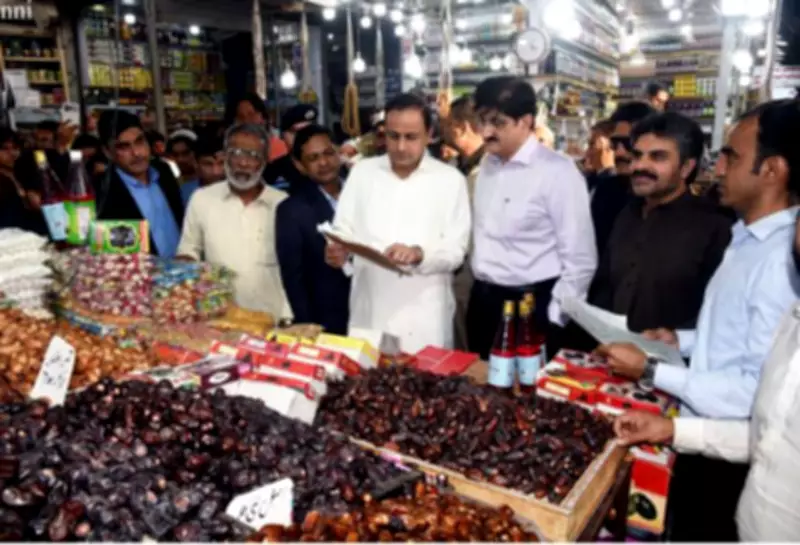
Sindh Chief Minister Conducts Surprise Market Inspection to Enforce Ramazan Price Controls
Sindh Chief Minister Syed Murad Ali Shah undertook an extensive and unannounced visit to key commercial hubs in Karachi on Thursday, personally overseeing the implementation of official price lists for essential food items during the holy month of Ramazan. The chief minister was accompanied by a high-level delegation including Provincial Minister Nasir Shah, Special Assistant Usman Hingoro, Mayor Murtaza Wahab, Parliamentary Secretary Dr. Bahadur Dahri, and Commissioner Karachi Hassan Naqvi.
Direct Engagement with Shopkeepers and Consumers at Burns Road
The inspection commenced at the bustling Burns Road area, where Chief Minister Shah meticulously examined prices of cooked food, fruits, and daily-use edibles. He scrutinized rate lists displayed at various shops and stalls, engaging in direct conversations with both shopkeepers and customers to gather firsthand feedback. "Prices of food items and fruits must strictly follow the officially notified rates," the chief minister asserted, emphasizing that overcharging during Ramazan was "absolutely intolerable."
During his walkthrough, Chief Minister Shah paused at a Dahi baray shop, purchasing the item at Rs 600 per kilogram. He expressed surprise upon discovering jalebi being sold at Rs 1,200 per kilogram. Commissioner Karachi clarified that while most items have fixed official prices, jalebi currently falls outside the notified price category. Despite the shopkeeper's initial reluctance to accept payment, the chief minister insisted on paying the full amount, setting an example of compliance.

Goodwill Gestures and Hands-On Observations
In a notable display of public engagement, Chief Minister Shah spent considerable time interacting with traders and shoppers, even posing for selfies with citizens. He stepped behind a shop counter to observe buying and selling practices firsthand, demonstrating his commitment to transparency. As a gesture of goodwill, he provided Rs 5,000 to a person with disabilities to assist in purchasing iftar items for their family.
Empress Market Inspection and Price Verification
The chief minister then proceeded to Empress Market, where he was warmly welcomed by shopkeepers. He cross-checked fruit rate lists at stalls against actual selling prices, uncovering instances where vendors were selling below official rates. At one fruit cart, berries were officially priced at Rs 120 per kilogram but were being sold at Rs 100 per kilogram. The vendor explained that prices had been reduced as the time for breaking the fast approached.
Chief Minister Shah also inquired about the prices of apples and pomegranates, which were being sold at Rs 265 and Rs 300 per kilogram, respectively. He reviewed price lists for dates at dry fruit shops and inspected vegetable prices, noting that bottle gourd was selling at Rs 58 per kilogram, brinjal at Rs 52 per kilogram, and carrots at Rs 46 per kilogram. A spokesperson confirmed that all stalls had displayed rate lists as required.
Assurance of No Harassment and Infrastructure Review
During interactions, the chief minister asked vendors whether they faced any harassment from authorities, to which shopkeepers replied, "No one troubles us." He also inspected the Karachi Metropolitan Corporation's Price Complaint cell at Empress Market and reviewed the under-construction meat market. Mayor Murtaza Wahab briefed him on the progress of restoration and rehabilitation work at the facility.
Strict Warning Against Profiteering
Concluding the visit, Chief Minister Shah reiterated that the provincial government would not tolerate profiteering or exploitation of consumers during Ramazan. He directed the administration to remain vigilant and responsive to public complaints, ensuring strict enforcement of price controls to protect citizens from inflationary pressures.