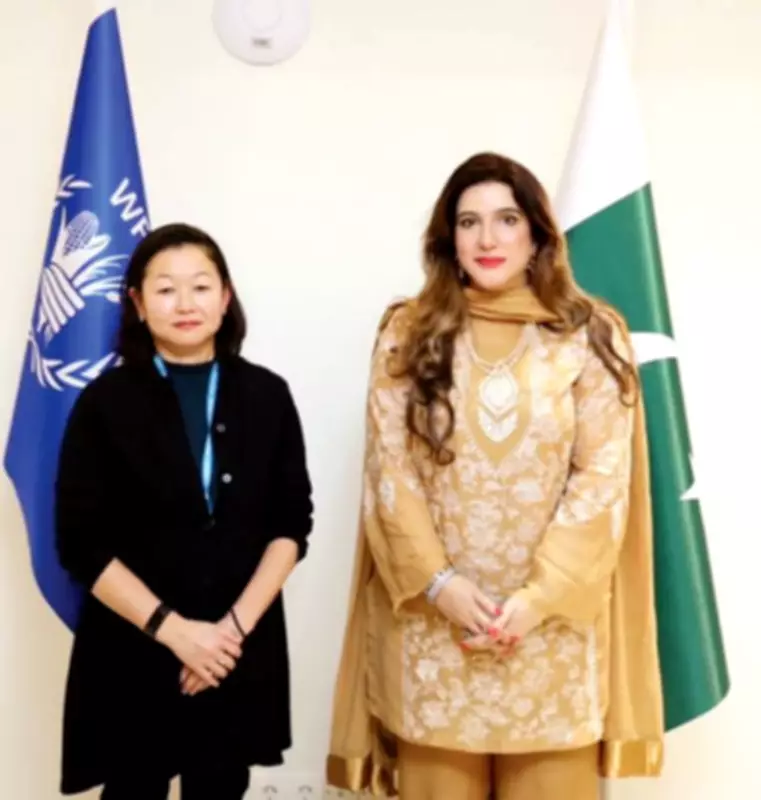
In a significant development for social welfare initiatives, Vice Chairperson of the Punjab Social Protection Authority (PSPA), Jahan Ara Manzoor Wattoo, convened a pivotal meeting with Coco Ushiyama, the Country Director of the United Nations World Food Programme (WFP), in Islamabad. This high-level engagement aimed to fortify the existing partnership between the two organizations, with a particular focus on enhancing social protection mechanisms across Punjab province.
Strengthening Institutional Collaboration
The discussions centered on reviewing key initiatives and exploring new avenues for institutional synergy. Both parties deliberated on arrangements for signing a landmark Memorandum of Understanding (MoU), which is expected to formalize and expand their collaborative efforts. This MoU is poised to mark a major milestone in reinforcing Punjab's social protection framework, ensuring more coordinated and effective interventions.
Unified Platform for Social Programs
During the meeting, Vice Chairperson Jahan Ara Manzoor Wattoo emphasized that the PSPA was established to consolidate all social protection programs in Punjab under a single, unified platform. This strategic move is designed to streamline service delivery, minimize duplication of efforts, and address existing coverage gaps. By bringing various initiatives together, the authority aims to enhance efficiency and ensure that assistance reaches the most vulnerable populations in a timely and dignified manner.

Flagship Programs Making an Impact
Vice Chairperson Wattoo highlighted several flagship programs under the PSPA that are currently being implemented successfully across the province. These include:
- Zewar-e-Taleem Program: Focused on educational support.
- Aaghosh Program: Aimed at early childhood development.
- Khud Mukhtar Program: Empowering individuals through self-reliance initiatives.
- Nai Zindagi Program: Providing new opportunities for marginalized communities.
- Ba-Himmat Buzurg Program: Supporting elderly citizens.
- Masawaat Program: Promoting equity and inclusion.
These programs are making a meaningful impact on the lives of vulnerable and marginalized groups, demonstrating the PSPA's commitment to social welfare.
Longstanding Partnership and Climate Resilience
The meeting also recalled the longstanding collaboration between PSPA and WFP, which has included joint work on insurance-related social protection studies. Recently, this cooperation has been further strengthened under a global initiative focused on protection against climate-related risks. This highlights the evolving nature of their partnership, adapting to contemporary challenges such as climate change.
Future Directions: Disaster Risk Financing
Looking ahead, both sides agreed to deepen their collaboration by linking social protection systems with disaster risk financing mechanisms. This involves exploring pre-arranged financial protection solutions to respond effectively to floods, droughts, and other emergencies. The goal is to establish a resilient and adaptive social protection system in Punjab that can withstand and recover from various shocks.
Enhancing Service Delivery and Accountability
Vice Chairperson Wattoo noted that the partnership with WFP will enable PSPA to leverage expertise in several critical areas, including:
- Research and Programme Design: Developing evidence-based interventions.
- Data Systems: Improving information management for better decision-making.
- Grievance Redressal Mechanisms: Ensuring transparency and accountability.
- Monitoring Frameworks: Tracking progress and outcomes effectively.
These enhancements are expected to ensure that service delivery is transparent, equitable, and accountable, ultimately improving the quality of life for vulnerable populations.

Commitment to Sustainable Interventions
At the conclusion of the meeting, both PSPA and WFP reaffirmed their determination to advance sustainable, inclusive, and impactful social protection interventions in Punjab under the proposed MoU. This commitment is aimed at not only strengthening the province's social protection system but also fostering long-term resilience and well-being for its most at-risk communities.