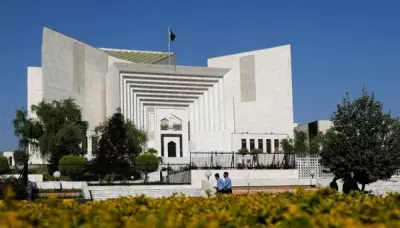
In a significant development for Pakistan's judicial system, the Judicial Commission of Pakistan (JCP) has given its formal approval for the appointment of three new judges to the Islamabad High Court (IHC). The pivotal meeting, which took place on Monday, was chaired by Chief Justice of Pakistan Qazi Faez Isa.
Commission Endorses Three Nominees
The commission, after thorough deliberation, approved the elevation of three distinguished legal professionals to the bench of the Islamabad High Court. The approved nominees are Advocate Mohsin Akhtar Kayani, Advocate Tariq Mehmood Jahangiri, and District & Sessions Judge Saman Fahim. Their appointments are set to fill existing vacancies and bolster the judicial capacity of the capital's high court.
The meeting saw the participation of key members of the country's top judicial body. Alongside Chief Justice Isa, the session was attended by senior puisne judge Justice Syed Mansoor Ali Shah, Federal Law Minister Azam Nazeer Tarar, Attorney General for Pakistan Mansoor Usman Awan, and a representative from the Pakistan Bar Council. The inclusion of the law minister and the attorney general underscores the collaborative nature of this constitutional process.

The Nomination and Approval Process
The process for these appointments was initiated based on recommendations forwarded to the JCP. It is reported that the Chief Justice of the Islamabad High Court, Justice Aamer Farooq, had proposed a panel of names for consideration to fill the vacant posts. The Judicial Commission, exercising its constitutional mandate, reviewed the proposed candidates before arriving at its final decision to approve the three judges.
This step is a crucial part of the procedure outlined in the Constitution of Pakistan for the appointment of superior court judges. The JCP's approval is the primary hurdle, after which the nominations will be sent to the Parliamentary Committee for further scrutiny and final confirmation.
Strengthening the Capital's Judiciary
The appointment of three new judges is expected to significantly enhance the functioning of the Islamabad High Court. The IHC holds a unique position as the high court for the federal capital territory, handling a wide array of constitutional, federal, and local matters. An increased number of judges will help in reducing case backlogs and ensuring speedier justice for the residents of Islamabad.
The diversity in the professional backgrounds of the appointees is also notable. While two are seasoned advocates with extensive practice, the third is a senior member of the district judiciary. This blend of experience from both the bar and the bench is often seen as beneficial for the overall perspective of the court.
The final step in the process now involves the Parliamentary Committee on the appointment of judges. If the committee agrees with the JCP's recommendations, the appointments will be finalized, and the new judges will assume their responsibilities at the Islamabad High Court. This development is being closely watched by legal circles as a move to ensure the judiciary is fully staffed and capable of meeting its demanding workload.