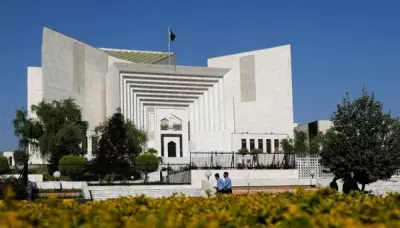
In a significant ruling, the Supreme Court of Pakistan has granted bail to a woman arrested for the alleged murder of her four-year-old stepson. The court delivered sharp criticism of the handling of the case, noting that such investigations are often compromised by the actions of both the complainant and the police.
Bench Observations and Bail Arguments
A three-judge bench, led by Justice Jamal Khan Mandokhail and including Justice Mussarat Hilali and Justice Malik Shahzad Ahmad Khan, heard the petition on Tuesday. The accused's lawyer, Zulfiqar Bhutta, presented a forceful defense. He argued that no eyewitness or concrete evidence connected his client to the crime. Bhutta also informed the court of two critical facts: the accused had given birth while in custody, and the deceased child had a history of asthma.
Contrasting this, the counsel for the complainant—the child's father—claimed the boy was in good health when left at home. Upon returning, he discovered the body. He alleged that the accused, his second wife, poisoned and strangled the child due to a domestic dispute.

Judicial Scrutiny of the Evidence
Justice Mussarat Hilali pointed to the medical report, which indicated the death was not natural. However, Justice Malik Shahzad Ahmad Khan raised a pivotal question: How could it be conclusively established that the stepmother was the perpetrator? He expanded on this, stating a common pattern where "half the case is ruined by the complainant and the other half by the police," weakening the prosecution's position from the outset.
After considering arguments from both sides, the bench approved bail for the accused woman. The case was originally registered against her at the Nankana Sahib Police Station on May 26.
Implications of the Ruling
This decision underscores ongoing concerns within Pakistan's judicial system regarding the quality of criminal investigations. The Supreme Court's remarks highlight how procedural and evidentiary shortcomings can critically undermine serious cases, even those involving grave charges like murder. The ruling emphasizes the necessity for robust, impartial evidence collection to ensure justice is served.