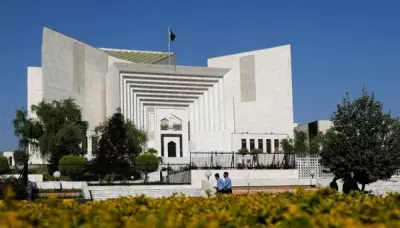
In a landmark decision that clarifies the taxation powers of local authorities, Pakistan's Supreme Court has definitively ruled that cantonment boards lack the legal authority to impose taxes on properties owned by the federal government.
Legal Battle Reaches Conclusion
The apex court's verdict came during proceedings where it was established that cantonment boards, which function as local government entities in military cantonments, cannot levy taxes on assets and buildings that belong to the federal government. This ruling settles a long-standing legal ambiguity that has persisted between local cantonment authorities and federal institutions.
Constitutional Clarity on Taxation Powers
The court emphasized that the constitutional framework clearly distinguishes between the taxation jurisdiction of local bodies and the protected status of federal properties. This decision reinforces the principle that federal assets enjoy immunity from local taxation, ensuring that government operations and resources remain unaffected by municipal tax demands.

Implications for Government Operations
This ruling has significant implications for numerous federal departments and institutions operating within cantonment areas across Pakistan. It provides legal protection against what many federal entities had described as unauthorized tax impositions that were affecting their operational budgets and financial planning.
Background of the Dispute
The legal confrontation emerged when several cantonment boards attempted to extend their taxation net to include federal government properties within their jurisdictions. Federal authorities challenged these moves, arguing that such taxation exceeded the legal mandate of cantonment boards and violated established constitutional principles.
Broader Impact on Local Governance
While this decision limits the revenue-generating capacity of cantonment boards regarding federal properties, it provides much-needed clarity on the boundaries of local taxation authority. The ruling is expected to influence similar disputes between local bodies and provincial or federal government entities nationwide.
The Supreme Court's definitive stance on this matter establishes an important precedent that will guide future interactions between local government bodies and federal institutions, ensuring that taxation powers are exercised within clearly defined legal parameters.