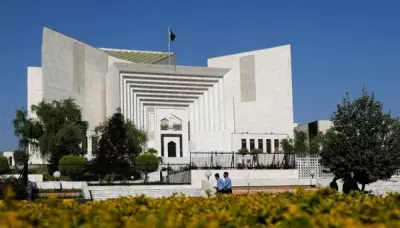
Supreme Court Declares CNIC Blocking for Court Decrees Unconstitutional
The Supreme Court of Pakistan has issued a landmark ruling, stating that blocking a citizen's Computerized National Identity Card (CNIC) to enforce court decrees constitutes a violation of the fundamental right to life. This decision underscores the judiciary's commitment to upholding constitutional protections against administrative overreach.
Details of the Court's Judgment
In a detailed judgment, the Supreme Court emphasized that the right to life, as enshrined in the Constitution of Pakistan, encompasses more than mere physical existence. It includes the ability to access essential services and participate fully in society. Blocking a CNIC, which is necessary for activities such as banking, travel, and employment, effectively deprives individuals of these basic rights, thereby infringing on their right to life.
The court noted that while enforcing court decrees is crucial for justice, it must not come at the cost of fundamental human rights. Administrative measures like CNIC blocking should be used judiciously and only in extreme cases where no alternative exists. The ruling aims to balance the need for legal enforcement with the protection of citizens' constitutional guarantees.

Implications for Legal and Administrative Practices
This ruling is expected to have significant implications for how court orders are enforced in Pakistan. It calls for a review of current practices where CNIC blocking has been used as a tool to compel compliance with judicial decisions. The Supreme Court directed relevant authorities, including the National Database and Registration Authority (NADRA), to ensure that such measures are not employed arbitrarily.
Legal experts have welcomed the decision, highlighting that it reinforces the principle that no administrative action should undermine constitutional rights. The judgment serves as a reminder that the state's power must be exercised within the bounds of law, respecting the dignity and rights of every citizen.
Broader Context and Future Directions
The Supreme Court's ruling comes amid ongoing discussions about the balance between state authority and individual freedoms in Pakistan. By addressing this specific issue, the court has set a precedent that could influence other areas where administrative actions might conflict with fundamental rights.
Moving forward, the government and judiciary are expected to collaborate on developing clearer guidelines for enforcing court decrees without resorting to measures that violate constitutional protections. This decision marks a step towards a more rights-based approach in Pakistan's legal and administrative frameworks.