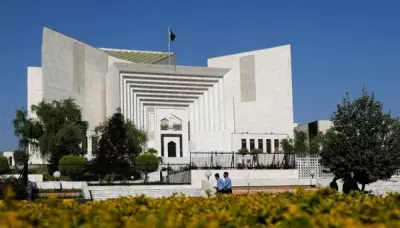
In a landmark judgment that highlights serious flaws in Pakistan's criminal justice system, the Supreme Court has acquitted two brothers who spent two decades behind bars for a bombing they were convicted of based on unreliable evidence.
Two Decades of Wrongful Imprisonment Ends
The Supreme Court of Pakistan on Friday ordered the immediate release of Abdul Aziz Khan and Mangla Khan, who had been imprisoned for exactly 20 years in connection with the deadly 2005 bombing outside PIDC House in Karachi. The court ruled that the prosecution completely failed to present any reliable evidence connecting the brothers to the crime.
The judicial bench set aside the convictions that had been previously upheld by both the trial court and the High Court. In a related development, the court also dismissed a petition challenging the acquittal of Abdul Hameed Bugti in the same case.

The Tragic 2005 PIDC Bombing
According to the detailed written judgment, the case stemmed from a vehicle-borne bomb explosion that occurred outside Karachi's PIDC House on November 15, 2005. The devastating blast claimed the lives of five people and left more than twenty others injured.
The explosion caused extensive damage to several nearby establishments, including multiple banks, a KFC outlet, and surrounding buildings. The incident sent shockwaves through the city and put immense pressure on law enforcement agencies to quickly apprehend those responsible.
Critical Flaws in Prosecution's Case
The Supreme Court judgment meticulously documented multiple failures in the prosecution's case that ultimately led to the acquittal. The court noted that the two main witnesses - Traffic Constable Muhammad Ashraf and taxi driver Zaheer Shah - could not reliably establish their presence at the crime scene during the incident.
Their testimonies were described as being "riddled with contradictions" that undermined their credibility. The identification process itself came under severe scrutiny, with the court noting that a combined rather than separate identification parade was conducted, using inappropriate dummies.
Furthermore, the fact that the accused were already in police custody at the time of identification made the entire process "unreliable" according to the judgment.
Evidence Suppression and Coercion
In what the court described as a particularly troubling aspect of the case, the judgment revealed that complete CCTV footage from cameras installed outside PIDC House existed, yet the investigating officer produced only a limited portion showing events after the blast.
The Supreme Court held that the prosecution failed to present the "best available evidence," which could have potentially supported the innocence of the accused. This raised serious suspicion that crucial material was deliberately withheld from the court.
The alleged judicial confessions of the accused were also deemed completely inadmissible due to clear evidence of coercion, prolonged police custody, unexplained delays, and lack of specific details regarding the alleged crime.
Justice Finally Prevails
The judgment expressed deep concern over investigative shortcomings, stating that even in a major terrorism case of this magnitude, the police failed to meet basic investigative standards. The court particularly lamented that two young men - aged only 27 and 37 at the time of their arrest - were forced to spend the prime of their lives behind bars based on weak and deficient evidence.
After thoroughly examining all aspects of the case, the Supreme Court accordingly overturned the convictions of Abdul Aziz Khan and Mangla Khan and ordered their honourable acquittal, bringing an end to their two-decade-long ordeal.