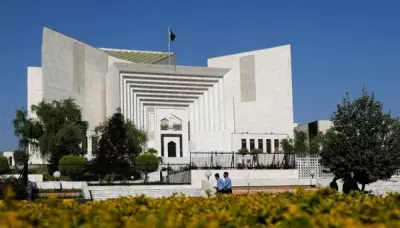
Peshawar High Court Delivers Landmark Ruling Against Secret Travel Bans
In a significant judgment safeguarding citizens' fundamental rights, the Peshawar High Court (PHC) has declared the practice of placing individuals on various travel control lists without prior notification to be illegal and unconstitutional. The court's ruling emphasizes the protection of freedom of movement as a core human right.
Court Declares Secret Listings a Violation of Fundamental Rights
The two-member bench, comprising Justice Sahibzada Asadullah and Justice Dr. Khurshid Iqbal, delivered a comprehensive 36-page written judgment authored by Justice Sahibzada Asadullah. The court explicitly stated that placing any citizen's name on the Exit Control List (ECL), Provincial National Identification List (PNIL), blacklist, or Passport Control List (PCL) without prior notice constitutes a severe violation of fundamental rights.
The court ruled that government agencies, including the Federal Investigation Agency (FIA), immigration authorities, and NADRA, cannot impose restrictions on citizens' freedom of movement without lawful justification. This decision came during hearings on multiple petitions concerning arbitrary travel restrictions, passport confiscations, and the non-renewal of travel documents for overseas Pakistanis.

Mandatory 24-Hour Advance Notice and Procedural Safeguards
A key directive from the court mandates that citizens must now be informed at least 24 hours in advance if their names are to be included on any such travel control list. This procedural safeguard is designed to prevent arbitrary and secretive actions by authorities.
The court further clarified that blacklists and the PNIL are merely administrative tools, not laws enacted by Parliament. By creating and utilizing these lists, the executive branch had effectively bypassed the established legal framework of the ECL ordinance, imposing restrictions without proper legal authority.
Impact on Affected Citizens and Overseas Pakistanis
The petitions highlighted numerous cases of individuals who faced severe hardships due to these secretive listings. Petitioners included students enrolled in foreign universities and workers seeking employment abroad, whose names were added to the PNIL, blacklist, and PCL without any notice.
Specific individuals named in the proceedings, such as Ahmad Khan, Muzammil, and Zulfiqar Ali Shah, were significantly affected, with some even unable to return to Pakistan. One petitioner, Hidayat Hussain, reported being detained at the airport for periods ranging from 12 to 48 hours and having his passport confiscated without explanation.
The judgment also addressed the plight of overseas Pakistanis residing in countries like Qatar, Oman, and Saudi Arabia. Many faced similar issues, with passport renewals deliberately delayed or denied, jeopardizing their employment status and legal residency abroad.
Constitutional Basis and Clarification of Agency Roles
The court emphasized that the right to travel is a fundamental human right protected under Articles 9 and 15 of the Constitution of Pakistan. Consequently, the refusal to renew passports or other essential travel documents was also ruled unlawful.
Furthermore, the PHC provided a crucial clarification regarding the roles of government bodies. It stated that the Directorate of Immigration and Passports is fundamentally a facilitation body, not a security agency. As such, it lacks the authority to restrict travel independently. The court asserted that final decisions on such matters must rest solely with the federal government, and external recommendations cannot override statutory powers.
Court Orders and Compliance Directives
To remedy the injustices faced by the petitioners, the court issued several specific orders. It directed that all pending applications from the petitioners be resolved within 15 days and that any confiscated passports be returned immediately.
Additionally, the court has restrained all government departments from placing citizens' names on any travel control list without first issuing a formal show-cause notice and providing a detailed, reasoned order at least 24 hours in advance.

The federal interior secretary has been directed to submit a comprehensive compliance report to the court within 30 days, detailing the steps taken to implement these directives and prevent future violations of citizens' rights.