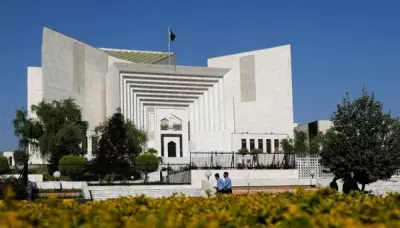
Islamabad High Court Demands Explanation for Denying Imran Khan's Counsel Meeting
The Islamabad High Court (IHC) has taken a firm stance in a recent legal proceeding, directing the state counsel to provide a detailed reply explaining the failure to arrange a meeting between PTI founder Imran Khan and his legal counsel, Salman Akram Raja. This directive was issued by a single bench of the IHC, presided over by Justice Arbab Muhammad Tahir, during a hearing on a contempt of court petition. The petition was filed due to the non-compliance with earlier court orders that mandated such a meeting, which is crucial for the ongoing case related to blocking Imran Khan's X (formerly Twitter) account.
Court's Directives and Legal Arguments
During the hearing, Salman Akram Raja, who serves as Imran Khan's counsel, presented his arguments to the court. He emphasized that he has not been permitted to meet with his client, Respondent-4, which has severely hindered his ability to assist the court effectively. Raja contended that this lack of access prevents him from obtaining necessary instructions on the matter, thereby impeding the legal process. He further alleged that prison authorities have not facilitated the meeting, despite his name being included in an approved list authorized for such interactions.
In response to these submissions, Justice Tahir issued a written order, explicitly directing the state counsel to file a reply or report. This document must clarify why learned counsel for Respondent-4 has been denied access to meet with Imran Khan. The judge underscored the importance of adhering to court directives, noting that earlier verbal orders from the IHC's full bench had also been disregarded in this regard.

Implications and Next Steps
The court's decision highlights ongoing tensions in the legal proceedings surrounding Imran Khan, with the IHC asserting its authority to ensure compliance with judicial orders. By deferring the hearing until February 24 for further proceedings, the bench has allowed time for the state counsel to provide the required explanation. This move is seen as a step towards addressing potential contempt issues and ensuring that legal rights, including the right to counsel, are upheld in high-profile cases.
This development comes amid broader discussions about the politicization of legal matters in Pakistan, with various stakeholders closely monitoring the situation. The IHC's directive serves as a reminder of the judiciary's role in safeguarding procedural fairness and access to justice, even in politically sensitive contexts.