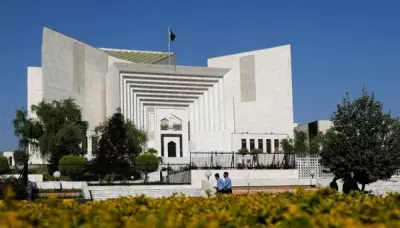
IHC Chief Justice Highlights Rising Crime in Islamabad, Calls for Forensic Evidence in Rape Cases
Chief Justice of the Islamabad High Court (IHC), Sardar Muhammad Sarfraz Dogar, expressed deep concern on Thursday over the escalating crime ratio in the Islamabad Capital Territory (ICT), particularly highlighting incidents of theft, accidents, and rape cases. During a meeting of the Justice Committee for ICT, he directed that in rape cases, reports from the Forensic Laboratory must be obtained to secure the best incriminating evidence, ensuring that perpetrators do not evade punishment.
Model Jail Construction Progress and Deadlines
The meeting also discussed the construction project of the Model Jail in Islamabad, with updates indicating that the project is 85% physically complete and has achieved 15% financial progress. The Chief Commissioner ICT's office confirmed the completion date as June 30, 2026. Justice Dogar emphasized that work on the Model Jail must be finalized without delay to meet this cutoff date. He further observed that logistics, including the deployment of jail staff, should be completed simultaneously to facilitate the shifting of prisoners starting from July 1, 2026.
Coordination and Prison Reform Initiatives
To address construction issues, the Secretary of the Ministry of Interior will coordinate with the Secretary of Finance, with the Finance Secretary invited to the next committee meeting. The committee acknowledged the National Prison Reform Action Plan submitted by the Jail Reform Sub-Committee as a key framework for improving prison administration. Justice Dogar stressed the importance of proper investigation of criminals to reduce the crime rate and recommended training for investigating officers to collect all possible incriminating evidence.

Judicial Efficiency and Security Measures
The Chief Justice urged judges of the District Judiciary to expedite case decisions to address public grievances. Discussions on law and order included the Digital/Safe City Surveillance Mechanism, which currently covers about 35% of critical areas in ICT through CCTV surveillance, including red zones, highways, and sensitive locations. Recent reports indicate checks on 19,692 persons and 15,779 vehicles, leading to the recovery of 17 stolen vehicles and detection of 15 proclaimed offenders. To enhance monitoring, installation of AI-integrated surveillance cameras is underway.
Enhanced Security for Judicial Complexes
Justice Dogar called for police deployment in other areas of Islamabad, such as the Red Zone, and directed a review and strengthening of security arrangements for the Islamabad High Court, District Judicial Complex, Federal Judicial Complex, and judges' residences in coordination with ICT Police. Continuous monitoring and periodic reviews of security measures are to be ensured by ICT Administration and Police. He appreciated Islamabad Police's strategy in preventing a suicide bomber from entering the Judicial Complex in G-11 and directed the construction of more emergency exit doors and installation of an integrated alarm system.
Prosecution Department Review and Attendees
The performance of the Prosecution Department in ICT and the status of challan submissions were reviewed, with directions to submit challans after proper scrutiny within reasonable time. The Federal Prosecutor General highlighted departmental issues, and the Chief Justice asked the concerned ministry to resolve them on a top priority basis. The meeting was attended by key officials, including the Secretary of the Ministry of Law and Justice, Additional Secretary of the Ministry of Interior, Chief Commissioner-ICT, IG Police-ICT, Advocate General-ICT, Deputy Attorney General, District & Sessions Judges, DG FIA, DG NCCIA, DG National Forensic Agency, DG Passport & Immigration, Federal Prosecutor General, and Registrar of the Islamabad High Court.