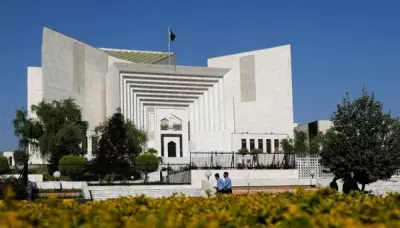
The Federal Constitutional Court (FCC) has postponed the hearing of an intra-court appeal filed by Pakistan Tehrik-e-Insaf (PTI) Chairman, Barrister Gohar Ali Khan. The case concerns challenges to the now-defunct Practice and Procedure Ordinance.
Court Proceedings and Bench Details
A five-member bench of the FCC, led by Justice Aamir Farooq, heard the appeal. The bench included notable justices Justice Ali Baqar Najafi, Justice Muhammad Karim Khan Agha, Justice Rozi Khan Barrech, and Justice Arshad Hussain Shah. The hearing was subsequently adjourned, marking another chapter in this legal proceeding.
Historical Context and Previous Ruling
This appeal follows a significant decision made by the constitutional bench of the Supreme Court in December last year. At that time, the court dismissed a series of petitions that challenged the validity of the Practice and Procedure Ordinance. The petitions were filed by PTI Chairman Barrister Gohar Ali Khan, Afraziaab Khattak, Ihtisham Haq, and Akmal Bari.

The core argument from the petitioners was a request to annul all decisions made under the authority of the expired ordinance. This specifically targeted actions taken by committees that were formed based on its provisions.
Judicial Reasoning on the Ordinance's Status
During the proceedings, the judges provided clear legal reasoning for their stance. Justice Aminuddin Khan remarked that the Practice and Procedure Ordinance had effectively ceased to exist. He emphasized that it was superseded by new laws passed by Parliament, stating plainly, "The ordinance has expired."
Justice Mohammad Ali Mazhar concurred, noting that following the passage of the new legislation, the provisions of the old ordinance were no longer applicable. He also clarified that the committee formed under the ordinance has been dissolved. Crucially, he stated that the decisions made by that committee are now protected as "past and closed transactions."
Further reinforcing this position, Justice Jamal Mandokhail pointed out that once new legislation replaces an ordinance, the latter loses its legal standing. He also highlighted that the Constitution of Pakistan grants the President the authority to issue ordinances, contextualizing the source of the original law.
The petitioners' lawyer argued vigorously that decisions made by committees under the ordinance should be declared invalid. However, the court's consistent view was that the matter was resolved by the new parliamentary legislation, rendering the ordinance and its subsequent committee actions a closed chapter.