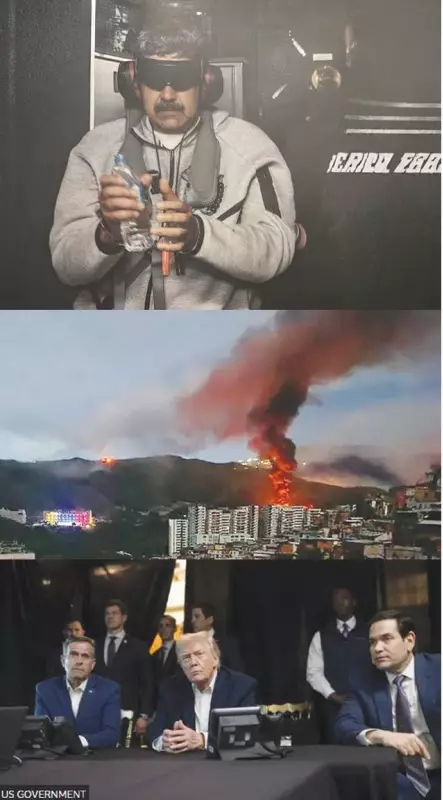
In a bold declaration that has sent shockwaves through international diplomatic circles, former United States President Donald Trump has announced his intention to authorize American military action against Venezuela if he returns to the White House. His stated goal is the capture of the country's current leader, Nicolas Maduro.
The Stark Warning from a Potential Future Commander-in-Chief
During a recent campaign rally, Trump outlined a hardline approach towards the South American nation, which has been under socialist rule and facing severe economic sanctions. The former president explicitly stated that under his administration, the US would conduct air strikes within Venezuelan territory. He framed this aggressive posture as a necessary measure to dismantle the Maduro government, which he and previous US administrations have labeled as illegitimate and oppressive.
Trump's comments mark a significant escalation in rhetoric, moving beyond the sanctions and diplomatic pressure that have characterized US policy. He suggested that military force is a viable tool for regime change, aiming to end what he described as a humanitarian crisis under Maduro's leadership. This promise directly ties his 2024 presidential campaign to a specific and volatile foreign policy objective.

Context and Potential Global Repercussions
The threat of military intervention is not made in a vacuum. Venezuela has been in a prolonged state of political and economic turmoil, with the US and dozens of other nations recognizing opposition figure Juan Guaido as the legitimate interim president in 2019. However, Maduro, backed by the military and allies like Russia, China, and Cuba, has retained control.
An American military incursion into Venezuela would have profound and unpredictable consequences for regional stability in Latin America. It would likely be met with fierce condemnation from global powers aligned with Caracas and could provoke a broader geopolitical confrontation. Furthermore, such action would require navigating complex international laws regarding sovereignty and the use of force.
The announcement also raises immediate questions about the stance of the current Biden administration. While maintaining pressure on Maduro, President Joe Biden has favored a more diplomatic approach, including negotiated solutions. Trump's pledge creates a stark contrast between the two potential foreign policy directions for the United States, making Venezuela a focal point in the upcoming election.
Reactions and the Road Ahead
Initial reactions have been sharply divided. Trump's supporters have praised the strong stance against a regime they view as a threat to hemispheric security. Critics, however, warn of the dangers of unilateral military action, pointing to the long and costly conflicts in Iraq and Afghanistan as cautionary tales. The potential for civilian casualties and a protracted engagement is a significant concern for analysts.
For the people of Venezuela, Trump's words add another layer of uncertainty to an already dire situation. The nation continues to grapple with hyperinflation, mass migration, and shortages of basic necessities. The specter of foreign air strikes introduces the terrifying possibility of open conflict on their soil.
Ultimately, the realization of this threat hinges entirely on the outcome of the November 2024 US presidential election. Should Donald Trump secure a second term, the world may witness a dramatic and forceful new chapter in US-Venezuela relations. Until then, his declaration serves as a potent campaign rallying cry and a serious point of concern for international observers monitoring an already volatile region.