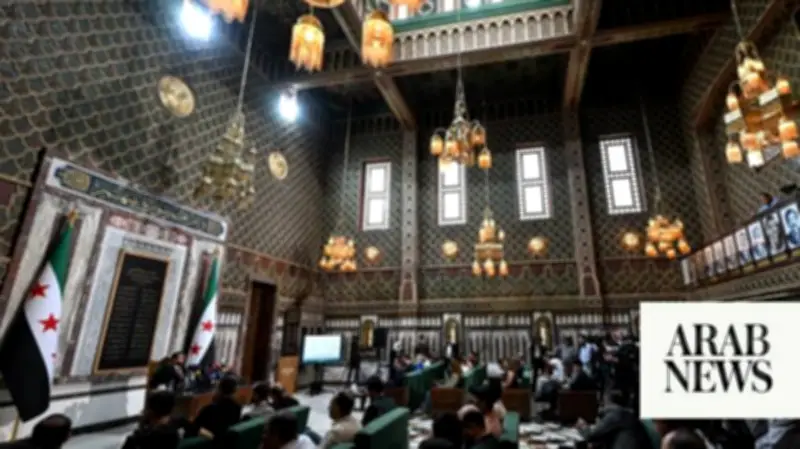
Syria's interim President Ahmad Al-Sharaa on July 1 named the final 70 members of the new parliament, including 15 women, completing the 210-seat People's Assembly. The appointments aim to project a broader, more inclusive political tent, bringing in prominent figures such as Kurdish politician Abdul Hakim Bashar and Druze leader Laith Al-Balous.
Geographic and Demographic Breakdown
According to the chamber's geographic breakdown, the appointments span all 14 Syrian governorates. The largest shares go to Aleppo (14 representatives), Hasakah (7), Homs (6), and Deir Ezzor (6). Other governorates include Idlib, Hama, Damascus, and Rif Dimashq (5 each); Latakia and Daraa (4 each); Raqqah (3); and Suwaida, Tartous, and Quneitra (2 each).
Balancing Sacrifice and Expertise
Presenting the appointments in Damascus, Mohammad Taha Al-Ahmad, chairman of the Higher Committee for People's Assembly Elections, described the announcement as “a new national milestone in the journey of building the Syrian state.” He said the final 70 members were chosen to balance “the voice of sacrifice and the voice of expertise,” referencing both veterans of the anti-Assad opposition and technocratic figures.

Analysts say this balance reflects an attempt to widen the chamber's appeal without loosening executive control. Nanar Hawach, Senior Syria Analyst at the International Crisis Group, said Al-Sharaa’s appointments “suggest that Damascus wants a chamber that can pass laws efficiently and speak to many audiences, while avoiding internal political surprises.”
Analysts Weigh In
“The list broadens the chamber’s profile, bringing in more technocrats and more women, which can improve the quality and presentation of legislation,” Hawach told Arab News. However, “the overall outcome suggests that loyalty, coordination and institutional continuity were highly valued,” he said. “A cooperative parliament can help a transition move quickly from decrees to laws and reduce uncertainty in government work. The downside is that difficult questions risk being filtered out before they reach the floor.”
Ghassan Ibrahim, a London-based Syrian analyst and head of the Global Arab Network, argues that some degree of presidential intervention was unavoidable. He said Al-Sharaa’s decision to appoint a smaller bloc himself “appears to have been aimed at creating some balance.” He added: “The broader selection process seems to have revealed gaps: there were not enough women, not enough highly qualified people, and not enough minority representation. His appointments were meant in part to address those shortcomings.”
Context of Transition
Nearly a year after the fall of longtime ruler Bashar Assad, the October 2025 parliamentary elections marked the first institutional test of Syria’s transition, but drew criticism. Critics noted that one third of the 210-seat assembly was reserved for presidential appointment, voting did not take place nationwide, and several areas outside Damascus’ control were left unrepresented. Early results showed low female and Christian representation, with women accounting for only six of 122 elected members, according to Al-Majalla. Al-Sharaa’s latest appointments raised the number of women to 21.
Ibrahim said those shortcomings had to be viewed in context: “There is no realistic way to form a parliament without the authorities playing a role. This is a transitional government, a transitional authority, and the parliament itself is part of that transition. A normal free election is not really possible right now. Many Syrians still lack proper documentation, many are refugees, and under those conditions it would be very difficult to hold a genuinely practical nationwide vote.”
He argued that a genuinely free election now would still likely produce a parliament broadly supportive of Al-Sharaa, “because many Syrians are exhausted by Assad and that would naturally produce a pro-Al-Sharaa outcome.” He also noted that fully open elections might not necessarily produce a more inclusive chamber: “If there were free elections now, minorities might well end up with even less representation than they have received already. That is not necessarily because Syrians do not want minorities to participate, but because that can simply be the outcome of majoritarian elections.”

Performance and Independence
For Ibrahim, the central question is less how the chamber was formed than what it does next: “The real test is how they perform once they begin working: are they doing the job, and are they genuinely representing their communities?”
Hawach argued that the longer-term issue is whether the chamber can exercise real authority. “Over time, public confidence will depend less on how broad the membership looks and more on whether parliament can meaningfully initiate legislation, amend draft laws, and exercise oversight over the executive,” he said.
Benjamin Feve, a senior consultant at Karam Shaar Advisory, noted that the 70 appointees include women, minorities, conservatives, liberals, technocrats, prominent figures from the IT sector and other nonparty profiles. “From what I have gathered, there does not seem to be an overwhelming presence of Hayat Tahrir Al-Sham hardliners or explicitly pro-HTS figures,” he told Arab News, referring to the group that led the offensive that toppled Assad and was once headed by Al-Sharaa. “That is important because it gives the parliament a degree of domestic and international acceptability.”
At the same time, he said the chamber may not emerge as a particularly strong or independent political actor. “My expectation is that, in the short term, it will function more as a consultative and ratifying body than as a legislature capable of seriously challenging the executive. That is not necessarily a bad thing in itself. Syria urgently needs to amend, replace, and pass a large body of laws, and the authorities will likely use parliament to give that process formal legislative legitimacy. In the initial phase, it could be quite useful, because the transition requires laws, and I do not expect major parliamentary blockages or deep ideological confrontation at first. Over the medium to long term, however, there may be grounds for concern, because many of the appointees are not professional politicians, which could limit the quality of parliamentary debate.”
Notable Appointees
The names chosen by Al-Sharaa reinforce the message of a broader chamber. Among them is prominent Druze Sheikh Laith Al-Balous, who was part of a coalition of Druze leaders that exercised autonomy from Assad in Suwaida. Also appointed was Gabriel Moshi Kourieh, a Syrian Christian and member of the Assyrian Democratic Organization who was detained by the Assad government from 2013 to 2016. Hassan Soufan, the former head of the Islamist rebel group Ahrar Al-Sham who also spent time in the notorious Saydnaya prison, was also named. Abdul Hakim Bashar of the Kurdish National Council was among two Kurdish appointees from Hasakah. The final list also included actress Rozina Lazkani and Aisha Al-Dibs, head of the government’s women’s affairs office.