History occasionally produces documents so brief, so deceptively bureaucratic, that their true violence is not immediately visible. Ink on paper rarely appears as dramatic as war on a battlefield. Yet some agreements kill across generations. Among the most consequential of such documents are the 1916 Sykes–Picot Agreement and the 1917 Balfour Declaration—two instruments of imperial statecraft that helped shape the modern Middle East, not as an organic political community, but as a macabre theatre for European strategic ambition. More than a century later, their aftershocks continue to reverberate from Gaza to Damascus, from Baghdad to Beirut.
The Essence of Realpolitik
If realpolitik is the cold doctrine that power outweighs principle, then Sykes–Picot and Balfour represent some of its most devastating historical applications. They were not merely diplomatic manoeuvres of wartime necessity. They were brutal acts of political engineering carried out with extraordinary arrogance—designed by men who presumed the right to redraw civilisations they neither understood nor intended to empower.
Sykes-Picot: A Secret Partition
In May 1916, at the height of the First World War, Britain and France concluded a secret agreement—negotiated by Sir Mark Sykes and François Georges-Picot—to divide the Arab provinces of the collapsing Ottoman Empire into zones of influence. Russia assented to the arrangement, expecting its own spoils. No Arab representative was consulted. The agreement was the geopolitical equivalent of colonial grave robbery, a premature division of territory before the Ottoman Empire had even fully collapsed. Britain sought strategic control over Mesopotamia, vital trade routes, and access to emerging oil resources. France wanted influence over Syria and the Levant. Indigenous populations—the Arabs, Kurds, Druze, Armenians, Assyrians, and others whose lives would be irreversibly altered—were treated as abstractions. The borders imagined under this imperial blueprint bore little relationship to social realities on the ground. Tribal geographies, religious realities, sectarian identities, ethnic continuities, and historical affinities were subordinate to imperial convenience.

Betrayal and Duplicity
When the Bolsheviks exposed the secret agreement in 1917, the revelation confirmed Arab suspicions of betrayal. Britain had simultaneously encouraged Arab revolt against Ottoman rule with vague promises of independence through the Hussein–McMahon Correspondence, even as it privately negotiated the region’s partition. This was not diplomacy. It was duplicity.
The Balfour Declaration: A Public Contradiction
If Sykes–Picot represented secret betrayal, the Balfour Declaration represented public contradiction. Issued later in November 1917, the declaration was a 67-word letter from British Foreign Secretary Arthur Balfour to Lord Walter Rothschild, a leader of the British Jewish community, expressing support for “the establishment in Palestine of a national home for the Jewish people,” while stipulating that the civil and religious rights of existing non-Jewish communities should not be prejudiced. Its ambiguity was sinisterly deliberate. Britain was attempting to satisfy multiple constituencies simultaneously: wartime strategic interests, Zionist lobbying, imperial control of territory adjacent to the Suez Canal, and broader calculations about post-war influence. Yet the declaration carried a staggering moral contradiction. Britain was effectively making commitments regarding land it did not yet formally control, concerning a population it had not consulted, while simultaneously having made incompatible promises elsewhere. The central flaw was not merely diplomatic inconsistency. It was the colonial presumption that an imperial power possessed legitimate authority to allocate another people’s political future.

Conflicting Narratives
For many Jewish communities, Balfour became a milestone on the path towards national self-determination after centuries of persecution. For Palestinians, it marked the beginning of political dispossession and the beginning of the Nakba, meaning "catastrophe" in Arabic; it refers to the 1948 violent displacement and dispossession of approximately 750,000 Palestinian Arabs during the Arab-Israeli war and the creation of Israel. It involved the destruction of over 500 villages, the loss of homes, and the systematic suppression of Palestinian culture and political rights. Both narratives are historically real. But the imperial architecture within which Balfour emerged ensured that coexistence would be extraordinarily difficult.
Structural Weaknesses of Colonial States
The modern Middle East’s dysfunction cannot be simplistically reduced to imperial cartography. Internal political failures, authoritarianism, Cold War interventions, regional rivalries, corruption, and ideological extremism all played decisive roles. Yet Sykes–Picot created structural weaknesses whose consequences proved enduring. The states that emerged under British and French mandate systems were rarely designed for democratic legitimacy. They were designed for administrative manageability and strategic utility. Iraq fused disparate Sunni Arab, Shia Arab, and Kurdish populations into a single entity without establishing a consensual political framework. Syria inherited similarly fragile pluralism under artificial conditions. Lebanon institutionalised sectarian balancing in ways that preserved instability rather than resolving it. Jordan emerged as an imperial construction shaped as much by strategic necessity as by coherent nationhood. The problem was not diversity itself. Diverse societies can thrive. The problem was governance imposed without political consent. States born without legitimate social contracts often survive through coercion. Much of the modern Arab authoritarian state emerged from precisely this deficit.
Strategic Interests Behind Imperialism
Moral rhetoric aside, strategic interests drove much of this imperial behaviour. The early twentieth century witnessed oil’s transformation into the lifeblood of military and industrial power. Mesopotamia’s significance was not merely geographic—it was economic. British strategic planners understood the value of controlling routes to India, securing maritime chokepoints, and safeguarding future energy infrastructure. Palestine’s importance similarly extended beyond theology. Its location near the Suez Canal gave it outsized strategic significance. This is what made Sykes–Picot such a pure expression of realpolitik: it was not a civilising mission, not humanitarian intervention, not democratic statecraft. It was power securing resources. The language of order merely concealed extraction.
Living Legacy in Palestine
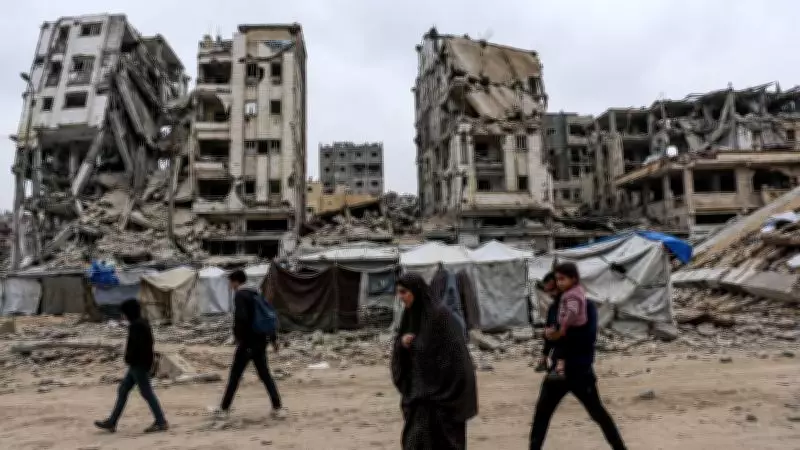
Nowhere is the legacy more devastating than in Palestine. The Balfour Declaration was later embedded within the British Mandate for Palestine, facilitating Jewish immigration while failing to reconcile competing national aspirations. By 1948, war accompanied the creation of Israel, and hundreds of thousands of Palestinians became refugees in what they remember as the Nakba—the catastrophe. That conflict remains unresolved. Generations have now grown up under occupation, siege, displacement, or perpetual insecurity. Diplomacy repeatedly fails because foundational questions—sovereignty, statehood, return, borders, security, legitimacy—remain unresolved. To many Palestinians, Sykes–Picot and Balfour are not remote historical events. They are living history. Each demolished home, each checkpoint, each failed negotiation, each cycle of violence appears as an extension of decisions made in imperial capitals by men long dead. That perception matters, whether one agrees with every element of the interpretation or not. History shapes political psychology.
Unstable Order
Ironically, even the order Sykes–Picot created proved unstable. The 2003 Iraq War shattered one pillar of the post-colonial state system. Syria’s civil war fractured another. ISIS explicitly weaponised anti-Sykes–Picot symbolism, theatrically declaring the “end” of colonial borders after bulldozing sections of the Iraq–Syria frontier in 2014. The symbolism resonated because the historical grievance was intelligible. Extremist groups thrive by transforming legitimate memory into violent mythology. This does not mean the Sykes–Picot caused ISIS. Such arguments are intellectually lazy. But unresolved historical humiliation can become combustible political material. Likewise, Kurdish statelessness remains one of the most enduring consequences of post-Ottoman settlement failures. A major ethnic nation was fragmented across Turkey, Iraq, Syria, and Iran without sovereign recognition. That unresolved question continues to destabilise regional politics.
Acknowledging Complexity
There is a temptation—especially in the Middle East—to treat Sykes–Picot as original sin, the single explanatory key for all subsequent tragedy. That is emotionally compelling but historically incomplete. Not every dictatorship emerged because of imperial cartography. Not every war can be blamed on European diplomacy. Local elites made catastrophic choices. Regional powers exploited divisions. External interventions continued long after colonial rule formally ended. The agency did not vanish after 1917. But acknowledging local responsibility does not absolve imperial culpability. The deeper indictment is that Sykes–Picot and Balfour created political structures predisposed towards instability while denying affected populations meaningful self-determination. That is the true disgrace.
Enduring Consequences
More than one hundred years on, the borders largely remain, but legitimacy remains fragile. The Middle East still wrestles with inherited contradictions, contested sovereignties, sectarian fragmentation, unresolved national questions, authoritarian political cultures, and enduring distrust of Western intentions. Sykes and Balfour likely believed they were managing the empire with strategic sophistication. Instead, they helped create one of modern history’s most persistent geopolitical crises. Realpolitik prides itself on pragmatism. Yet the greatest irony of Sykes–Picot and Balfour is this: policies designed to secure stability through power instead generated instability through injustice. Empires often mistake temporary control for durable order. History eventually delivers the correction. But history is rarely kind to artificial arrangements imposed by distant empires. Geography, identity, and civilisational memory possess a stubborn permanence that diplomacy in London and Paris could neither comprehend nor extinguish. Whether they will ultimately bury this cartographic monstrosity—and with it one of the most reckless exercises in modern realpolitik—in the rubbish bin of history remains an open question.