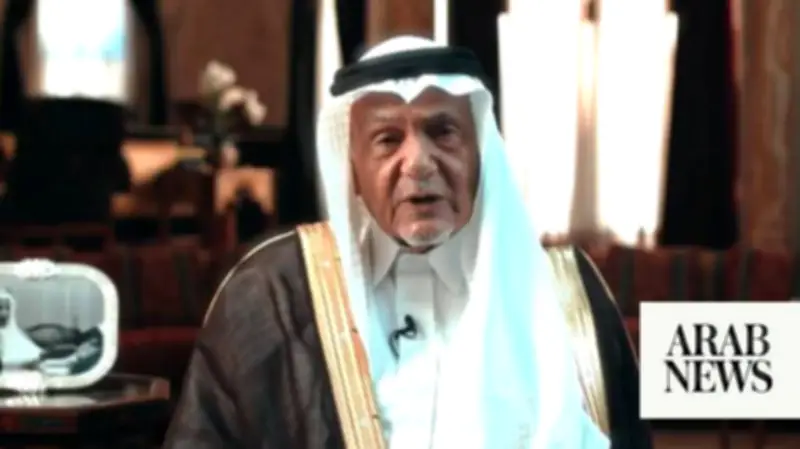
Prince Turki Al-Faisal Bin Abdulaziz Al Saud, chairman of the board of directors for King Faisal Center for Research and Islamic Studies, told attendees at the Future Hospitality Summit in Riyadh on June 23 that the window of competitive advantage for tourism investment in the Kingdom will not remain open indefinitely. He urged global investors and developers to act now to capitalize on Saudi Arabia's changing regulatory environment and unprecedented infrastructure investment.
Vision 2030 and the Hospitality Sector
Strengthening hospitality is a key goal of Saudi Arabia's Vision 2030, which aims to diversify the economy and establish the Kingdom as a global tourism hub. The National Tourism Strategy has already surpassed its initial target of 100 million visitors and now aims to attract 150 million visitors by 2030. "The opportunity in front of you is real. The regulatory environment has changed. The infrastructure investment is unlike anything this region has seen," said Prince Turki Al-Faisal in a pre-recorded video message.
He added: "The window of competitive advantage does not stay open forever. The decisions made in the next three or five years will determine whether Saudi Arabia becomes one of the world's great hospitality destinations or simply a market where great hospitality happens to exist. That distinction matters enormously."

Framework Needs Builders
Prince Turki Al-Faisal emphasized that Vision 2030 provided the strategy, but execution now depends on private sector partners. "Vision 2030 gave us a framework, but framework requires builders. They are now in this room; developers, investors, operators and architects. You are not here to observe the transformation. You are here to advance it," he said.
The official highlighted the massive scale of ongoing projects across AlUla, the Red Sea, Diriyah, and Neom, describing the regulatory reforms and infrastructure push as unprecedented in the region. He stressed that hospitality is more than "beds and restaurants," adding: "It is about the signal a country sends when it opens its doors."
Strong Numbers and Resilience of Saudi Tourism
Mahmoud Abdulhadi, deputy minister of tourism in Saudi Arabia, presented robust performance data at the summit. He reported that Saudi Arabia welcomed over 120 million tourists in 2025, generating more than SR304 billion ($80.99 billion) in spending. In the first quarter of 2026, tourist numbers grew 8 percent year on year, with total spend reaching SR82.7 billion, despite regional tensions, driven largely by strong domestic demand.
"This is something that gives the Saudi tourism sector more resilience compared to other markets in the region," said Abdulhadi. He added that the Kingdom is building a diversified national portfolio of destinations catering to religious, leisure, entertainment, sports, culture, and business segments, rather than depending on a single market or project.
Abdulhadi assured investors that Saudi Arabia is not asking them to invest on "promises alone," adding: "They should invest where demand is forming, where destinations are opening, where reforms and regulations ease and clarify the investment process, and where private capital is already participating." He noted that consumers in the tourism industry are becoming more selective, seeking higher quality, authentic, and unique experiences, demanding discipline from operators and capital providers.
Resilience Through Structure and Discipline
Addressing global concerns over volatility, geopolitical tensions, and capital selectivity, Abdulhadi said: "Regional volatility across the globe is rising, global capital is more selective. Investors are rightly asking questions about returns and future stability. Our answer is simple: resilience is not the absence of disruption. Resilience is the ability to continue, to adapt and to continue to grow through any disruptions by maintaining structure and discipline."