The murderous attack on a San Diego mosque and its affiliated elementary school on May 19 did not occur in a vacuum. It was neither an isolated incident nor something that could be explained away simply by attributing it to two young men facing psychological challenges. For years, Islamophobic rhetoric has been amplified by prominent political figures and organisations. When two young men entered a religious complex in San Diego intending to kill Muslims and, in their own words, commit a 'hate crime,' they were acting upon a racist ideology. A 75-page manifesto found in their vehicle contained Nazi and neo-Nazi symbols. The attackers drew inspiration from Brenton Tarrant, who murdered 51 Muslim worshippers in two mosques in New Zealand in 2019, and referred to themselves as the 'Sons of Tarrant.' Their ideology targeted Muslims, Jews, Blacks, Latinos, and members of the LGBT community. They glorified school shootings, white nationalism, and neo-Nazi terrorism.
Hate-Driven Violence: A Moral Failing
Hate-driven violence represents one of humanity's gravest moral failings. Every major religious, social, and political tradition condemns it and dissociates itself from it. Yet violence against a perceived 'out-group' is often justified and even celebrated as a defence of higher values and interests of the 'in-group'. Such justifications are commonly wrapped in ideologies of race, religion, ethnicity, or nationalism. The latest act of violence against Muslim worshippers is part of a broader climate of Islamophobia that has become increasingly embedded in the right-wing political discourse in parts of the United States, Europe, and India.
The Post-9/11 Turning Point
The terrorist attacks of September 11, 2001, marked a turning point, placing American Muslims and their faith under intense scrutiny and suspicion. In the aftermath of those attacks, President George W. Bush visited a mosque in Washington and delivered his famous 'Islam Is Peace' speech. He stated, 'These acts of violence against innocents violate the fundamental tenets of the Islamic faith.' He concluded by affirming that Muslims 'love America just as much as I do.' His words and his choice of venue helped ease anti-Muslim sentiment, at least temporarily. Despite President Bush's efforts to calm tensions, anti-Muslim groups remained active and continued to promote Islamophobia as a political tool, creating a fear psychosis.

The United States-led invasion of Iraq in 2003 contributed to instability and violence, including the emergence of an Iraqi branch of al-Qaeda. Insurgency and terrorism were met with overwhelming military force, creating a destructive cycle that deepened conflict and mistrust. The changing public perception of Muslims and the increasing tendency among some political leaders to portray them as an 'out-group' became evident during Donald Trump's presidential campaign. On March 9, 2016, Trump told CNN, 'I think Islam hates us.' Earlier, in December 2015, he proposed 'a total and complete shutdown of Muslims entering the United States.'
Us Versus Them Narrative
This 'us versus them' narrative has since become normalised in segments of political and religious discourse. Some critics portray Islam as inherently violent, incompatible with Western values, and hostile to the Judeo-Christian tradition. Such arguments seek to exclude Islam from the Abrahamic tradition, despite Islam's own claim that it is a continuation of the same message revealed in the Old and New Testaments. The division between 'in-group' and 'out-group' has a long history in both Europe and America. Liberalism and, later, multiculturalism sought to address these tensions, but questions of race, religion, and ethnicity remain unresolved.

Disparity in Public Response
The rise of right-wing political movements has coincided with increased concerns about both antisemitism and Islamophobia. From a Muslim perspective, however, there is a noticeable difference in public response. Acts of antisemitism typically draw swift and widespread condemnation from political leaders, media organisations, and public institutions. Incidents targeting Muslims often receive a more muted response. Congressional hearings are rare, editorials are fewer, official statements tend to be less forceful, and public attention fades more quickly. In most cases, crimes committed by individuals are not attributed to an entire religious or ethnic community. Alleged war crimes committed by the Israeli Defence Forces in Gaza are not, and should not be, blamed on Jews or Judaism. Yet acts of terrorism committed by Muslim individuals are frequently discussed in ways that implicate Islam or Muslims as a whole. Muslim Americans are often expected to prove their loyalty, condemn extremist groups, or distance themselves from acts committed by people with whom they share neither responsibility nor affiliation.
Campaigns Against Sharia Law
A more recent strategy for perpetuating fear of Islam emerged around 2010 through campaigns against so-called 'Sharia law.' According to the Southern Poverty Law Centre (SPLC), states including Alabama, Arizona, Florida, Kansas, Louisiana, North Carolina, South Dakota, Tennessee, and Texas have enacted legislation restricting the application of foreign or religious law in state courts. Organisations such as the American Freedom Law Center (AFLC) and ACT for America have been among the most visible advocates of these efforts. Nearly identical bills have appeared in multiple state legislatures, accompanied by media campaigns warning of the alleged threat posed by Islamic law to the American legal system and constitutional freedoms.
Critics argue that these measures have little practical legal significance because the United States Constitution and existing state laws already prevent courts from enforcing foreign or religious laws that conflict with American law. Nevertheless, the campaigns continue, often portraying Islam and Muslims as threats to the American way of life. The legislation frequently invokes terms such as 'invasion' and emphasises the need to stop Sharia law from entering the judicial system. Supporters maintain that such measures safeguard constitutional principles and civil liberties. Guy Rodgers of ACT for America acknowledged that Islamic law has little influence in American courts but argued, as quoted by The New York Times, 'Before the train gets too far down the tracks, it's time to put up the block.'
Historical Parallels and Muslim Resilience
The challenges facing Muslim immigrants today are not unique in American history. Successive waves of immigrants have encountered prejudice and hostility at both social and institutional levels. Religion, race, and ethnicity have repeatedly been used to portray groups as outsiders. Public discourse often depicted them as violent, disloyal, or incapable of assimilation. Antisemitism was once widely accepted. Prestigious universities imposed quotas on Jewish students. The Chinese Exclusion Act of 1882 remains the only federal law to ban immigration explicitly based on race and nationality. The racist terms 'Yellow Peril' and 'Yellow Terror' were used against Chinese and Japanese immigrants. During World War II, Japanese Americans were forcibly relocated and incarcerated in internment camps. Despite these injustices, immigrant communities persevered and eventually became integral parts of American society.
The Muslim community must remain patient, resilient, and persistent in pursuing the American dream. As Shakespeare wrote in King Lear: 'We are not the first Who with best meaning have incurred the worst.' At the same time, Muslims must confront an uncomfortable reality: extremist interpretations of Islam do exist and have been used to justify violence. In a democratic society governed by the rule of law, there can be no place for such ideologies. Muslim scholars and community leaders should continue to challenge and expose extremist narratives that distort their faith. The counter-narrative must also address broader historical questions: how the decline of Muslim empires and the loss of political power influenced religious discourse; how modern societies have evolved; and how Muslims can thrive within pluralistic, multicultural democracies while remaining faithful to their religious identity.
The Broader Fight Against Bigotry
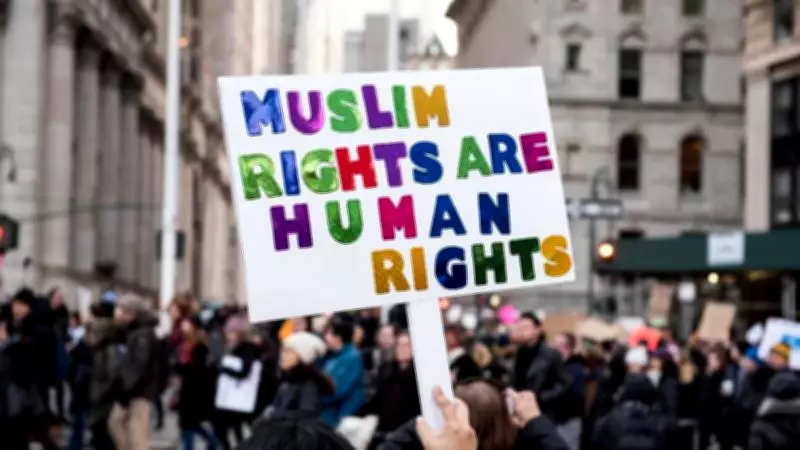
The fight against Islamophobia, like the struggle against antisemitism, racism, and other forms of bigotry, ultimately concerns more than one community. It is part of the broader effort to preserve a society in which citizens are judged as individuals rather than as representatives of entire groups, and where violence and hatred find no sanctuary.