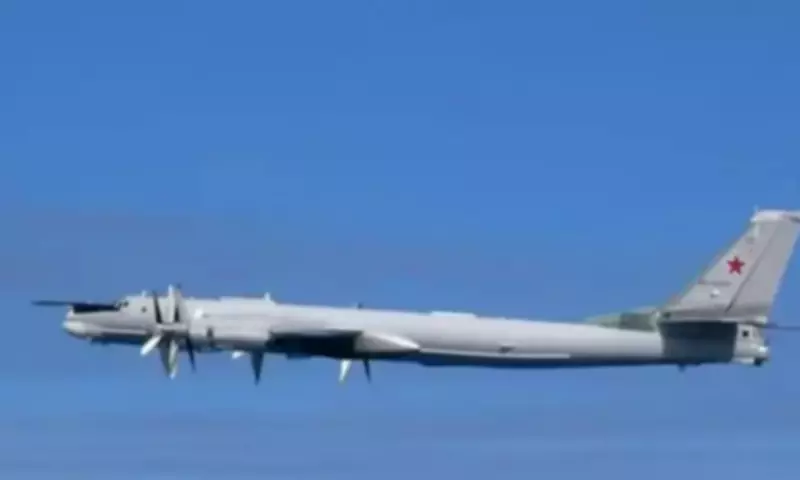
NORAD Responds to Russian Military Aircraft Near Alaskan Airspace
The North American Aerospace Defence Command (NORAD) announced on Thursday that it had detected and tracked multiple Russian military aircraft operating in the Alaskan Air Defence Identification Zone (ADIZ). This incident, which occurred off the coast of Alaska, prompted a swift response from the joint US and Canadian defence organisation.
Details of the Russian Aircraft Detected
According to an official statement released by NORAD, the detected aircraft included two Russian Tu-95 strategic bombers, two Su-35 fighter jets, and one A-50 airborne early warning and control aircraft. These aircraft were monitored as they entered the Alaskan ADIZ, a designated area where identification and control measures are enforced to enhance national security.
The presence of these Russian military planes in such proximity to North American airspace underscores ongoing geopolitical tensions and the importance of vigilant defence monitoring.

NORAD's Immediate Response and Interception
In response to the detection, NORAD launched a coordinated interception mission. The organisation deployed two F-16 Fighting Falcons, two F-35 Lightning II stealth fighters, one E-3 Sentry airborne warning and control system aircraft, and four KC-135 Stratotanker aerial refuelling aircraft.
The primary objectives of this mission were to positively identify the Russian aircraft, intercept them, and provide an escort to ensure they remained outside sovereign airspace. This rapid deployment highlights NORAD's readiness and capability to respond to potential aerial threats in the region.
No Breach of Sovereign Airspace Reported
NORAD confirmed that the Russian military aircraft remained in international airspace throughout the incident and did not enter American or Canadian sovereign airspace. The escort operation continued until the Russian planes departed the Alaskan ADIZ, ensuring a controlled and safe resolution to the encounter.
This incident follows a pattern of similar interactions in the region, where Russian military flights near Alaska have been periodically monitored by NORAD. Such events are often viewed as routine training or reconnaissance missions by Russia, but they necessitate careful observation due to their strategic implications.
The Alaskan ADIZ is a critical area for North American defence, given its proximity to Russian territory. NORAD's ability to detect, track, and respond to such incursions is essential for maintaining air sovereignty and preventing potential escalations. This event serves as a reminder of the ongoing need for robust defence cooperation between the United States and Canada in safeguarding continental security.