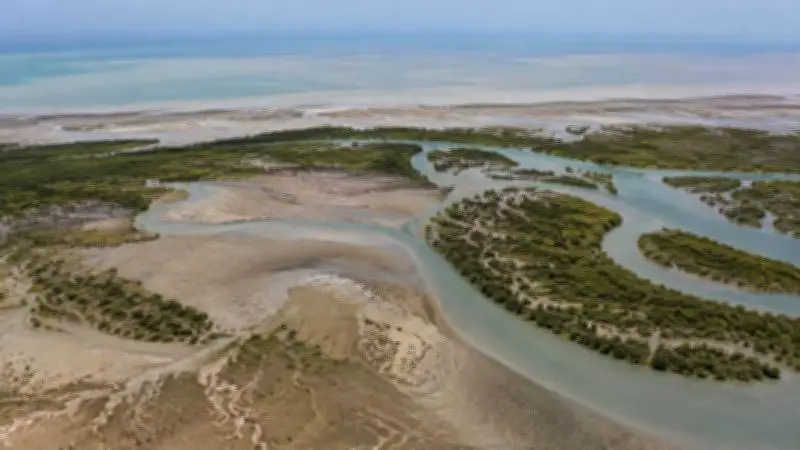
India's suspension of the Indus Waters Treaty and the elimination of environmental flows are pushing South Asia toward a potentially catastrophic nuclear confrontation, according to analysts. The crisis, emerging from a long-simmering water dispute, has escalated rapidly following a terrorist attack in Pahalgam and India's subsequent treaty suspension.
Chronology of the Crisis
India formally initiated the process of revising the Indus Waters Treaty through a notice issued on 25 January 2023, followed by a more comprehensive notice on 30 August 2024. These actions demonstrate that New Delhi had been contemplating fundamental changes to the Treaty long before the tragic events in Pahalgam. On 22 April 2025, a terrorist attack in Pahalgam, Jammu and Kashmir, claimed innocent lives and was condemned worldwide. Yet less than twenty-four hours later, on 23 April 2025, India announced the suspension of the Indus Waters Treaty.
The speed of the decision raises questions about whether the suspension was a reaction to the attack or whether the attack provided the political opportunity to execute a policy already under consideration for more than two years. While the circumstances surrounding the Pahalgam attack remain disputed, innocent civilians lost their lives and deserve universal sympathy. However, a humanitarian tragedy should not become the basis for actions that place the water security of millions of civilians at risk.

Voices of Caution Within India
Several prominent voices within India—including former diplomats, security analysts, journalists, and civil society commentators—have warned against transforming water into a geopolitical weapon and questioned whether the suspension serves long-term regional stability. Their concerns deserve serious international attention because they reflect a growing recognition that weaponising shared rivers threatens not only Pakistan's security but also the foundations of international law and peace in South Asia.
Environmental Flows and Legal Contradictions
To justify revisiting the existing water regime, India has increasingly relied on arguments relating to climate change and altered environmental circumstances. Yet this narrative faces a serious contradiction from within India's own judicial system. In September 2025, a bench of the Indian Supreme Court comprising Justices J.B. Pardiwala and R. Mahadevan highlighted how ecological degradation, landslides, and environmental instability across the fragile Himalayan region were significantly linked to poorly planned hydropower projects, excessive infrastructure expansion, and unsustainable development practices. The legal implication is unavoidable: a state cannot invoke environmental conditions substantially created by its own developmental choices as justification for suspending international obligations owed to downstream populations.
Impact on the Ravi and Sutlej Rivers
Nowhere is the danger more visible than in the Ravi and Sutlej rivers. Political declarations regarding 'zero flow' to Pakistan have moved from rhetoric towards operational reality through infrastructure capable of capturing the remaining waters that historically crossed the international border. The Shahpur Kandi Dam has become symbolic of this shift. Between 2000 and 2023, average annual Ravi flows reaching Pakistan had already declined dramatically, fluctuating between approximately 1.1 and 2.2 million acre-feet. Yet even these diminished flows remained critically important because they sustained environmental functions that modern water science recognises as indispensable. Eliminating those residual flows altogether risks converting a stressed river into an ecological corpse.

Threat to Lahore's Groundwater
The consequences extend directly to Lahore, a megacity of more than 15 million people. For years, Lahore's groundwater table has been declining by an estimated two to three feet annually. Multiple scientific studies, including assessments cited by the World Bank, WWF, the Pakistan Atomic Energy Commission, and the Pakistan Engineering Congress, indicate that the Ravi River contributes the overwhelming majority of natural recharge sustaining the Lahore aquifer, with some estimates exceeding 80 per cent. A dry Ravi threatens drinking water security, public health, agriculture, industrial activity, groundwater sustainability, and the long-term viability of an entire metropolitan region. The disappearance of environmental flows is not simply an ecological concern; it is the early warning signal of a humanitarian emergency.
Legal Framework and International Law
Defenders of a complete flow stoppage often rely on the text of the 1960 Indus Waters Treaty itself. However, this argument ignores six decades of evolution in international environmental law. The Treaty was negotiated at a time when the science of environmental flows, aquifer recharge, ecosystem preservation, and river health was still in its infancy. Modern international law has since filled that gap. Today, customary international law recognises the principle of Equitable and Reasonable Utilisation, which prohibits upstream actions that destroy the ecological viability and sustainability of downstream regions. The equally important Obligation to Prevent Significant Harm requires states to exercise due diligence to avoid causing severe transboundary environmental and humanitarian damage. The doctrine of Community of Interest further recognises that international rivers are shared ecological systems whose integrity belongs collectively to all riparian states.
India's own environmental jurisprudence reinforces this conclusion. In 2015, the National Green Tribunal emphasised the necessity of maintaining environmental flows, generally requiring a minimum percentage of lean-season river discharge to preserve ecological health. The science behind this principle does not cease to exist at an international border. International jurisprudence points in the same direction. Article 20 of the United Nations Convention on the Law of the Non-Navigational Uses of International Watercourses obliges states to protect and preserve the ecosystems of international watercourses. In the Gabčíkovo-Nagymaros case, the International Court of Justice recognised environmental protection as a central component of modern international law. In the Kishenganga Arbitration, India itself was required to maintain minimum environmental flows despite legitimate hydropower interests. In Costa Rica v. Nicaragua, the International Court of Justice reinforced the obligation to assess and prevent significant transboundary environmental harm.
Strategic Asymmetry and Existential Threat
What makes this crisis particularly alarming is its strategic context. Pakistan is one of the most water-stressed countries in the world and remains overwhelmingly dependent on the Indus Basin system for agriculture, food security, energy production, and human consumption. India, by contrast, possesses multiple major river basins distributed across a vast geographical area. This asymmetry transforms any perception of water coercion into a matter of national survival. History repeatedly demonstrates that societies facing existential resource insecurity react not as ordinary states but as states confronting strategic threats.
International Community Must Act
This is why the silence of the international community is becoming increasingly dangerous. The United Nations cannot afford to view this solely as a bilateral disagreement. The World Bank cannot remain merely a historical custodian of a Treaty that has long been regarded as one of the world's greatest examples of successful water diplomacy. The International Court of Justice must be prepared to clarify the legal obligations surrounding environmental flows, treaty continuity, transboundary aquifers, and significant environmental harm before irreversible damage occurs.
The greatest threat is not the drying of the Ravi or the Sutlej alone. The greatest threat is the normalisation of a doctrine under which powerful upstream states can weaponise water against downstream populations. If that precedent survives, every international river basin—from the Nile to the Mekong, from the Tigris-Euphrates to the Jordan—will become more vulnerable to coercion and conflict. The world has repeatedly learned that it is far cheaper to prevent crises than to manage their consequences. The suspension of the Indus Waters Treaty and the elimination of environmental flows are not technical disagreements over hydrology. They are actions with the potential to destabilise a region of nearly two billion people inhabited by two nuclear-armed rivals. The international community must act before riverbeds become battlegrounds and before a preventable water crisis evolves into the first major interstate conflict of the twenty-first century in which water, rather than territory, becomes the spark for a nuclear catastrophe.