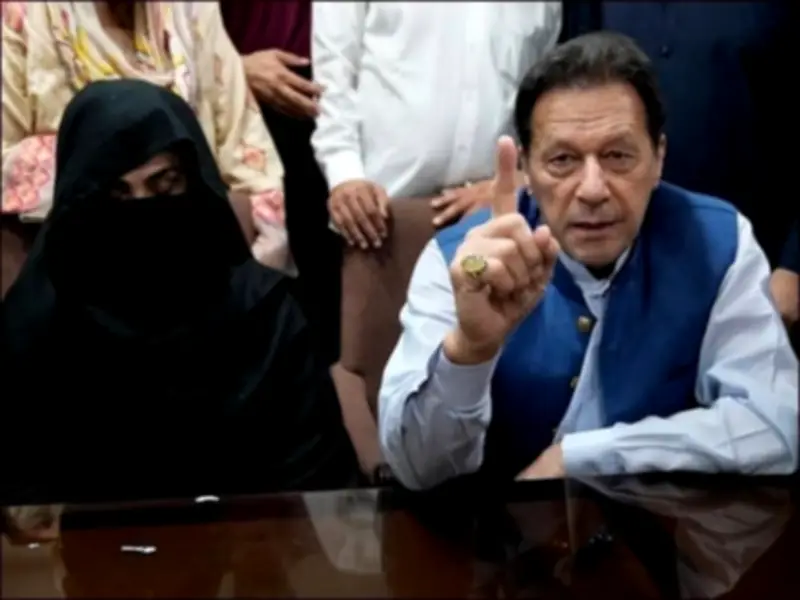
The Islamabad High Court (IHC) on Thursday directed the advocate general of Islamabad to ensure that a meeting is arranged within seven days between Pakistan Tehreek-e-Insaf (PTI) founder Imran Khan, his spouse Bushra Bibi, and their legal counsel. This meeting aims to facilitate the completion of legal formalities and the prosecution of appeals against their conviction in the £190 million reference case.
Background of the Case
Imran Khan and Bushra Bibi remain incarcerated in Rawalpindi's Adiala Jail. They were sentenced on December 20, 2025, to 17 years in prison in the Toshakhana-II case, which involves allegations that the couple unlawfully retained a Bulgari jewellery set gifted by the Saudi crown prince during an official visit to Saudi Arabia.
In January last year, an Islamabad accountability court sentenced Imran to 14 years and Bushra Bibi to seven years in prison in the reference filed by the National Accountability Bureau (NAB). The IHC is currently hearing appeals seeking suspension of these sentences.

Court Proceedings
The hearing of the appeals filed by Imran and his spouse was conducted by Chief Justice Sarfraz Dogar of the IHC. Senior counsel Barrister Salman Safdar raised multiple objections regarding the non-availability of signed vakalatnamas (power of attorney documents) and the lack of access to his clients for instructions.
During the proceedings, Chief Justice Dogar asked what objection had been raised and questioned whether it amounted to a contempt petition, adding, “Which order has not been complied with?” He noted that the vakalatnamas were still not available and said that if jail authorities had to obtain signatures, they should have done so.
Barrister Safdar informed the court that vakalatnamas were still not being provided, as jail authorities had not obtained signatures. He further stated that the case had been fixed for hearing on April 7 for the first time, and since then, 16 hearings had taken place. He also mentioned that in a separate matter, a woman’s petition was not being heard here, and she had to approach the Supreme Court, which then issued directions.
Safdar requested the court to allow him to proceed with arguments, stating that he had not yet received instructions. He further said that under a court order, he was allowed a meeting with his client, but no meeting had been arranged with Imran's spouse.
He added that his client, a woman in custody, was also suffering from an eye-related health issue and that he required proper access to both clients for legal instructions. He stressed that without vakalatnamas, he could not proceed to the next legal forum.
Chief Justice Dogar responded that the meeting had already been arranged under a court order and asked counsel to proceed with arguments. He also remarked that the counsel had earlier stated he did not have instructions for arguments on the appeal.
The court also questioned the absence of the Advocate General’s office representative and asked why vakalatnamas had not been signed and provided. Safdar reiterated his request that meetings with his clients be facilitated, saying he had only been allowed access to Imran and not to his spouse.
The IHC chief justice again noted that the meeting had been arranged under the court’s order and stated that the matter of appeals would be looked into and dates would be given accordingly.
The deputy prosecutor of NAB told the court that the issue was not related to vakalatnamas from their side. In response, Chief Justice Dogar directed NAB’s special prosecutor to ensure that vakalatnamas were completed and facilitated.
Chief Justice Dogar further remarked on whether jail authorities intended to delay the process until the appeal period expired before getting the documents signed. Concluding the proceedings, the court directed the advocate general’s office to ensure compliance with the court’s order within seven days regarding the facilitation of signed vakalatnamas and related legal requirements.
The £190 Million Reference Case
The £190 million case pertains to allegations linked to the Al-Qadir Trust, a welfare organisation established in 2018. The trust, which runs a university outside Islamabad, is accused of being used as a front to receive land worth millions of dollars from a real estate tycoon.

According to the government, the donations were made in exchange for the former premier’s administration using repatriated funds from the United Kingdom to pay fines on behalf of the businessman instead of depositing the amount into the national exchequer. Imran has denied the allegations, maintaining that neither he nor his wife derived any financial benefit from the trust or related transactions.
Separate Development: FIA Submits Challan in Prohibited Funding Case
In a separate development, the Federal Investigation Agency (FIA) submitted a challan in court against the PTI founder and others in the prohibited funding case. Officials said the challan was filed with Registrar Abdul Wahab of the Special Court (Commercial Banking Circle), Islamabad. The registrar’s office will forward the challan to the court after completing the scrutiny process, following which the case will be fixed for regular hearing. The PTI founder and other accused have been nominated in the case and face allegations of foreign funding and financial irregularities.