The Strait of Hormuz Crisis and the Fragility of the Rules-Based Order
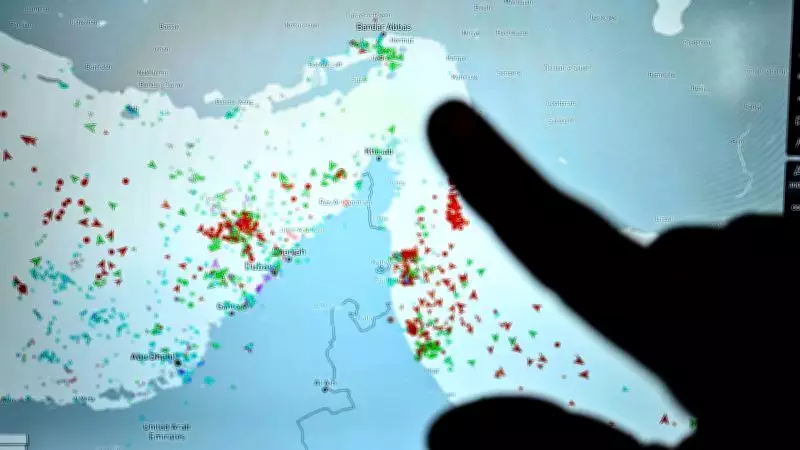
The ongoing tensions over the Strait of Hormuz once again expose the fragility of what powerful states describe as the "rules-based international order." This narrow maritime corridor carries nearly one-fifth of the world's oil trade. The mere possibility of disruption in navigation through it immediately sends tremors across global markets, energy supplies, currencies, and political alliances. Suddenly, international law, freedom of navigation, and the sanctity of trade routes become sacred principles demanding collective enforcement. What appears less discussed is a more fundamental question: are modern laws genuinely rooted in universal principles of justice, or are they ultimately shaped by prevailing power structures? This question lies at the heart of both domestic and international jurisprudence.
Historical Dilemma: Law vs. Power
Every civilisation has struggled with the same dilemma. Does law derive legitimacy merely because it is enacted by authority, or does authority itself remain subordinate to higher moral principles? The answer determines whether constitutions become instruments of justice or sophisticated mechanisms of domination. Modern nation-states formally claim allegiance to liberty, equality, human dignity, and the rule of law. International institutions speak the language of peace, cooperation, and collective security. The actual conduct of states often reveals a different reality. International law becomes rigid when the interests of dominant powers are threatened and flexible when those very powers violate the same principles elsewhere.
Selective Application of Principles
Aggression is condemned selectively. Occupations are judged differently according to geography and alliances. Economic coercion against weaker societies is legitimised in the name of sanctions or strategic necessity. The contradiction is neither accidental nor new. Human history repeatedly demonstrates that law detached from moral foundations gradually becomes an extension of power. Courts have often legitimised extraordinary concentrations of power in the name of stability and national interest. The Strait of Hormuz illustrates this contradiction vividly. Freedom of navigation is defended as an inviolable principle because the global economy depends upon it. The same consistency disappears when weaker nations face blockades, occupations, externally imposed regime changes, or economic structures that permanently subordinate their sovereignty to global financial interests. In such cases, legality often bends before strategic calculations.

Deep Mistrust in International Order
This selective application of principles has produced deep mistrust in the existing international order. Large sections of humanity no longer perceive international law as a neutral framework of justice. They increasingly view it as a vocabulary employed by powerful states to preserve geopolitical and economic dominance. The crisis extends far beyond international relations. Domestic constitutional systems frequently suffer from the same moral contradiction. Almost every modern constitution demands loyalty to the state and obedience to law. Article 5 of the Constitution of the Islamic Republic of Pakistan reflects this tradition by declaring loyalty to the state and obedience to the Constitution and law as inviolable obligations of citizenship. The principle appears simple and necessary because no society can survive without collective discipline and legal order. Disorder destroys institutions, economies, and social cohesion. At the same time, history repeatedly shows that legality itself can become an instrument of oppression when detached from foundational principles of justice.

Historical Examples of Law as Oppression
Colonial regimes operated through legal systems. Fascist governments enacted laws through constitutional mechanisms. Apartheid functioned within a formally structured legal order. Military dictatorships across the world frequently preserved constitutional façades while hollowing out constitutional morality itself. Courts have often legitimised extraordinary concentrations of power in the name of stability and national interest. The twentieth century forced humanity to confront this uncomfortable reality. The Nuremberg Trials became historically significant because they rejected the argument that obedience to state authority absolves moral responsibility. The defence at the Nuremberg Trials that crimes were committed "according to law" was deemed insufficient. Humanity collectively acknowledged that certain principles stand above rulers, governments, and states themselves. This was not merely a legal development; it was a civilisational moment. It established that legality alone cannot be the ultimate basis of justice.
Islamic Political Thought and the Limits of Authority
The same philosophical issue occupied classical debates within Islamic political thought, although later sectarian and dynastic conflicts often obscured its ethical essence. The core question was never simply whether rulers should be obeyed. The deeper issue concerned the limits of political authority itself. Can any ruler, parliament, or majority claim absolute legitimacy merely because it possesses power? Over centuries, many political and theological traditions transformed obedience into a doctrine of political quietism. Stability came to be treated as superior to justice. Resistance against oppression was frequently portrayed as rebellion against order itself. Such interpretations strengthened empires and dynasties but weakened the moral foundations of collective life.
Original Ethical Impulse of Early Islamic Civilisation
The original ethical impulse underlying early Islamic civilisation was far more profound. Political authority was never conceived as sovereign in itself. Human life possessed sanctity beyond state interests. Justice stood above rulers. Collective affairs required consultation. Economic exploitation was morally unacceptable. Power was regarded as a trust rather than a privilege. Equality of human beings formed the ethical basis of social order. No ruler could legitimately suspend these principles merely through force or political authority. This distinction remains vital for modern constitutionalism. If constitutions, legislatures, courts, or international institutions become the ultimate arbiters of morality, then justice inevitably becomes subordinate to temporary political interests. In such a framework, law no longer restrains power; power begins defining law.
Modern Democracies and Procedural Authoritarianism
Constitutional amendments, parliamentary majorities, or judicial doctrines may then legalise almost anything so long as procedural requirements are formally satisfied. Modern democracies increasingly reveal this danger. Electoral legitimacy alone cannot guarantee justice when wealth, media concentration, corporate influence, and state machinery shape public consciousness itself. Majoritarianism without moral restraints gradually degenerates into procedural authoritarianism. Citizens continue voting while substantive power remains concentrated within narrow elites. The problem, therefore, is not democracy itself but the absence of universally accepted ethical limits upon political power.
A Hierarchy of Legitimacy
A sustainable jurisprudential framework requires a hierarchy of legitimacy. At the highest level must stand certain foundational principles which no ruler, parliament, majority, or international institution may violate. Constitutions derive legitimacy insofar as they embody these principles. Governments derive legitimacy insofar as they remain faithful to constitutional morality. Laws derive legitimacy insofar as they protect justice rather than domination. Without such a hierarchy, constitutional loyalty itself becomes morally dangerous because it may demand obedience even against human dignity and collective welfare.
Universal Principles Beyond Ideological Divides
The modern world often hesitates to discuss universal moral principles because ideological polarisation has produced suspicion towards all grand ethical frameworks. Some fear that invoking higher values may lead to theocracy. Others fear that moral relativism leaves humanity defenceless before organised power. The challenge, therefore, is neither theological absolutism nor moral nihilism. The challenge is to identify those universal principles which transcend sectarian, national, and ideological divisions. Human civilisation already possesses a broad consensus on many such principles, even if political practice frequently violates them. Human life possesses intrinsic dignity. Equality before the law is indispensable because selective justice destroys legitimacy. Economic systems producing extreme deprivation amidst concentrated wealth are socially destructive. Public authority exists as a trust for collective welfare rather than private enrichment. Freedom of conscience and expression remains necessary because intellectual coercion suffocates civilisation from within. Accountability of rulers is essential because concentrated power inevitably corrupts institutions.
Accumulated Moral Wisdom
These principles are not exclusively religious or secular. They represent accumulated moral wisdom emerging across civilisations and historical experiences. Every society that ignored them eventually entered decline, fragmentation, or violence. The crisis confronting humanity today is not merely political; it is jurisprudential and civilisational. The world possesses elaborate constitutions, international treaties, courts, and legal systems. What it lacks is a consensus regarding immutable ethical restraints upon power itself. This absence explains why modern legality often appears hollow. International law becomes selective diplomacy. Constitutionalism degenerates into procedural formalism. Democracy becomes numerical management of populations by elite interests. Human rights become strategic rhetoric deployed unevenly across geopolitical divides.
Consequences of a Hollow Legal Order
The consequences are visible everywhere: endless wars, widening inequality, ecological destruction, surveillance states, militarisation of societies, and growing distrust between citizens and institutions. Large numbers of people no longer believe that existing legal systems genuinely serve justice. Humanity cannot move towards a stable global order under such conditions. Neither aggressive nationalism nor centralised global domination offers a sustainable future. A just order requires rethinking the foundations of jurisprudence itself. The real question before modern civilisation is simple, though profoundly difficult: should law remain subordinate to power, or should power remain subordinate to universal principles of justice? The future of constitutionalism and international law depends upon the answer.
The Strait of Hormuz as a Symbol
If power continues to define legality, then constitutions and treaties will remain vulnerable to manipulation by dominant interests. If law is reconnected with enduring moral foundations, constitutional loyalty can evolve into fidelity to justice rather than servitude to authority. The Strait of Hormuz is not merely a geopolitical flashpoint. It symbolises a deeper crisis within the modern legal imagination. Humanity has developed sophisticated institutions for managing power, but has failed to establish universally enforceable moral limits upon its exercise. Without such limits, legality becomes organised coercion wrapped in procedural language. With them, law may still become an instrument of human liberation rather than domination.