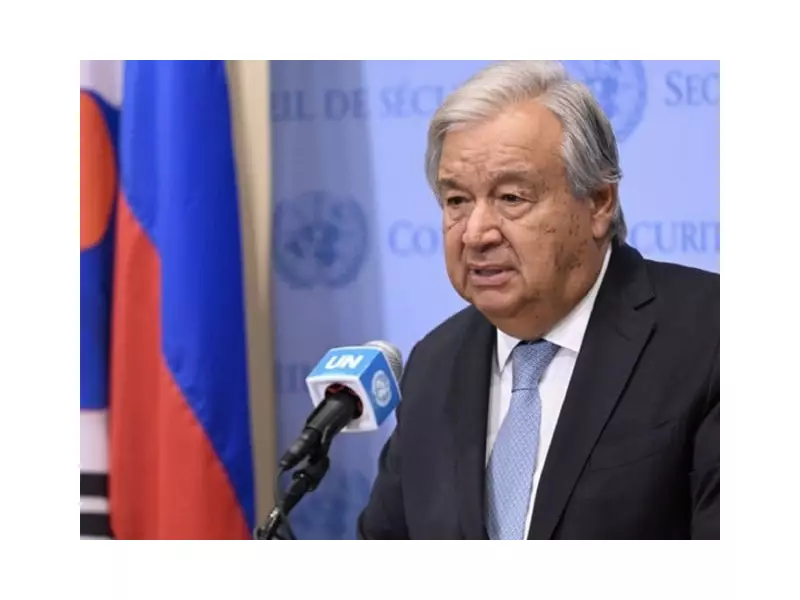
United Nations Secretary-General Antonio Guterres has issued a strong appeal, calling on Israel to immediately reverse its decision to ban dozens of international humanitarian organizations from operating in the Gaza Strip. The UN chief expressed deep concern over the move, which he warned threatens to worsen the already dire situation for Palestinians.
UN's Stern Warning and Israel's Justification
In a statement delivered by his spokesperson, Stephane Dujarric, on Friday, Guterres stressed that these international non-governmental organizations are indispensable for life-saving work. He argued that the suspension risks undermining the fragile progress achieved during the current ceasefire. "This recent action will further exacerbate the humanitarian crisis facing Palestinians," Dujarric added, conveying the Secretary-General's position.
The controversy stems from an order issued by Israel on Thursday. The government suspended 37 foreign humanitarian organizations from accessing Gaza after they refused to provide lists of their Palestinian employees to Israeli officials. The affected groups have been ordered to cease all operations by March 1.

NGOs Push Back, Citing Principle and Danger
Israel defends the new regulation as a necessary step to prevent organizations it accuses of supporting terrorism from working in the Palestinian territories. However, the banned NGOs and their allies have strongly contested this.
Several of the organizations state that the Israeli demand violates international humanitarian law and compromises their operational independence and the safety of their staff. Notably, the ban includes the renowned Doctors Without Borders (MSF), which employs approximately 1,200 staff members across the Palestinian territories, with the vast majority based in Gaza.
In a show of solidarity, 18 Israel-based left-wing NGOs publicly denounced the decision on Thursday. They condemned the new registration framework, asserting it violates core humanitarian principles of independence and neutrality.
A Fragile Context and Deepening Crisis
This development occurs against a backdrop of tense calm. A fragile ceasefire has been in place since October, following a deadly war initiated by Israel in response to Hamas's attack on October 7, 2023. The UN chief's intervention highlights fears that blocking major aid providers could destabilize this precarious peace and lead to a rapid deterioration in living conditions for Gaza's population.
The international community now watches closely to see if Israel will heed the UN's call to reverse the ban or if the standoff will further restrict the flow of essential aid into the blockaded coastal enclave.