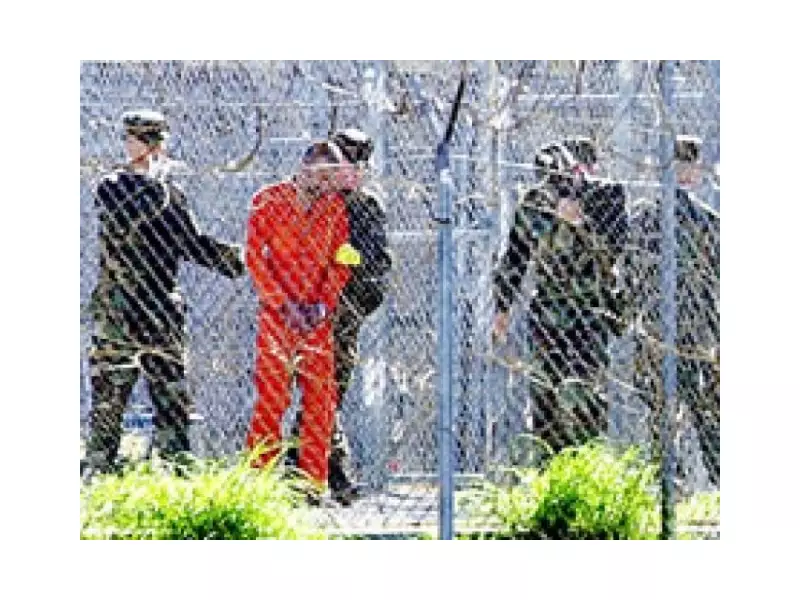
A recent investigation has uncovered that the British government paid a substantial sum exceeding £1 million to a man who was previously held at the controversial US detention facility in Guantanamo Bay. The payment was reportedly made as part of a settlement following allegations of UK security services' involvement in his ordeal.
The Settlement and Its Origins
The individual at the center of this case is Mohamed Ahmed, a dual British-Egyptian national. Ahmed was detained in Pakistan in 2002 and subsequently transferred to Guantanamo Bay, where he was held for nearly two years before being released without any charges being filed against him. Upon his return to the United Kingdom, Ahmed initiated legal action against the British government.
He alleged that Britain's intelligence agencies, MI5 and MI6, were complicit in his detention and the mistreatment he suffered. The legal claim asserted that UK officials provided questions to his interrogators and were aware of the abusive conditions he endured. To avoid a protracted and potentially damaging public court case, the UK government opted for an out-of-court settlement.

Details of the Financial Compensation
The report, based on documents from the UK Treasury, confirms that the total payment made to Mohamed Ahmed amounted to £1,067,000. This significant compensation package was finalized several years ago but the exact figure had not been publicly disclosed until now. The settlement was intended to resolve his claims of complicity and misfeasance in public office by British security personnel.
This is not an isolated incident. The UK government has previously settled with other former Guantanamo detainees, including a notable group known as the 'Tipton Three'. However, the scale of this individual payment brings renewed scrutiny to the government's policies and the actions of its intelligence services during the so-called 'War on Terror'.
Broader Implications and Ongoing Debates
This revelation has ignited a fresh debate in the UK regarding transparency, accountability, and the ethical boundaries of counter-terrorism cooperation. Human rights organizations argue that such settlements, while providing some redress to victims, also serve to conceal the full extent of government involvement in extraordinary rendition and torture programs. They call for a full public inquiry into the UK's role during that period.
Conversely, government defenders often state that settling such cases is a pragmatic decision to protect national security secrets that would be exposed during a trial. They maintain that it prevents the disclosure of sensitive intelligence methodologies and avoids further strain on diplomatic relations with allies, particularly the United States.
The case of Mohamed Ahmed underscores the long and complex legacy of Guantanamo Bay. It highlights the continuing legal and moral repercussions for governments that were involved, directly or indirectly, with the detention facility. The payment, while closing a legal chapter, continues to raise profound questions about justice, security, and the price of state complicity.