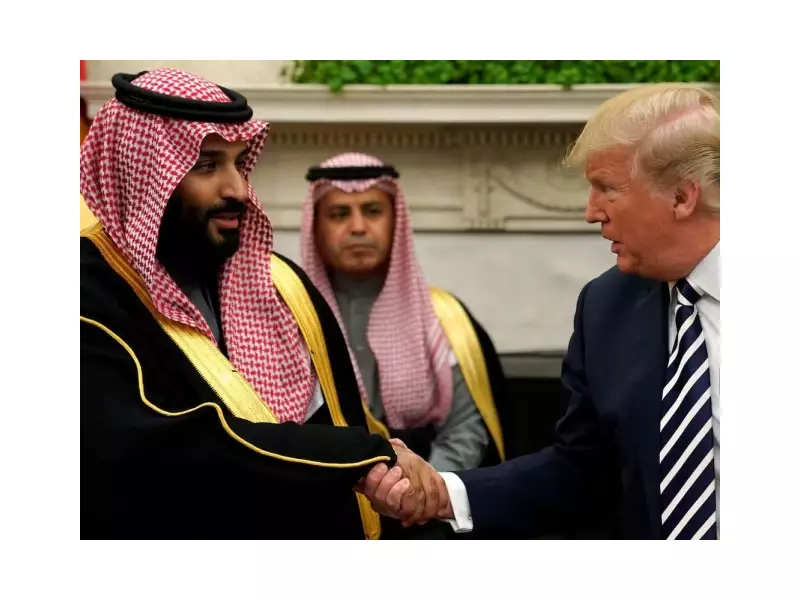
US President Donald Trump is preparing to give Saudi Arabia's de facto ruler Crown Prince Mohammed bin Salman a warm welcome on Tuesday, marking a significant moment in US-Saudi relations. This visit represents the crown prince's first trip to the United States since the 2018 killing of Saudi critic Jamal Khashoggi, an event that caused international outrage and strained diplomatic ties.
High-Stakes Diplomacy and Defense Deals
The White House has planned an extensive day of diplomacy for the Saudi leader, including Oval Office talks with President Trump, a lunch in the Cabinet Room, and an evening black-tie dinner. The centerpiece of discussions involves advancing the sale of F-35 fighter jets to Saudi Arabia, with Trump confirming to reporters on Monday that "We'll be selling" the advanced aircraft to the kingdom.
Saudi Arabia has formally requested to purchase 48 F-35s, which would mark a significant policy shift as Israel has been the only Middle Eastern country operating these advanced fighter jets until now. This potential deal could substantially alter the military balance in the region and test Washington's commitment to maintaining Israel's "qualitative military edge."

Beyond Military: Broader Strategic Partnership
The visit extends far beyond defense equipment. President Trump aims to capitalize on a $600 billion Saudi investment pledge made during his visit to the kingdom in May 2017. A senior White House official revealed that numerous US-Saudi deals covering technology, manufacturing, and defense are expected to be announced.
The Saudi delegation is seeking multiple strategic concessions from Washington, including security guarantees, access to artificial intelligence technology, and progress on a civilian nuclear program. Former US Middle East negotiator Dennis Ross noted that Trump wants to develop a multifaceted relationship that keeps Saudi Arabia within the US sphere of influence rather than China's.
Normalization Pressure and Khashoggi's Shadow
President Trump is expected to pressure Crown Prince Mohammed bin Salman for Saudi Arabia to join the Abraham Accords and normalize relations with Israel. The senior White House official emphasized that "It's very important to him that they join the Abraham Accords during his term." However, Saudi Arabia has shown reluctance to take this major step without a clear path to Palestinian statehood.
The warm reception for the crown prince signals that relations have largely recovered from the deep strain caused by Khashoggi's murder. US intelligence concluded that MBS approved the capture or killing of the prominent critic, though the crown prince denied ordering the operation while acknowledging responsibility as Saudi Arabia's de facto ruler.
Jonathan Panikoff, former deputy national intelligence officer on the Middle East, suggested that while Trump will urge movement toward Israeli normalization, any lack of progress is unlikely to hinder reaching a new US-Saudi security pact. The substantial Saudi investment in the United States could help expand defense ties even as normalization efforts continue.