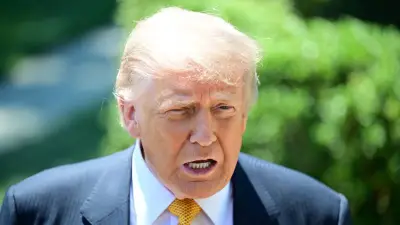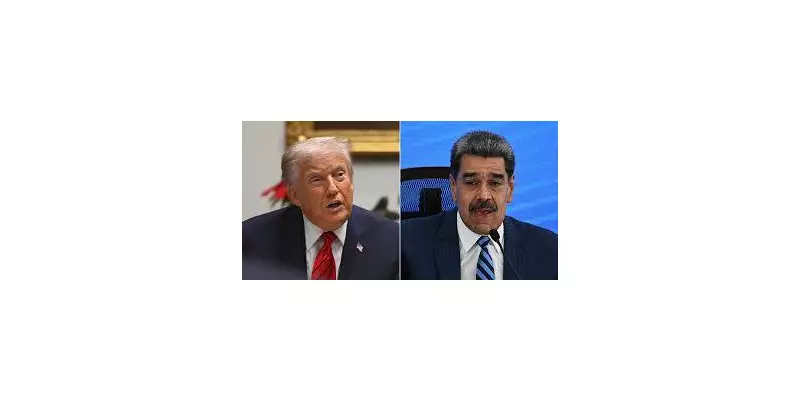
In a significant escalation of tensions, US President Donald Trump has publicly suggested that Venezuelan leader Nicolas Maduro should consider stepping down from power. This statement comes as American naval forces intensify a blockade targeting the South American nation's crucial oil exports.
Trump's Direct Warning to Caracas
Speaking from his Florida residence on Tuesday, President Trump addressed questions about Washington's mounting pressure on the Venezuelan government. When asked if the US threats were aimed at forcing Maduro out after his 12-year rule, Trump responded that the decision was ultimately up to the Venezuelan president. "That's up to him, what he wants to do. I think it would be smart for him to do that," Trump stated. He followed with a stark warning, adding, "If he wants to do something -- if he plays tough, it'll be the last time he's ever able to play tough."
The US military campaign, active since September, has involved strikes on boats allegedly involved in drug trafficking in the Caribbean and eastern Pacific. Washington claims these actions target narcotics networks, though it has not publicly provided evidence linking the vessels to such activities. According to reports from families and regional governments, these operations have resulted in over 100 fatalities, including fishermen.

Moscow's Firm Backing and Diplomatic Maneuvers
In a swift rebuttal, President Maduro fired back, advising Trump to focus on domestic American issues rather than threatening Venezuela. During a televised speech, Maduro argued that Trump "would be better off in his own country on economic and social issues."
Maduro's key international ally, Russia, moved quickly to affirm its support. On the eve of a United Nations Security Council meeting called to discuss the crisis, the Russian foreign ministry issued a strong statement. Following a phone call between Russian Foreign Minister Sergei Lavrov and his Venezuelan counterpart, Yvan Gil, Moscow expressed "deep concern over the escalation of Washington's actions in the Caribbean Sea." The ministry warned these actions "could have serious consequences for the region and threaten international shipping." Crucially, it "reaffirmed its full support for and solidarity with the Venezuelan leadership and people."
The diplomatic coordination was clear. Both ministers agreed to synchronize their actions on the global stage, particularly at the UN. Venezuela, with backing from Russia and China, successfully requested the UNSC meeting to address what it labels "the ongoing US aggression."
A Deepening Crisis with Global Repercussions
The core of the US action is a blockade announced by President Trump on December 16 against "sanctioned oil vessels" bound to and from Venezuela. The US accuses the Maduro government of using oil revenues to finance "drug terrorism, human trafficking, murder and kidnapping." In a remark highlighting the economic dimension, Trump also claimed Venezuela had taken "all of our oil"—a likely reference to the nationalization of the petroleum sector—and bluntly stated, "we want it back."
Venezuela condemns the US measures as "international piracy" and fears they are part of a wider regime-change strategy. On Monday, Foreign Minister Gil read a letter on state TV, signed by Maduro and addressed to UN member states, warning that the American blockade "will affect the supply of oil and energy" worldwide.
Despite the strong rhetoric from Moscow, US Secretary of State Marco Rubio recently downplayed concerns about a direct confrontation with Russia over Venezuela, suggesting Moscow was preoccupied with the war in Ukraine. However, US-Russia relations have deteriorated further as Trump has voiced frustration over the lack of a resolution to the Ukraine conflict, adding another layer of complexity to this international standoff.