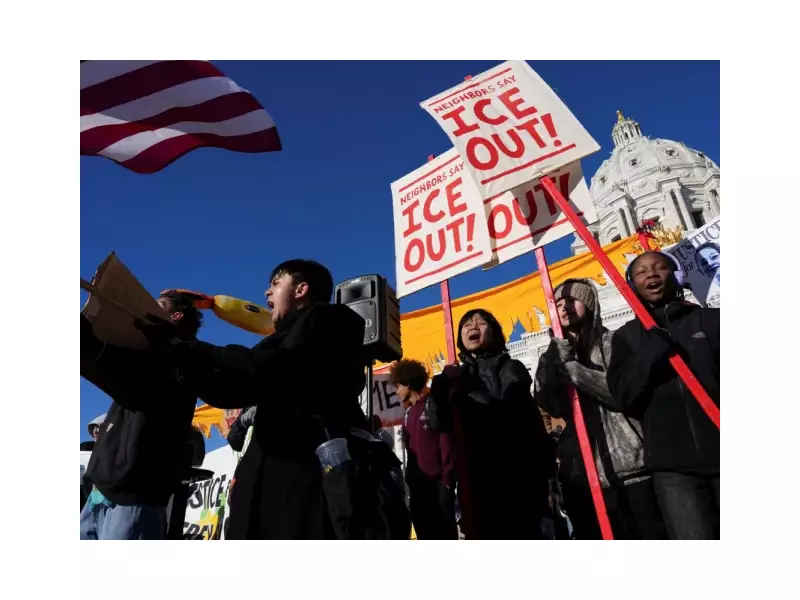
US President Donald Trump has issued a stark threat to deploy military forces in Minnesota, invoking a centuries-old law, following days of intense and violent protests against federal immigration agents operating in the state.
Escalating Tensions and Fatal Shootings
The crisis escalated after an Immigration and Customs Enforcement (ICE) agent fatally shot a US citizen, Renee Good, in a car eight days ago in Minneapolis. Confrontations between residents and federal officers have intensified since, spreading protests to other cities. The situation worsened just hours before Trump's threat when another immigration officer shot a Venezuelan man. The government stated the man was fleeing after agents tried to stop his vehicle.
Taking to social media, Trump directly targeted Minnesota's Democratic leadership. "If the corrupt politicians of Minnesota don't obey the law and stop the professional agitators and insurrectionists from attacking the Patriots of ICE, who are only trying to do their job, I will institute the INSURRECTION ACT," he wrote. The Republican president has repeatedly derided the state's leaders and made inflammatory comments about the local Somali community.

A Federal "Invasion" and Legal Battles
Trump has already sent nearly 3,000 federal officers into Minneapolis, where they patrol in military-style gear. These agents have faced constant protests, with residents using whistles and tambourines to demonstrate. Their tactics, including arresting immigrants and protesters, smashing windows, and reportedly stopping Black and Latino US citizens for ID checks, have drawn fierce criticism.
Minneapolis Mayor Jacob Frey condemned the ICE surge as an "invasion" and labeled their conduct "disgusting and intolerable." He warned of the dangerous precedent of "two governmental entities literally fighting one another." In response, the Minnesota attorney general's office has sued the Trump administration, arguing the ICE operations violate residents' rights and seeking a temporary restraining order from US District Judge Kate Menendez.
The Insurrection Act and a Divided Base
The Insurrection Act of 1807 allows a president to use the military or federalize a state's National Guard to suppress rebellion. Used about 30 times in US history, the Supreme Court has ruled the president has sole authority to determine when its conditions are met. Trump has previously used it to deploy the National Guard for immigration enforcement in cities like Los Angeles, a move later ruled unconstitutional by a judge.
Trump's aggressive stance has revealed a split among his supporters. A Reuters/Ipsos survey found 59% of Republicans favor prioritizing arrests even if people are hurt, while 39% prefer reducing harm even if it means fewer arrests. If Trump follows through on his threat to send soldiers, immediate legal challenges are expected.
The US Department of Homeland Security (DHS) defended Wednesday's shooting, claiming the Venezuelan man attacked an officer with a broomstick and snow shovel, forcing the officer to fire "defensive shots." DHS also stated the man had entered the US in 2022 under a Biden administration parole program, but the Trump administration considers him illegal. Reuters noted it could not independently verify the DHS account. The man's injuries were not life-threatening.