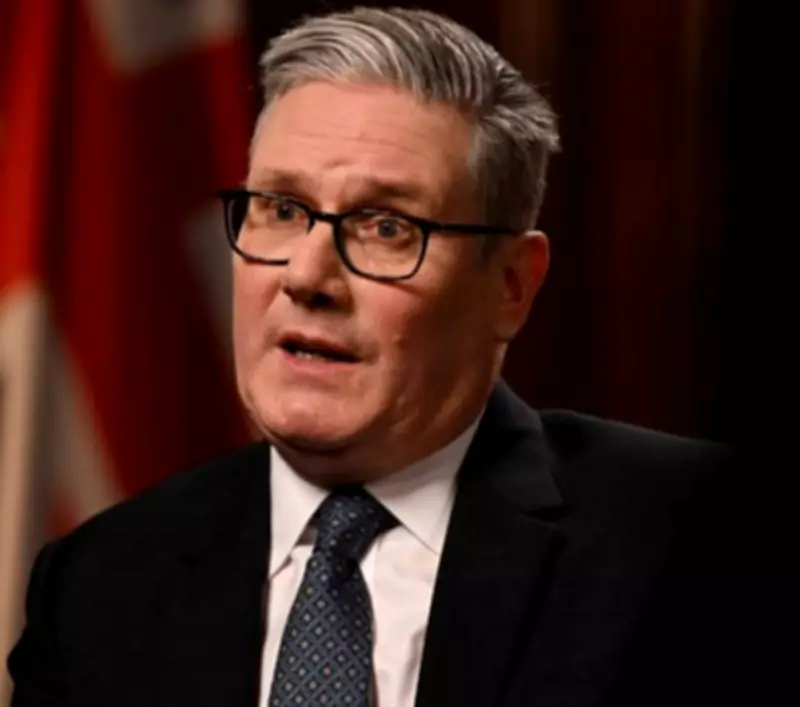
UK's Starmer Pursues EU Alignment, Sparking Sovereignty Debate
Sir Keir Starmer has repeatedly emphasized his goal of fostering a closer relationship with the European Union, a key element of his platform during the 2024 general election, though initially outlined in broad terms. At the inaugural UK-EU summit held eleven months ago, it was confirmed that the UK is actively negotiating agreements with the EU concerning food and drink standards, carbon emissions, and electricity regulations.
Dynamic Alignment and Parliamentary Process
The complexity arises from the government's pursuit of dynamic alignment, which entails not only adhering to current EU rules in these three critical areas but also committing to follow them as they evolve over time. Legislation on this matter is slated for introduction later this year, with a parliamentary vote expected. However, as the government updates UK regulations to mirror European standards, further votes may not be required, a process known as secondary legislation. This mechanism was similarly utilized by previous Conservative governments when they sought to diverge from EU rules.
The government's recent acknowledgment of this parliamentary procedure has ignited significant backlash from the Conservatives and Reform UK. Yet, the core of the dispute extends beyond procedural concerns, delving into profound questions about Britain's sovereignty, economic strategy, and global positioning, issues that have dominated political discourse for over a decade.

Political Opposition and Sovereignty Concerns
Andrew Griffith, the Conservatives' shadow business secretary, criticized the plans, arguing they would reduce Parliament to a mere spectator while Brussels dictates terms, a scenario he claims the country explicitly rejected in the 2016 Brexit referendum. Reform UK's Nigel Farage echoed this sentiment, labeling the acceptance of EU rules without a vote as a direct betrayal of the Brexit outcome. Essentially, they contend that the UK should not be a rule-taker without the ability to influence those rules as part of the bloc.
In response, the government, led by Sir Keir Starmer, frames the issue differently, asserting that the economic advantages of aligning with EU rules in specific sectors justify the approach. The prime minister has long advocated for this alignment, but recent global instability, partly attributed to unique political dynamics, has bolstered his argument. Speaking to BBC Radio 5 Live, Starmer highlighted the current climate of massive conflict and uncertainty, stating his firm belief that the UK's best interests lie in a stronger, closer relationship with Europe.
Economic and Political Calculations
At a press conference earlier this month, focused on the economic repercussions of the war in Iran, Sir Keir concluded by declaring that the UK's long-term national interest necessitates closer partnership with European allies. He acknowledged that Brexit inflicted deep damage on the economy and expressed a desire for more ambitious economic cooperation with the EU.
These arguments mark a shift for Starmer, who, as Jeremy Corbyn's shadow Brexit secretary, had previously avoided such direct statements due to fears of alienating Labour voters, whether they supported Leave or Remain but wished to avoid reopening the debate. The changing political landscape, influenced by polls showing declining support for Brexit and concerns over progressive challenges—such as the Green Party's victory in the Gorton and Denton by-election—has prompted this strategic pivot.
Risks and Future Pressures
However, there is a potential risk that Sir Keir's emphasis on UK-EU relations may not go far enough to satisfy progressive voters, as he remains committed to the fundamental framework of the post-Brexit settlement established by Theresa May. This includes no membership in the single market, which would involve free movement of people, and no customs union membership, which would preclude post-Brexit free trade deals.
Indications suggest that Starmer will face mounting pressure from within his own party to adopt a more ambitious stance on EU relations, highlighting ongoing internal divisions and the delicate balance between economic pragmatism and sovereignty concerns.